RSA-129 - Numberphile
TL;DR
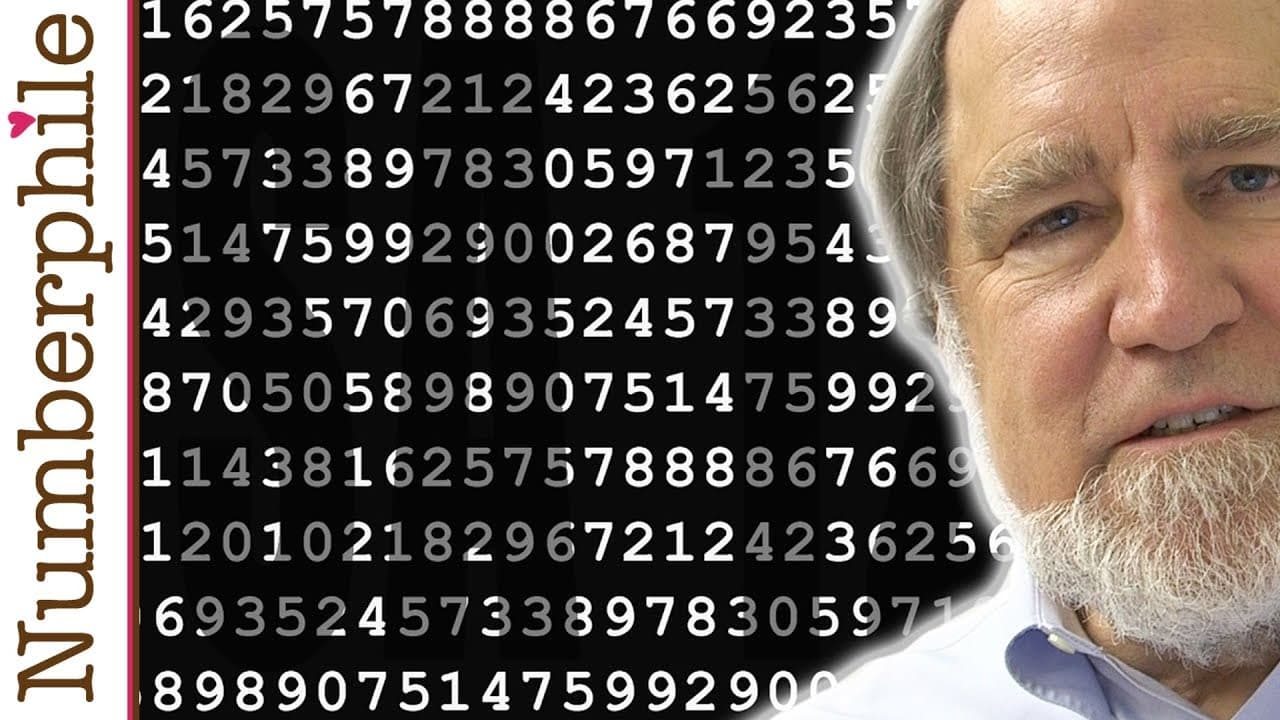
RSA-129, a 129-digit number created for a cryptographic challenge in the late '70s, was later successfully factored.
Transcript
It's fairly large. There are bigger ones. But it's a nice big number, yep. And it's a particular number, it's a number I've had some association with, you might say. This number is 129 decimal digits long, so it's probably more than your calculator can handle easily. Although maybe these days calculators are getting pretty smart. But it's something... Read More
Key Insights
- #️⃣ RSA-129, a 129-digit number, was created by Rivest, Shamir, and Adleman as a cryptographic challenge in the '70s.
- #️⃣ The number served as a test for the security assumptions of the RSA system based on the product of two large prime numbers.
- 🥺 Advancements in computer technology and factoring algorithms led to the successful factorization of RSA-129 in 1994.
- 🪘 The factorization of RSA-129 highlighted the importance of using longer prime numbers to strengthen encryption methods and maintain security.
- 💨 RSA-129's challenge paved the way for further research in cryptography and the development of more robust encryption techniques.
- 🔒 The successful factorization of RSA-129 prompted the cryptographic community to reconsider the length of prime numbers used in encryption for enhanced security measures.
- 😤 The team of researchers who factored RSA-129 received a $100 prize, showcasing the need for robust encryption methods in the face of advancing technology.
Install to Summarize YouTube Videos and Get Transcripts
Explore YouTube Video Summarizer or Get YouTube Transcript Extractor
Questions & Answers
Q: What is the significance of RSA-129 in the history of cryptography?
RSA-129 was a groundbreaking challenge that tested the security of the RSA cryptographic system and demonstrated the importance of using long prime numbers for encryption.
Q: How was RSA-129 generated, and why were the prime numbers used to create it kept secret?
RSA-129 was generated by Rivest, Shamir, and Adleman through a process involving random numbers and the multiplication of two large prime numbers, which were kept secret to test the security assumptions of the system.
Q: How did advancements in computer technology lead to the successful factorization of RSA-129?
With the increase in computational power and better factoring algorithms, a team of researchers was able to factor RSA-129 in 1994, highlighting the need for stronger encryption methods.
Q: What impact did the factoring of RSA-129 have on the cryptographic community?
The successful factorization of RSA-129 prompted the use of longer prime numbers in encryption to enhance security measures and prompted further research into the resilience of encryption systems.
Summary & Key Takeaways
-
RSA-129, a 129-digit number, was created as a challenge in the '70s for testing cryptographic security.
-
The number was based on the product of two large prime numbers, serving as the foundation of RSA, a public key cryptography system invented by Rivest, Shamir, and Adleman.
-
After years of advancement in computer technology, an international team successfully factored RSA-129, highlighting the need for longer prime numbers for security.
Read in Other Languages (beta)
Share This Summary 📚
Summarize YouTube Videos and Get Video Transcripts with 1-Click
Try YouTube Summary with ChatGPT & Claude or YouTube Transcript Generator
Explore More Summaries from Numberphile 📚





Summarize YouTube Videos and Get Video Transcripts with 1-Click
Try YouTube Summary with ChatGPT & Claude or YouTube Transcript Generator