Good Things Evil Dictators Did
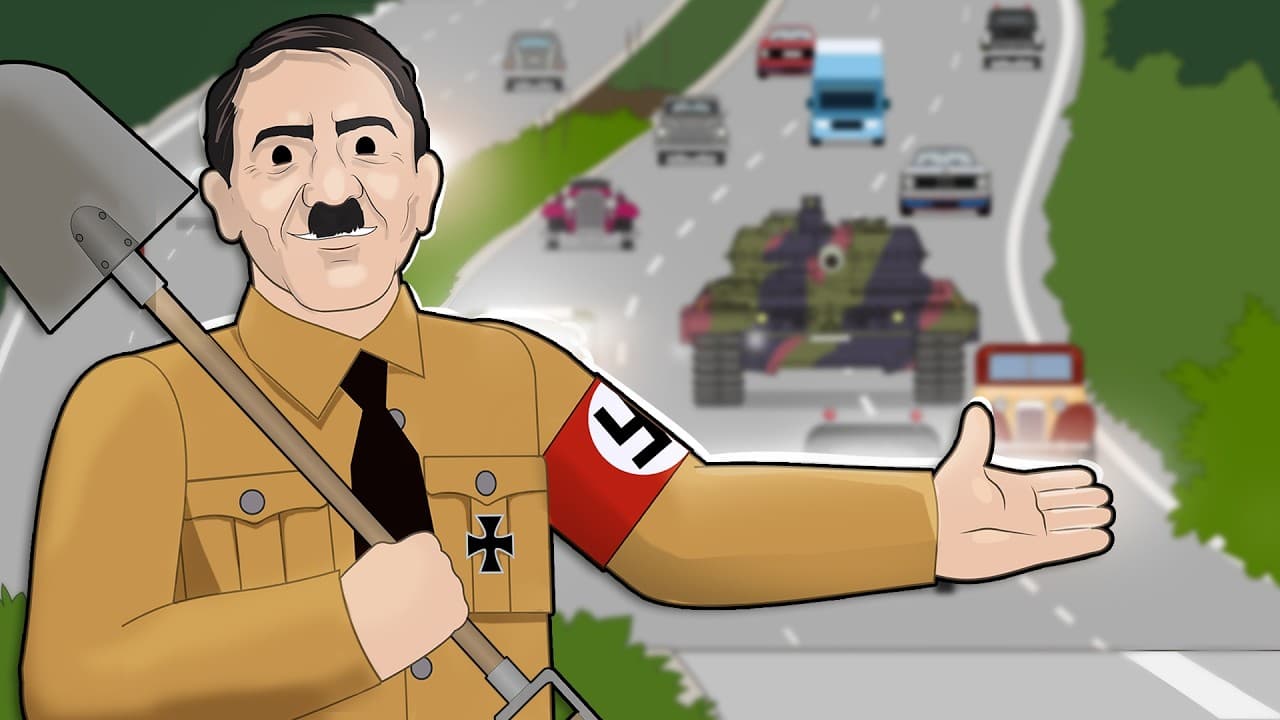
TL;DR
Dictators like Hitler and Saddam Hussein occasionally implemented policies that had positive social impacts despite their horrific actions.
Transcript
Good Deeds by evil dictators whether it's murder pillage unspeakable acts of violence or horrendous war crimes dictators give you plenty of reasons to emphasize that first syllable but believe it or not they weren't all bad all the time just 99% of it in between eradicating entire ethnic groups they sometimes had to pause and think about the most e... Read More
Key Insights
- 🥺 Dictators often implemented policies that, while serving oppressive aims, led to measurable benefits in areas such as literacy and animal welfare.
- 🗯️ Hitler’s animal rights laws reflect a juxtaposition of compassion for animals with extreme human cruelty, showcasing the complexity of his character.
- 🎮 Saddam Hussein's approach to education was geared more towards control than enlightenment, using literacy as a tool for indoctrination.
- 🍉 Genghis Khan's creation of trade standards and cultural exchanges exemplified how even brutal conquests can foster long-term connectivity and economic growth.
- ☠️ Stalin's educational policies drastically improved literacy rates in the Soviet Union but were heavily infused with propaganda to maintain control over the populace.
- 🍃 Despite their cruelty and tyranny, some dictators have left legacies that unexpectedly advance societal progress, complicating historical narratives.
- 🗯️ The focus on animal rights during dictatorial regimes can illustrate hypocrisy in leadership priorities while highlighting societal values.
Install to Summarize YouTube Videos and Get Transcripts
Explore YouTube Video Summarizer or Get YouTube Transcript Extractor
Questions & Answers
Q: How did Hitler's policies contribute to animal welfare?
Hitler introduced several animal protection laws upon becoming Chancellor in 1933. These laws mandated humane treatment of animals, banned inhumane slaughter, and prohibited animal experimentation unless under strict conditions. While these laws appeared altruistic, they simultaneously targeted Jewish customs, demonstrating a chilling blend of concern for animal rights and horrific human rights abuses.
Q: What was the impact of Saddam Hussein's literacy campaign on Iraqi society?
Saddam Hussein's literacy campaign resulted in an increase in literacy rates during his regime, with male literacy rising to 87% and female literacy improving remarkably. However, these educational reforms were used for indoctrination, rewriting history to emphasize his regime's glory while repressing marginalized communities, illustrating the complex consequences of his policies.
Q: What did Genghis Khan contribute that affected future societies positively?
Genghis Khan was instrumental in establishing a standardized infrastructure that bolstered trade along the Silk Road. His promotion of meritocracy over lineage rewarded individuals for their abilities and contributions, enhancing commerce and cultural exchange across continents, laying foundations for social and economic systems that resonate today.
Q: In what ways did Stalin's educational policy serve his dictatorship?
Stalin's educational reforms aimed to elevate literacy rates as a means of control, crafting a population capable of engaging with communist ideology as per the state’s narrative. By the end of his rule, high literacy rates allowed for better manipulation of information, disseminating his propaganda widely among Soviet citizens.
Q: Can dictators ever be seen as beneficial for society despite their methods?
While dictators can implement policies that yield societal benefits, such as improved literacy or advanced animal rights, these actions are often overshadowed by their violent oppression and moral atrocities. The results they achieve can inadvertently improve some aspects of society, leading to complex historical evaluations.
Q: How did literacy rates change in Soviet Russia under Stalin's rule?
Under Stalin, the literacy rate dramatically increased, from only about 28.4% at the turn of the century to near universal literacy among soldiers and significant rates among children by 1939. This was largely driven by the state's need for a politically engaged populace that adhered to communist ideals, demonstrating how education can be weaponized for control.
Q: What contradictions exist in the legacies of dictators as highlighted in the content?
The content highlights that dictators like Hitler and Saddam Hussein may have enacted policies with positive societal impacts (such as animal rights or literacy campaigns) despite being responsible for extensive violence and atrocities. This contradiction creates a complex historical narrative that complicates their overall legacies.
Summary & Key Takeaways
-
Many notorious dictators, while responsible for atrocities, also made some positive societal contributions, showcasing a paradox in their legacies.
-
Hitler, despite his genocidal actions, introduced animal welfare laws that were surprisingly progressive, reflecting an odd juxtaposition in his character.
-
Saddam Hussein's brutal regime improved literacy in Iraq significantly, albeit as a tool for indoctrination, showcasing how oppressive governance can yield unintended benefits.
Read in Other Languages (beta)
Share This Summary 📚
Summarize YouTube Videos and Get Video Transcripts with 1-Click
Try YouTube Summary with ChatGPT & Claude or YouTube Transcript Generator
Explore More Summaries from Simple History 📚





Summarize YouTube Videos and Get Video Transcripts with 1-Click
Try YouTube Summary with ChatGPT & Claude or YouTube Transcript Generator