This Fossil Arachnid was a HUGE Discovery
TL;DR
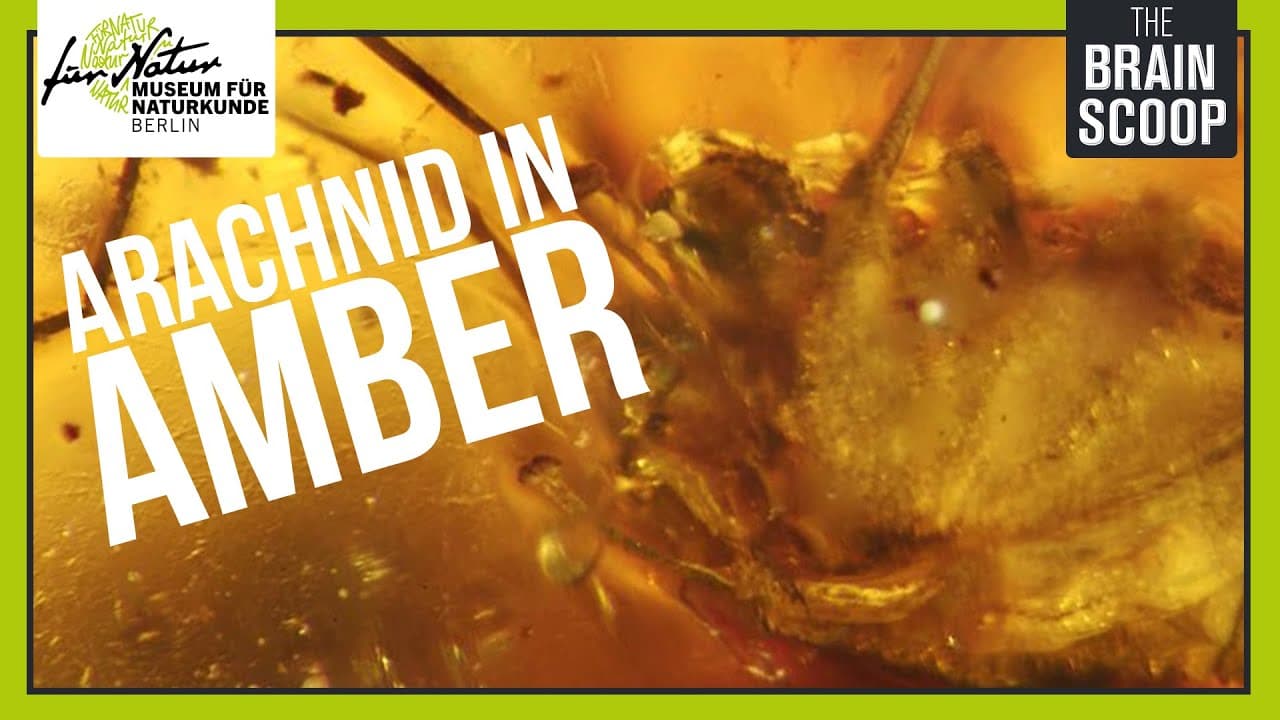
Arachnologist Dr. Jason Dunlop discusses the study of fossil arachnids and a recent discovery of a 100 million year old Harvestman with unique genitalia.
Transcript
this episode is brought to you by the Field Museum in Chicago Illinois and the museum for natural kwinda in berlin germany arachnids do not typically make it onto people's top lists for favourite animals which is too bad there's so much diversity from camel spiders and scorpions too well regular spiders we just can't get enough of these amazing cre... Read More
Key Insights
- 🕷️ Fossil arachnids provide valuable insights into the evolution of spiders and other arachnids.
- 👻 Amber preservation allows for the study of well-preserved specimens, including details of their anatomy.
- 👶 The discovery of a new Harvestman species with unique genitalia contributes to understanding the diversity of ancient arachnids.
- 🛩️ The study of fossil arachnids is a niche field with a small number of researchers worldwide.
- 👥 Fossil arachnids are less well-known compared to popular fossil groups like dinosaurs, but they play an important role in understanding the origins of various animal groups.
- 💻 Techniques like computer tomography enhance the study of fossil arachnids by providing detailed three-dimensional scans of specimens.
- 👨🔬 The World Spider Catalog is a global collaborative effort to catalog all known living spider species, providing a useful baseline for taxonomic research.
Install to Summarize YouTube Videos and Get Transcripts
Explore YouTube Video Summarizer or Get YouTube Transcript Extractor
Questions & Answers
Q: How does Dr. Dunlop use the fossil record to study the evolution of arachnids?
Dr. Dunlop uses the fossil record to understand the relationships between different groups of arachnids and search for potential missing links in their evolution.
Q: What was the recent significant discovery made by Dr. Dunlop and his colleagues?
Dr. Dunlop and his colleagues discovered a new species of Harvestman in amber with unique genitalia, providing valuable insights into the evolution of this group of arachnids.
Q: How does Dr. Dunlop feel about the media attention received for the discovery?
Dr. Dunlop appreciates the serious coverage from publications like National Geographic that highlights the scientific significance of the discovery. However, he also acknowledges the sensationalized coverage in tabloid press.
Q: What types of organisms are commonly preserved in amber?
Arachnids and insects are most commonly preserved in amber due to their ability to get caught in tree resin. However, larger organisms like lizards or birds are rare to find in amber.
Summary & Key Takeaways
-
Arachnologist Dr. Jason Dunlop studies fossil arachnids to understand their evolution and relationship to modern-day arachnids.
-
Fossil arachnids, often preserved in amber, provide well-preserved specimens for study, including a recent discovery of a new Harvestman species with unique genitalia.
-
Amber preservation allows for the use of new techniques like computer tomography to study the internal structures of fossil arachnids.
Read in Other Languages (beta)
Share This Summary 📚
Summarize YouTube Videos and Get Video Transcripts with 1-Click
Try YouTube Summary with ChatGPT & Claude or YouTube Transcript Generator
Explore More Summaries from thebrainscoop 📚



Summarize YouTube Videos and Get Video Transcripts with 1-Click
Try YouTube Summary with ChatGPT & Claude or YouTube Transcript Generator