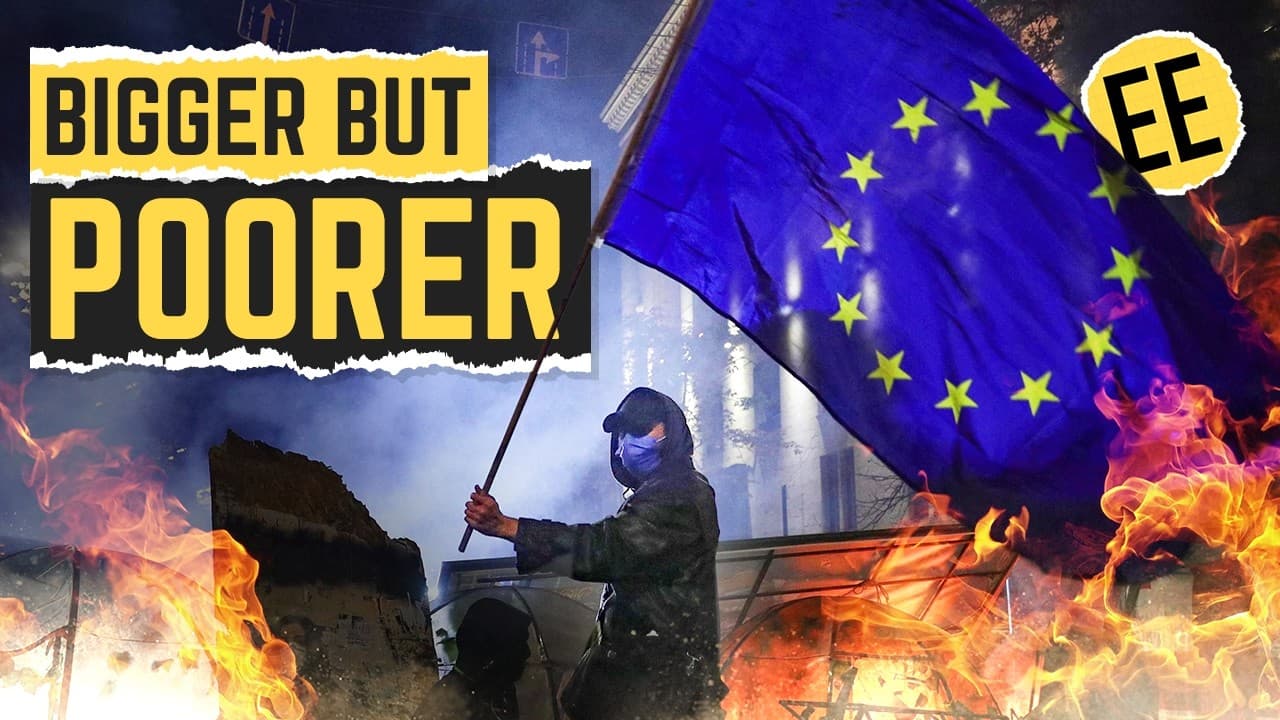
How Europe Sabotaged Its Own Economy
TL;DR
Europe faces economic stagnation due to self-inflicted issues.
Transcript
The European Union, as well as other closely integrated European countries, collectively make up the second largest economy in the world, only really falling behind the USA. Germany alone is now the third largest economy in the world after overtaking a stagnant Japan, and the continent is overwhelmingly made up of high-income advanced economies wit... Read More
Key Insights
- Europe's economy is the second largest globally but has been stagnant for nearly two decades, trailing the USA in raw output.
- Despite high living standards and competitive salaries, Europe faces challenges in innovation, immigration, industry, integration, and energy.
- Immigration is a complex issue, with narratives framing it as either a policy failure or a necessary economic booster.
- Europe's migration dynamics differ from other advanced economies, focusing more on social issues rather than purely economic ones.
- Energy use is closely tied to economic wealth, but Europe lacks large energy reserves and is investing heavily in renewables.
- Europe is losing highly educated individuals to the USA and UK, impacting its capacity for innovation and technical advancement.
- Strict EU regulations, while beneficial for consumers, may hinder new companies and innovation compared to the USA.
- Despite economic challenges, Europe's quality of life remains high, with less expensive living costs and better healthcare compared to the USA.
Install to Summarize YouTube Videos and Get Transcripts
Explore YouTube Video Summarizer or Get YouTube Transcript Extractor
Questions & Answers
Q: What are the main reasons for Europe's economic stagnation?
Europe's economic stagnation is primarily due to self-inflicted issues in key areas such as innovation, immigration, industry, integration, and energy. Despite having high living standards and competitive salaries, Europe has struggled to maintain growth, falling behind the USA in terms of raw economic output over the past two decades.
Q: How does immigration impact Europe's economy?
Immigration impacts Europe's economy in complex ways. While it can fill labor shortages and drive growth, the narratives around immigration are polarized. Europe's focus on social issues in migration policy, such as family reunification and asylum, may not stimulate the economy as much as other advanced economies that prioritize economic-driven immigration.
Q: What role does energy play in Europe's economic challenges?
Energy plays a significant role in Europe's economic challenges. The continent lacks large energy reserves and has relied on imports, notably from Russia, which have become complicated recently. Europe's investment in renewables is a long-term strategy, but in the short term, it faces high energy costs and competition in energy-intensive industries.
Q: Why is Europe losing highly educated individuals to the USA and UK?
Europe is losing highly educated individuals to the USA and UK due to better job opportunities in sectors like tech and finance. This brain drain is exacerbated by Europe's regulatory environment, which can be less conducive to innovation and entrepreneurship compared to the more dynamic ecosystems in the USA and UK.
Q: How do EU regulations affect innovation and new businesses?
EU regulations, while beneficial for consumers, can pose challenges for innovation and new businesses. The strict regulatory environment adds layers of oversight that can hinder startup growth and investment. This contrasts with the USA, where looser regulations have fostered a more robust environment for tech and innovation.
Q: What are the implications of Europe's investment in renewable energy?
Europe's investment in renewable energy is a long-term strategy aimed at reducing reliance on fossil fuel imports and addressing environmental concerns. However, in the short term, it represents a significant expense and does not immediately solve the continent's energy challenges, impacting competitiveness in energy-intensive industries.
Q: How does Europe's quality of life compare to the USA despite economic stagnation?
Despite economic stagnation, Europe's quality of life remains high compared to the USA. Living costs, especially healthcare, are generally lower in Europe, and the social safety nets provide a better standard of living for the average person. This contrasts with the USA, where economic growth has not always translated into widespread quality of life improvements.
Q: What are the potential consequences if Europe does not address its economic challenges?
If Europe does not address its economic challenges, it risks prolonged stagnation, exacerbating issues like brain drain, youth unemployment, and social mobility. These problems can spiral, making societal luxuries unaffordable and potentially leading to economic and social instability across the continent.
Summary & Key Takeaways
-
Europe, despite being a major economic power, has been experiencing stagnation, falling behind the USA in terms of economic output. Several self-inflicted issues, including challenges in innovation, immigration, and energy, contribute to this slowdown.
-
Immigration is a double-edged sword for Europe, offering economic benefits but also facing complex narratives and policies. The migration dynamics are more socially focused, impacting economic stimulation differently than in other advanced economies.
-
Europe's energy challenges, coupled with a brain drain of highly educated individuals to the USA, highlight the continent's struggles in maintaining competitiveness. While investing in renewables, Europe must address innovation and regulatory hurdles to reverse stagnation.
Read in Other Languages (beta)
Share This Summary 📚
Summarize YouTube Videos and Get Video Transcripts with 1-Click
Try YouTube Summary with ChatGPT & Claude or YouTube Transcript Generator
Explore More Summaries from Economics Explained 📚


Summarize YouTube Videos and Get Video Transcripts with 1-Click
Try YouTube Summary with ChatGPT & Claude or YouTube Transcript Generator