vlog #4 - Perceptual-motor adaptation
TL;DR
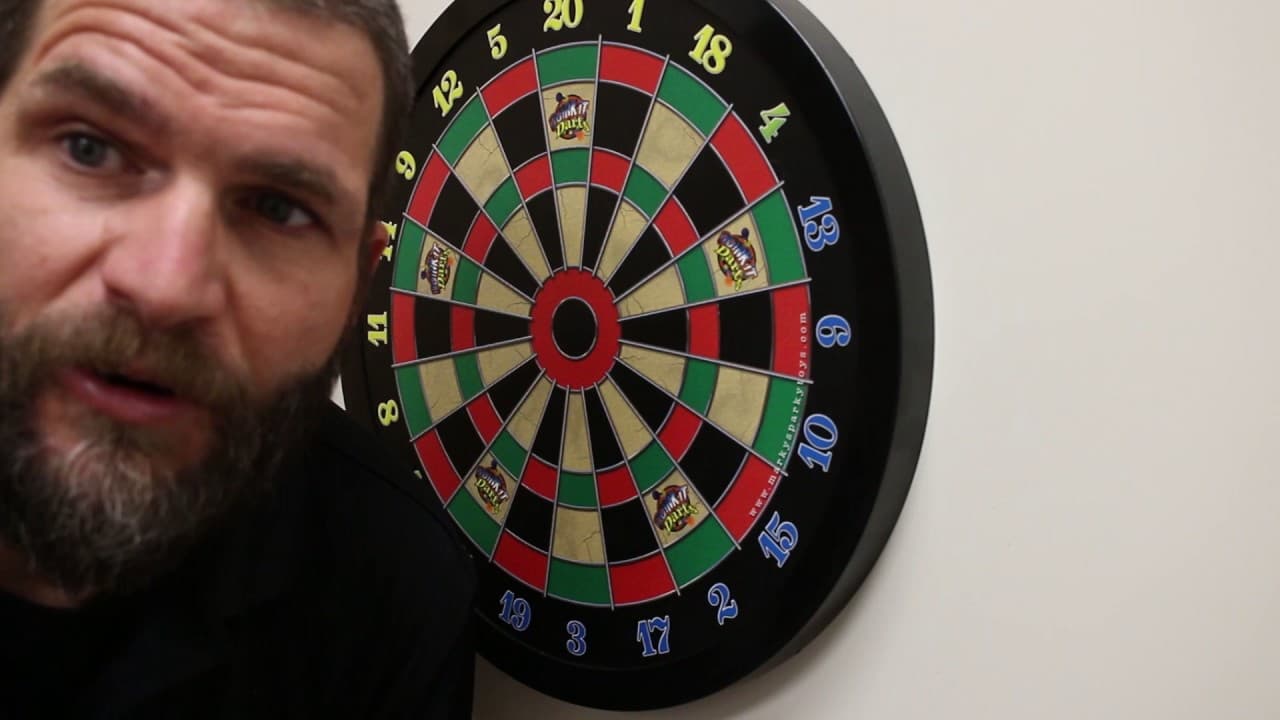
Exploring perceptual-motor adaptation using prism glasses and darts.
Transcript
hey everyone this is Rob Gray from Arizona State University and the perception and action podcast and this is Vlog number four today I want to talk about the process of perceptual motor adaptation and I also want to show you a really fun exercise you can use for a variety of different things you can use it for research studying the process of perce... Read More
Key Insights
- Perceptual-motor adaptation involves adjusting movements based on sensory feedback to correct performance errors caused by factors like fatigue or environmental changes.
- Prism glasses create spatial misalignments by bending light, offering a practical way to study perceptual-motor adaptation through simple exercises like dart throwing.
- The adaptation process involves recalibration rather than changing the action itself, allowing athletes to align their movements with altered perceptions.
- Misalignments can be spatial or temporal, constant or variable, with variable misalignments being particularly challenging to adapt to.
- Repeated exposure to misalignments leads to 'savings,' where individuals adapt more quickly to the same misalignment over time.
- The 'rental car effect' illustrates perceptual-motor adaptation in everyday life, as individuals recalibrate movements when switching between different vehicles.
- Research indicates brain regions like the cerebellum and prefrontal cortex are involved in perceptual-motor adaptation, with injuries affecting adaptation abilities.
- Analyzing kinematics reveals that adapted movements might differ slightly from original actions, showcasing the complexity of perceptual-motor adaptation.
Install to Summarize YouTube Videos and Get Transcripts
Explore YouTube Video Summarizer or Get YouTube Transcript Extractor
Questions & Answers
Q: What is perceptual-motor adaptation?
Perceptual-motor adaptation is the process where individuals adjust their movements based on sensory feedback to correct performance errors. This adjustment is necessary when there are misalignments between perception and action, which can be caused by factors like fatigue, weather, or changes in equipment. The adaptation involves recalibrating the relationship between perception and action rather than altering the action itself.
Q: How do prism glasses help in studying perceptual-motor adaptation?
Prism glasses help study perceptual-motor adaptation by creating spatial misalignments. They bend light, causing objects to appear displaced from their actual position. This misalignment forces individuals to recalibrate their movements, such as in dart throwing exercises, to hit targets accurately. The glasses provide a practical, inexpensive method for illustrating and analyzing the adaptation process in educational settings.
Q: What are the different types of misalignments discussed?
The content discusses two main types of misalignments: spatial and temporal. Spatial misalignments involve discrepancies in direction or distance, while temporal misalignments relate to timing errors. Misalignments can also be constant, where the error remains the same, or variable, where the error changes unpredictably. Variable misalignments, such as lag in online gaming, are particularly challenging to adapt to.
Q: What is the 'rental car effect' in perceptual-motor adaptation?
The 'rental car effect' is an example of perceptual-motor adaptation in everyday life. It occurs when individuals switch between different vehicles, like a rental car and their own car, requiring recalibration of movements. Initially, actions like braking might be too abrupt or delayed due to differences in vehicle controls. Over time, individuals adapt and adjust their movements for smooth operation, illustrating the adaptation process.
Q: What role do brain regions play in perceptual-motor adaptation?
Brain regions such as the cerebellum and prefrontal cortex are crucial in perceptual-motor adaptation. The cerebellum is involved in fine-tuning movements and adapting to errors, while the prefrontal cortex is associated with planning and decision-making. Research shows that injuries to these areas can impair an individual's ability to adapt to sensory-motor misalignments, highlighting their importance in the adaptation process.
Q: What is 'savings' in the context of perceptual-motor adaptation?
'Savings' refers to the phenomenon where individuals adapt more quickly to a previously encountered misalignment upon repeated exposure. After initially adapting to a misalignment, the brain stores the calibration, allowing for faster adjustment in future encounters. This concept is important in understanding how repeated practice can enhance an individual's ability to adapt to sensory-motor errors efficiently.
Q: How does perceptual-motor adaptation affect kinematics?
Perceptual-motor adaptation can alter kinematics, the study of movement. After adapting to misalignments, individuals might not perform the same movements as before. For example, in dart throwing, adapted throws might involve different motion patterns, such as a reach-out-and-around throw instead of a standard throw. This highlights the complexity of adaptation, where achieving the same result might involve different movement strategies.
Q: What practical applications do prism glasses have in education?
Prism glasses have practical applications in education by providing a hands-on method to study perceptual-motor adaptation. They are affordable and easy to use, making them suitable for demonstrations in classrooms from high school to university levels. Exercises like dart throwing with prism glasses allow students to experience and analyze adaptation processes, enhancing their understanding of sensory-motor coordination and error correction.
Summary & Key Takeaways
-
Perceptual-motor adaptation is the process of adjusting movements based on sensory feedback to correct performance errors. This can be caused by factors like fatigue, weather, or equipment changes, requiring athletes to recalibrate rather than change their actions.
-
Prism glasses are used to create spatial misalignments by bending light, providing a practical and inexpensive method to study perceptual-motor adaptation. Through exercises like dart throwing, individuals can experience and analyze their adaptation process.
-
Repeated exposure to misalignments leads to 'savings,' allowing faster adaptation over time. Brain areas such as the cerebellum and prefrontal cortex play roles in this process, and injuries can impair adaptation abilities.
Read in Other Languages (beta)
Share This Summary 📚
Summarize YouTube Videos and Get Video Transcripts with 1-Click
Try YouTube Summary with ChatGPT & Claude or YouTube Transcript Generator
Explore More Summaries from Rob Gray 📚
Summarize YouTube Videos and Get Video Transcripts with 1-Click
Try YouTube Summary with ChatGPT & Claude or YouTube Transcript Generator