Why Isn't Bangladesh a Leading Asian Economy?
TL;DR
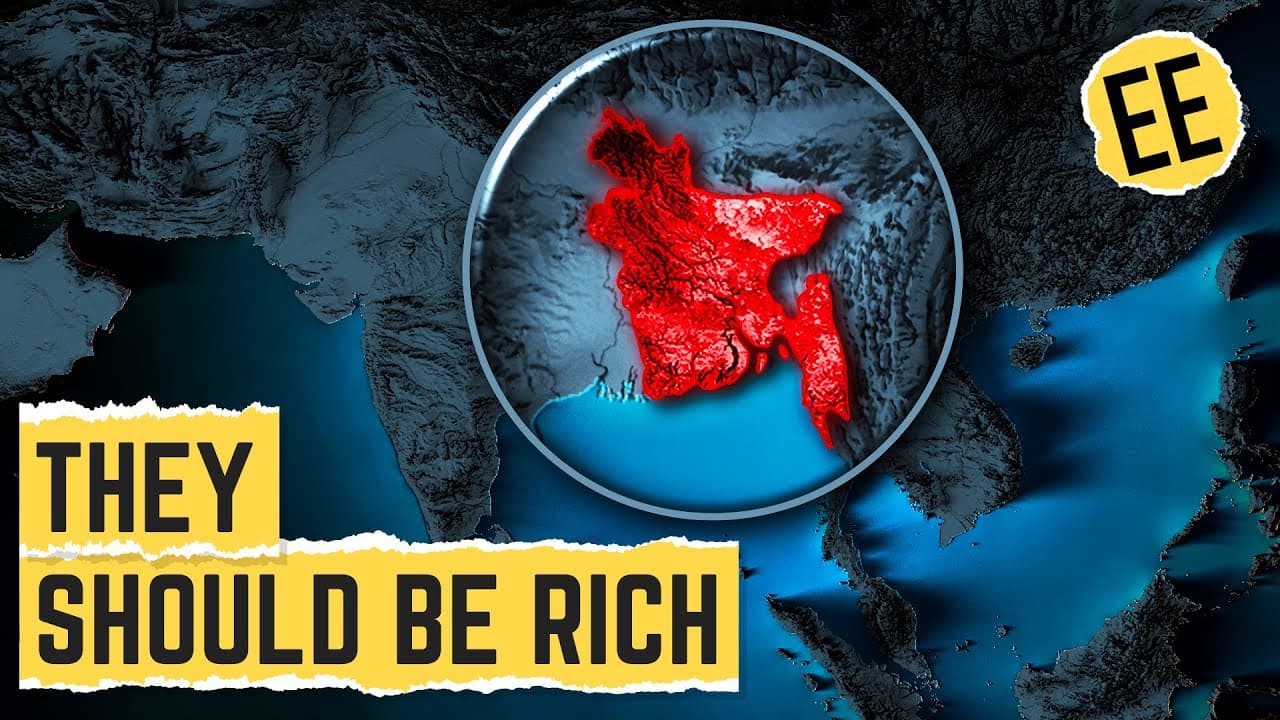
Bangladesh has significant potential due to its strategic location, low debt, and large workforce. However, historical challenges and a reliance on labor-intensive industries have hindered its economic growth. To transition from a least developed to a middle-income country, Bangladesh must diversify its exports, shift to capital-intensive industries, and improve data transparency.
Transcript
Bangladesh is a country that tragically should be much more successful than it is. It has a lot of the advantages that could have made it a rapidly developing economy. Global trade routes, a low debt to GDP ratio, access to oil, and a dense population. It even adopted the Westminster legal system, something that is loved by international investors ... Read More
Key Insights
- Bangladesh has access to global trade routes, a low debt-to-GDP ratio, and a dense population, making it a potential economic powerhouse.
- Despite these advantages, Bangladesh remains on the UN's least developed country list due to historical and structural challenges.
- The country primarily relies on textiles, a labor-intensive industry, which limits its economic advancement.
- For sustained growth, Bangladesh needs to transition to a capital-intensive economy and diversify its exports.
- Remittances play a crucial role in stabilizing Bangladesh's foreign exchange reserves and supporting GDP growth.
- Accurate and transparent economic data is essential for informed policymaking, a current challenge for Bangladesh.
- Inter-regional trade in South Asia is low, and Bangladesh could benefit from expanding trade with neighboring countries.
- Bangladesh's economic growth is strong but unsustainable without diversification and investment in new industries.
Install to Summarize YouTube Videos and Get Transcripts
Explore YouTube Video Summarizer or Get YouTube Transcript Extractor
Questions & Answers
Q: How can Bangladesh become a leading economy in Asia?
To become a leading economy in Asia, Bangladesh must diversify its exports beyond textiles and transition from a labor-intensive to a capital-intensive economy. This involves attracting foreign investment, improving infrastructure, and fostering innovation. Additionally, enhancing data transparency and expanding trade relations with neighboring countries can support sustainable economic growth.
Q: What are the main challenges facing Bangladesh's economy?
Bangladesh faces challenges such as reliance on labor-intensive industries, lack of export diversification, and inadequate data transparency. Historical factors and political instability have also hindered economic progress. To overcome these, Bangladesh needs to shift towards capital-intensive industries, improve data accuracy, and enhance trade partnerships in the region.
Q: Why is Bangladesh still considered a least developed country?
Despite its strategic advantages, Bangladesh remains a least developed country due to historical challenges, reliance on labor-intensive industries, and lack of export diversification. Political instability, inadequate infrastructure, and unreliable economic data further impede its growth. Transitioning to a middle-income country requires addressing these issues and fostering sustainable development.
Q: What role do remittances play in Bangladesh's economy?
Remittances are vital for Bangladesh's economy, providing a stable source of foreign currency that supports foreign exchange reserves and GDP growth. They help balance trade deficits and contribute to household income, boosting domestic consumption. As Bangladesh transitions economically, maintaining remittance flows is crucial for financial stability and development.
Q: How does Bangladesh's comparative advantage affect its economy?
Bangladesh's comparative advantage in textiles allows it to be a low-cost exporter, but this reliance limits economic advancement. To transition to a middle-income country, Bangladesh must develop new comparative advantages in capital-intensive industries, diversify exports, and attract foreign investment to foster sustainable economic growth.
Q: What is the importance of export diversification for Bangladesh?
Export diversification is crucial for Bangladesh to reduce dependency on textiles and mitigate economic vulnerabilities. By expanding into capital-intensive industries and developing new trade partnerships, Bangladesh can enhance economic resilience, attract foreign investment, and achieve sustainable growth, moving towards becoming a middle-income country.
Q: How can Bangladesh improve its economic data transparency?
Improving economic data transparency in Bangladesh requires coordination among reporting agencies to ensure accuracy and reliability. Establishing a credible statistical system, reducing political influence, and enhancing data collection methods are essential steps. Transparent data supports informed policymaking, attracting investment, and fostering economic development.
Q: What lessons can Bangladesh learn from Sri Lanka's economic situation?
Bangladesh can learn from Sri Lanka's economic challenges by avoiding over-reliance on a few export sectors and ensuring export diversification. It should also focus on maintaining a stable balance of payments, attracting foreign direct investment, and improving data transparency to prevent economic instability and achieve sustainable growth.
Summary & Key Takeaways
-
Bangladesh's strategic advantages include access to global trade routes and a low debt-to-GDP ratio, yet it remains a least developed country due to historical and structural issues. To transition to a middle-income country, it must diversify exports and shift from labor-intensive to capital-intensive industries.
-
The country's reliance on textiles limits its economic growth, and remittances are essential for stabilizing foreign exchange reserves. Accurate economic data is crucial for policymaking, but current data lacks transparency and reliability, hindering informed decisions.
-
Inter-regional trade in South Asia is minimal, and Bangladesh could benefit from expanding trade relationships with neighboring countries. Despite significant growth, Bangladesh's economy needs diversification and investment in new industries to ensure sustainable development.
Read in Other Languages (beta)
Share This Summary 📚
Summarize YouTube Videos and Get Video Transcripts with 1-Click
Try YouTube Summary with ChatGPT & Claude or YouTube Transcript Generator
Explore More Summaries from Economics Explained 📚





Summarize YouTube Videos and Get Video Transcripts with 1-Click
Try YouTube Summary with ChatGPT & Claude or YouTube Transcript Generator