How Does the Paranormal Relate to Religion?
TL;DR
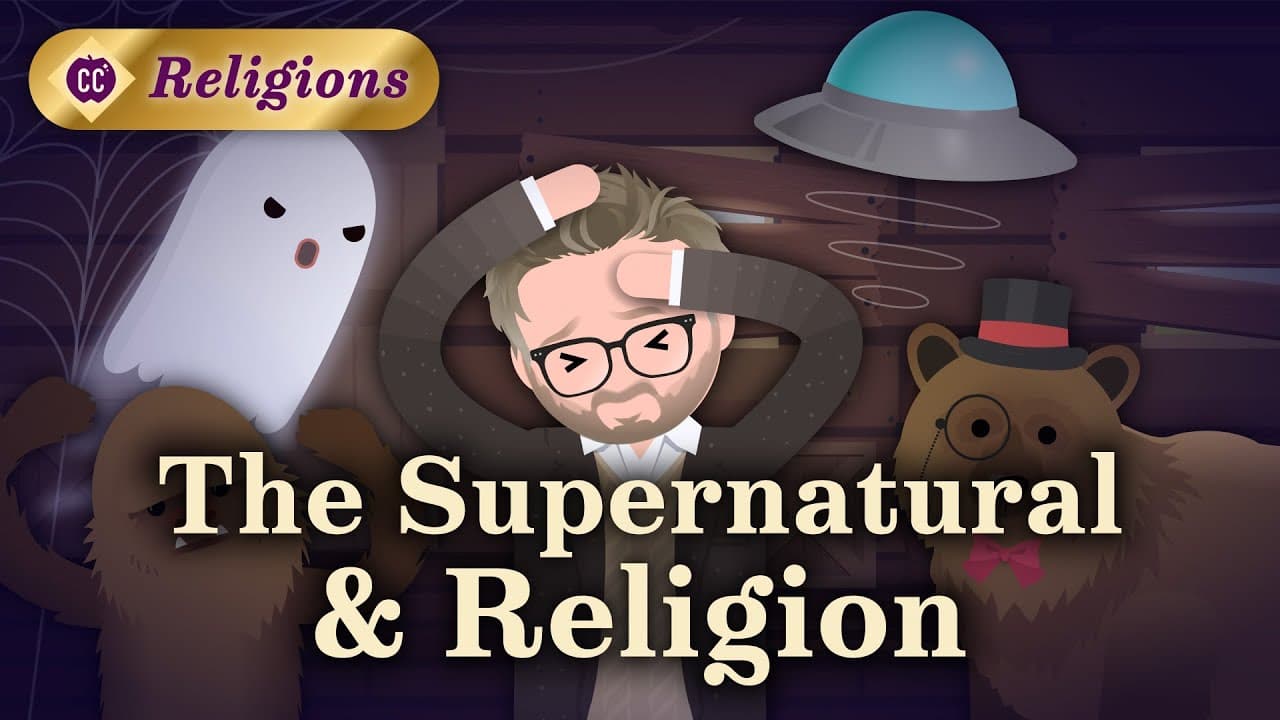
The paranormal, including beliefs in ghosts and UFOs, often intersects with religious beliefs, even among those who identify as 'spiritual but not religious.' Many people blend elements of spirituality and religion, creating unique personal belief systems. This flexibility reflects the evolving nature of spirituality, which can include diverse practices and beliefs beyond traditional religious frameworks.
Transcript
Hi, I’m John Green, and welcome to Crash Course Religions. Do you ever get the feeling something — or someone — is watching you? Maybe it’s a tingle on the back of your neck? A perfume in the air? Or a strange noise coming from your attic? Your email getting inexplicably hacked by a user called “FancyBear”? PUTIN?! It could be Vlad, of course, ... Read More
Key Insights
- Four in ten Americans believe the dead can communicate with the living, highlighting the intersection of paranormal beliefs and spirituality.
- The term 'paranormal' often refers to phenomena unexplained by science and not widely accepted by mainstream religions, such as UFOs.
- Angels are considered supernatural, with seventy percent of Americans believing in them, including those who do not identify with a religion.
- The concept of 'spiritual but not religious' suggests a separation between spirituality and organized religion, often for personal or political reasons.
- Many people create their own version of spirituality by extracting elements from various religious traditions, as seen in practices like yoga and meditation.
- Belief in ghosts is widespread across cultures and religions, serving as a means for humans to make sense of the world.
- Spirituality is eclectic and can evolve to include diverse beliefs, traditions, and technologies, such as meditation apps and TikTok trends.
- Religions and spiritual beliefs are fluid, allowing individuals to incorporate paranormal elements into their personal religious practices.
Install to Summarize YouTube Videos and Get Transcripts
Explore YouTube Video Summarizer or Get YouTube Transcript Extractor
Questions & Answers
Q: How do paranormal beliefs intersect with religious beliefs?
Paranormal beliefs, such as those in ghosts and UFOs, often intersect with religious beliefs as people blend elements from both to form personal belief systems. Many individuals identify as 'spiritual but not religious,' choosing to extract spiritual elements from various traditions while not adhering strictly to organized religion, allowing for a flexible and evolving spirituality.
Q: What is the difference between paranormal and supernatural phenomena?
Paranormal phenomena refer to events unexplained by science and not widely accepted by mainstream religions, such as UFOs and telepathy. Supernatural phenomena, like angels, are often associated with religious beliefs. The distinction lies in cultural acceptance and scientific explanation, with paranormal being less accepted by traditional religious institutions.
Q: Why do some people identify as 'spiritual but not religious'?
People may identify as 'spiritual but not religious' to separate their spirituality from organized religion, often due to personal or political reasons. They seek an individual, authentic connection to the divine outside the confines of religious institutions, which they may view as discouraging the connection they seek.
Q: How do people create their own versions of spirituality?
Individuals create their own versions of spirituality by extracting elements from various religious traditions and integrating them with personal beliefs and practices. This eclectic approach allows them to form unique spiritual systems that resonate with their personal values, often blending traditional religious practices with modern spiritual trends like yoga and meditation.
Q: What role do ghosts play in religious and secular traditions?
Ghosts are a part of both religious and secular traditions, serving as a way for humans to make sense of the world. They appear in religious texts and folklore across cultures, such as the Hebrew Bible and Hindu Vedic texts, and are also popular in secular settings, like campfire stories, reflecting the universal human fascination with the afterlife and the unknown.
Q: How has spirituality evolved in recent years?
Spirituality has evolved to become more eclectic, incorporating diverse beliefs, traditions, and technologies. This includes the rise of meditation apps, TikTok trends like 'witchtok,' and the blending of spiritual practices with modern technology. This evolution reflects the dynamic relationship between spirituality, religion, and culture, allowing individuals to personalize their spiritual experiences.
Q: Can paranormal beliefs be part of religious practices?
Yes, paranormal beliefs can be integrated into religious practices as people often blend elements from different belief systems. For example, a Christian might practice yoga or use crystals, which are not traditionally part of Christianity. This reflects the fluidity of religious practices, where individuals incorporate diverse beliefs to form their own lived religion.
Q: How do religions and spiritual beliefs adapt to new cultural contexts?
Religions and spiritual beliefs adapt to new cultural contexts by borrowing and changing when encountering different cultures. This adaptability allows for the integration of new practices and ideas, such as the secularization of yoga in Western cultures, reflecting the dynamic and evolving nature of spirituality and religion in response to cultural influences.
Summary & Key Takeaways
-
The video explores how paranormal beliefs, such as ghosts and UFOs, intersect with religious and spiritual beliefs. Many people identify as 'spiritual but not religious,' choosing to create personal belief systems by blending elements from various traditions. This reflects the evolving nature of spirituality, which can include diverse practices beyond traditional religious frameworks.
-
Paranormal phenomena like UFOs and ghosts often fall outside mainstream religious beliefs but are still widely believed in. The concept of being 'spiritual but not religious' allows individuals to separate spirituality from organized religion, often for personal or political reasons, and create unique spiritual practices.
-
The video highlights how spirituality is eclectic and constantly evolving, incorporating diverse beliefs, traditions, and technologies. This fluidity allows people to personalize their spiritual practices, integrating elements from different religions and paranormal beliefs, illustrating the dynamic relationship between spirituality, religion, and culture.
Read in Other Languages (beta)
Share This Summary 📚
Summarize YouTube Videos and Get Video Transcripts with 1-Click
Try YouTube Summary with ChatGPT & Claude or YouTube Transcript Generator
Explore More Summaries from CrashCourse 📚



Summarize YouTube Videos and Get Video Transcripts with 1-Click
Try YouTube Summary with ChatGPT & Claude or YouTube Transcript Generator