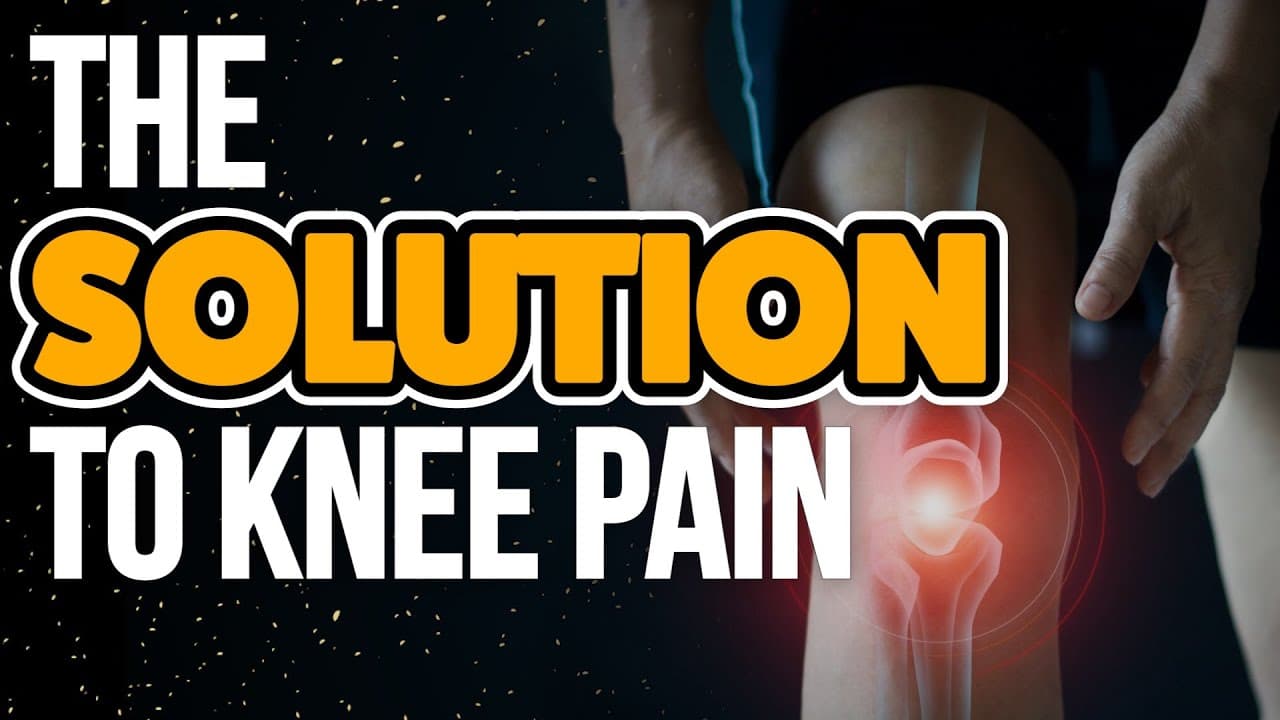
Why Does Prime Pro Not Have A Knee Joint Section?
TL;DR
Knee pain often stems from ankle or hip issues.
Transcript
our next caller is gabby from california gabby what's happening how can we help you hi um i have been having an issue with my knee i got maps prime and prime pro um but it i mean i work long hours i'm a bartender so i'm standing a lot um but i've tried you know like 90 90 i've tried stretching it seems to hurt a little bit more when i'm trying to c... Read More
Key Insights
- Knee pain is often caused by issues in the ankle or hip, rather than the knee itself, due to their greater range of motion.
- The knee joint primarily flexes and extends, lacking the rotational movement present in the ankle and hip, which can lead to instability if those areas are weak.
- Flexing the ankle by bringing the toes towards the shin can help stabilize the knee during exercises like the 90/90 stretch.
- Foam rolling and using yoga blocks can assist in reducing pain during exercises by improving mobility and reducing tightness.
- Improving ankle mobility can significantly alleviate knee pain, as poor ankle movement can transfer stress to the knee.
- Unilateral exercises, such as lunges and single-leg squats, are recommended to reduce knee pain and inflammation.
- Running can exacerbate knee issues if not performed with proper technique and consideration of existing mobility limitations.
- Strengthening the supporting muscles around the knee, hip, and ankle is crucial for preventing and managing knee pain.
Install to Summarize YouTube Videos and Get Transcripts
Explore YouTube Video Summarizer or Get YouTube Transcript Extractor
Questions & Answers
Q: Why does knee pain often stem from the ankle or hip?
Knee pain frequently originates from the ankle or hip because these joints have a greater range of motion compared to the knee. The knee primarily flexes and extends, lacking the rotational capabilities of the ankle and hip. When these areas are weak or inflexible, the knee compensates, leading to pain and potential injury.
Q: How can flexing the ankle help with knee stability?
Flexing the ankle by bringing the toes towards the shin can help stabilize the knee during exercises. This action activates muscles that support the knee, reducing the reliance on the knee's ligaments for stability, particularly during movements that involve hip rotation, such as the 90/90 stretch.
Q: What role does foam rolling play in managing knee pain?
Foam rolling helps manage knee pain by releasing tension and improving flexibility in the muscles surrounding the knee, hip, and ankle. This can enhance mobility, reduce tightness, and allow for better alignment during exercises, thereby decreasing the stress on the knee joint and alleviating pain.
Q: Why are unilateral exercises recommended for knee pain?
Unilateral exercises, such as lunges and single-leg squats, are recommended for knee pain because they allow for targeted strengthening and stabilization of each leg individually. This approach helps improve muscle imbalances and reduces the load on the knee, promoting recovery and reducing inflammation.
Q: How does ankle mobility affect knee pain?
Ankle mobility significantly affects knee pain because restricted ankle movement can transfer stress to the knee. Improving ankle flexibility allows for better movement patterns and reduces the compensatory actions that lead to knee pain. Exercises targeting ankle mobility can therefore alleviate knee discomfort.
Q: Why can running exacerbate knee issues?
Running can exacerbate knee issues because it often involves repetitive motion and impact, which can stress the knee if proper technique and mobility are lacking. Without addressing underlying mobility limitations in the ankle or hip, running can worsen existing knee pain or lead to new injuries.
Q: What is the importance of strengthening supporting muscles around the knee?
Strengthening the supporting muscles around the knee is crucial for preventing and managing knee pain. Strong muscles in the hip, thigh, and calf can provide stability and reduce the load on the knee joint, minimizing the risk of injury and promoting better movement patterns during physical activities.
Q: What modifications can help reduce pain during the 90/90 stretch?
Modifications to reduce pain during the 90/90 stretch include flexing the ankle to stabilize the knee, using foam rollers to release muscle tension, and incorporating yoga blocks to adjust the intensity of the stretch. These adjustments can enhance comfort and effectiveness, allowing for improved hip and knee mobility.
Summary & Key Takeaways
-
Knee pain often originates from the ankle or hip due to their extensive range of motion, which the knee lacks. Addressing these areas can alleviate pain.
-
Exercises like the 90/90 stretch can be modified to reduce knee pain by flexing the ankle and using foam rollers or yoga blocks for support.
-
Unilateral exercises are recommended to manage knee pain, and improving ankle mobility can provide significant relief, reducing stress on the knee.
Read in Other Languages (beta)
Share This Summary 📚
Summarize YouTube Videos and Get Video Transcripts with 1-Click
Try YouTube Summary with ChatGPT & Claude or YouTube Transcript Generator
Explore More Summaries from Mind Pump Show 📚




Summarize YouTube Videos and Get Video Transcripts with 1-Click
Try YouTube Summary with ChatGPT & Claude or YouTube Transcript Generator