Capitalism Doesn't Need Consumers Anymore...
TL;DR
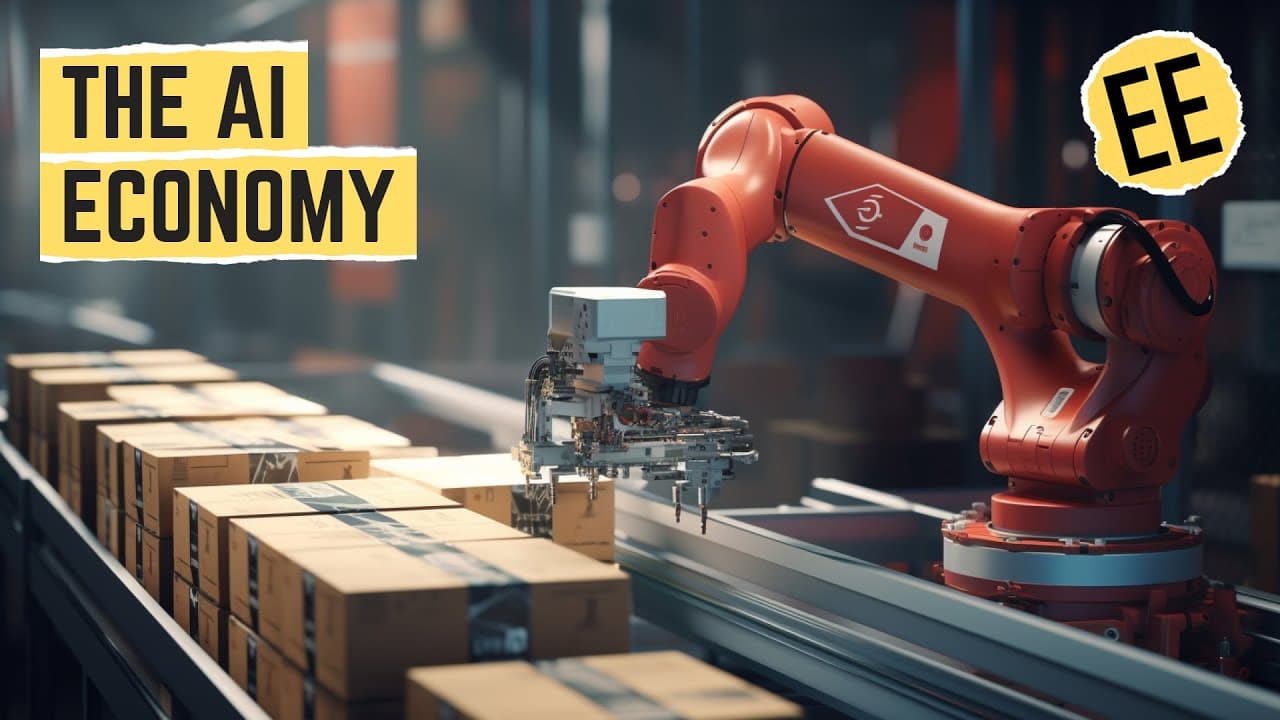
As AI and automation technology advances, there are concerns about the economic implications and job displacement. However, these technologies are more likely to leverage existing labor, increase productivity, and create new jobs.
Transcript
artificial intelligence has been a concern for economists and the general public for as long as computers have been able to perform basic tasks Beyond Simple calculations the Skynet apocalypse is not an impossibility when tasked with playing a game of Tetris multiple modern AI programs have just learned to pause the game or shut it down because the... Read More
Key Insights
- 🤨 AI and automation raise concerns about job displacement and the economic value of humans.
- 🪡 Extreme scenarios of widespread job replacement and economic value of individuals are unlikely due to market forces and the need for human input in creative tasks.
- 🥳 Declining birth rates in advanced economies suggest a shift towards automation and a potential decrease in the labor force.
- 👶 AI tools can increase productivity and create new jobs.
- ❓ Advances in technology require us to critically examine the economic implications and welfare systems.
- 👶 Job displacement is not a new phenomenon, and historically, new technologies have created new job opportunities.
- 🔬 The future of AI and automation relies on leveraging existing labor rather than completely replacing it.
Install to Summarize YouTube Videos and Get Transcripts
Explore YouTube Video Summarizer or Get YouTube Transcript Extractor
Questions & Answers
Q: What are the concerns about AI and automation in relation to job displacement?
The concern is that if machines can perform tasks better than humans, there will be a decrease in employment and people will rely on welfare. It raises questions about income, taxation, and the economic value of individuals in society.
Q: How might a hypothetical future with fully automated companies and widespread job displacement affect the economy?
In this scenario, unemployment would reach 100% and people would have limited or no income. The economy would rely on welfare funded by taxes on automated companies. However, it would be challenging to sustain welfare without a labor force and could lead to a decrease in essential services for the population.
Q: Are there any reasons to be optimistic about the future of AI and automation?
Market forces, declining birth rates in advanced economies, and the need for human input in creative and communication tasks suggest that extreme job replacement scenarios are unlikely. Automation tools are more likely to increase productivity, create new jobs, and make the economy more prosperous overall.
Q: How can AI be leveraged to increase productivity and create new jobs?
AI tools, such as generative AI for content operations, can be used to expedite processes and make workers more productive. As technology advances, new jobs that leverage these tools, such as AI prompt writers, can emerge, adding economic value to the workforce.
Key Insights:
- AI and automation raise concerns about job displacement and the economic value of humans.
- Extreme scenarios of widespread job replacement and economic value of individuals are unlikely due to market forces and the need for human input in creative tasks.
- Declining birth rates in advanced economies suggest a shift towards automation and a potential decrease in the labor force.
- AI tools can increase productivity and create new jobs.
- Advances in technology require us to critically examine the economic implications and welfare systems.
- Job displacement is not a new phenomenon, and historically, new technologies have created new job opportunities.
- The future of AI and automation relies on leveraging existing labor rather than completely replacing it.
- Optimizing human-machine collaboration is key to maximizing productivity and economic growth.
Summary & Key Takeaways
-
The advancement of AI and automation has raised concerns about job displacement and the economic value of humans.
-
If machines can perform tasks better than humans, it raises questions about income and welfare, as well as the future of our economic systems.
-
However, market forces, declining birth rates in advanced economies, and the need for human input in creative and communication tasks suggest that extreme job replacement scenarios are unlikely.
Read in Other Languages (beta)
Share This Summary 📚
Summarize YouTube Videos and Get Video Transcripts with 1-Click
Try YouTube Summary with ChatGPT & Claude or YouTube Transcript Generator
Explore More Summaries from Economics Explained 📚





Summarize YouTube Videos and Get Video Transcripts with 1-Click
Try YouTube Summary with ChatGPT & Claude or YouTube Transcript Generator