The (mostly) true story of “ghost photography"
TL;DR
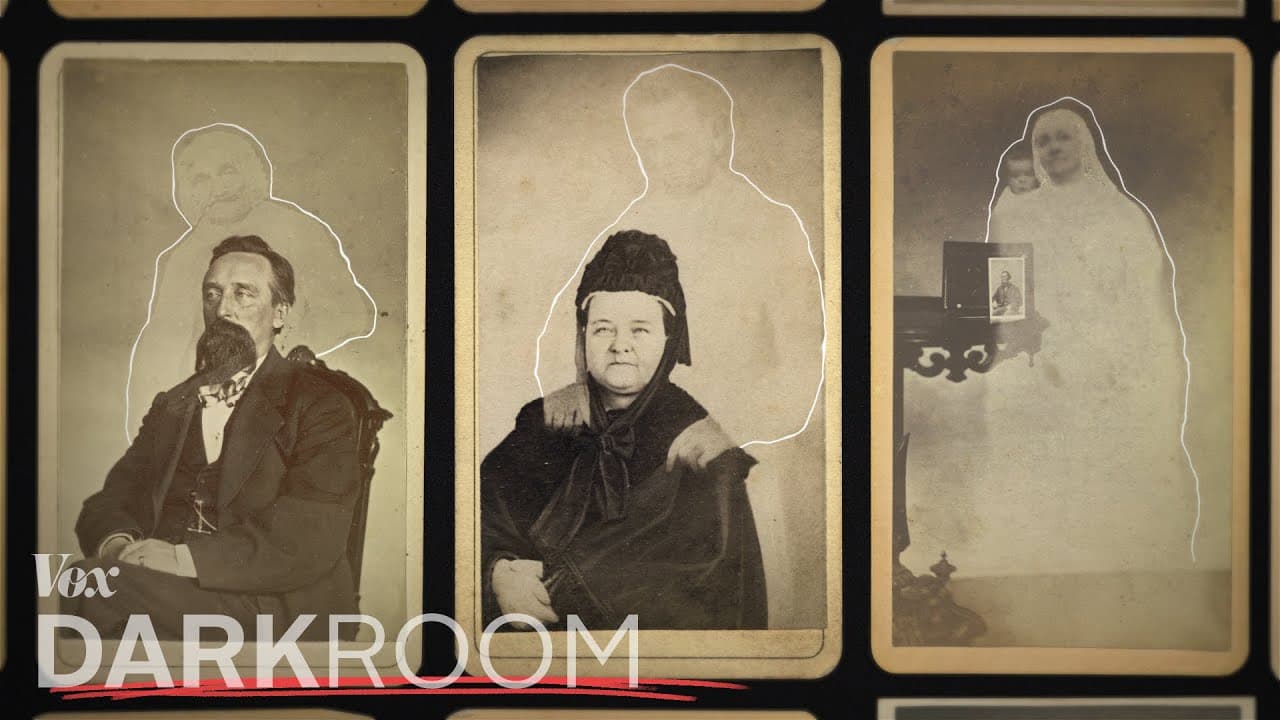
William Mumler's spirit photography baffled skeptics and fascinated believers.
Transcript
Bridgett and I recently took a trip to Rochester, New York. To recreate a photo from 1872. Alright. Turn just a little bit – that’s it, just like that. Only your eyes, look here. Okay. It’s very strange where she’s looking. This is Mark Osterman. I was the process historian at the George Eastman Museum for 21 years. My specialty is understandin... Read More
Key Insights
- William Mumler claimed to capture spirits in photographs, attracting both believers and skeptics in the late 1800s.
- His wife, Hannah, was a professional photographer and spiritualist medium, possibly the true mastermind behind the spirit photography.
- Despite numerous investigations, no one could definitively prove Mumler's method, leading to his acquittal in a sensational trial.
- The trial featured notable figures like P.T. Barnum, highlighting the widespread skepticism and intrigue surrounding spirit photography.
- Mumler's spirit photography business thrived post-trial, with prominent figures like Mary Todd Lincoln seeking his services for comfort.
- Mark Osterman demonstrated a plausible method Mumler might have used, involving sleight of hand with dual negatives.
- Spiritualism, the belief in communicating with the dead, gained traction during the Civil War era, enhancing the appeal of spirit photography.
- Hannah Mumler's role as a potential pioneer in spirit photography is gaining recognition in recent research studies.
Install to Summarize YouTube Videos and Get Transcripts
Explore YouTube Video Summarizer or Get YouTube Transcript Extractor
Questions & Answers
Q: What was William Mumler's claim to fame?
William Mumler claimed to capture the spirits of deceased loved ones in photographs, a phenomenon that intrigued both believers and skeptics during the late 1800s. His work attracted significant attention due to the era's fascination with spiritualism and the possibility of communicating with the dead through mediums.
Q: Who was Hannah Mumler and what was her role?
Hannah Mumler, also known as Helen F. Stuart, was William Mumler's wife, a professional photographer, and a spiritualist medium. Recent research suggests she may have been the actual mastermind behind the spirit photography, teaching William the techniques and possibly being the true inventor of the process.
Q: Why was Mumler's trial significant?
Mumler's trial was significant due to its sensational nature and the involvement of high-profile figures like P.T. Barnum. Despite numerous experts attempting to debunk his methods, no one could conclusively prove how Mumler created his spirit photographs, leading to his acquittal and further fueling public intrigue and debate over the legitimacy of his work.
Q: How did Mark Osterman demonstrate a possible method for spirit photography?
Mark Osterman demonstrated a method involving the use of two negatives printed simultaneously with sleight of hand. This technique could have allowed Mumler to create the illusion of spirits appearing in photographs, aligning with the era's technological capabilities and the challenges of detecting such trickery in front of witnesses.
Q: What role did spiritualism play in the popularity of spirit photography?
Spiritualism, a belief system that emerged during the mid-1800s, posited that communication with the dead was possible through mediums. This belief gained traction during the American Civil War, as many sought comfort in the possibility of connecting with deceased loved ones, thus enhancing the appeal and market for spirit photography.
Q: What was the public's reaction to Mumler's spirit photography?
The public's reaction to Mumler's spirit photography was mixed, with many believers finding comfort and evidence of an afterlife in his work, while skeptics and professionals in the photographic community sought to expose it as fraud. Despite the skepticism, the inability to definitively debunk his methods allowed his business to thrive.
Q: How did Mumler's business evolve after his trial?
After his trial, Mumler's spirit photography business expanded, with him taking portraits of prominent figures and offering mail-in services for those unable to visit his studio. The trial's publicity inadvertently boosted his business, allowing him to continue producing spirit photographs that captivated the imaginations of many.
Q: What recent research has emerged about Hannah Mumler's contribution?
Recent research, including work by Felicity Tsering Chödron Hamer, has highlighted Hannah Mumler's significant role in the development of spirit photography. This research suggests that she may have been the true inventor of the process, overshadowed by her husband's public persona, and is now being recognized as a pioneering figure in the field.
Summary & Key Takeaways
-
William Mumler's spirit photography captivated both believers and skeptics in the late 1800s, with his wife Hannah potentially being the true inventor. Despite numerous investigations, no one could prove Mumler's method, leading to his acquittal in a sensational trial featuring figures like P.T. Barnum.
-
The trial, widely covered by the media, couldn't conclusively identify Mumler's technique, allowing his business to flourish post-trial. Notable figures like Mary Todd Lincoln sought his spirit photography for comfort, believing it provided evidence of an afterlife.
-
Mark Osterman demonstrated a potential method involving dual negatives and sleight of hand, offering a plausible explanation for Mumler's technique. Recent research highlights Hannah Mumler's significant role, suggesting she was the true pioneer of spirit photography.
Read in Other Languages (beta)
Share This Summary 📚
Summarize YouTube Videos and Get Video Transcripts with 1-Click
Try YouTube Summary with ChatGPT & Claude or YouTube Transcript Generator
Explore More Summaries from Vox 📚


Summarize YouTube Videos and Get Video Transcripts with 1-Click
Try YouTube Summary with ChatGPT & Claude or YouTube Transcript Generator