Why a cat always lands on its feet
TL;DR
A camera solved why cats always land on their feet.
Transcript
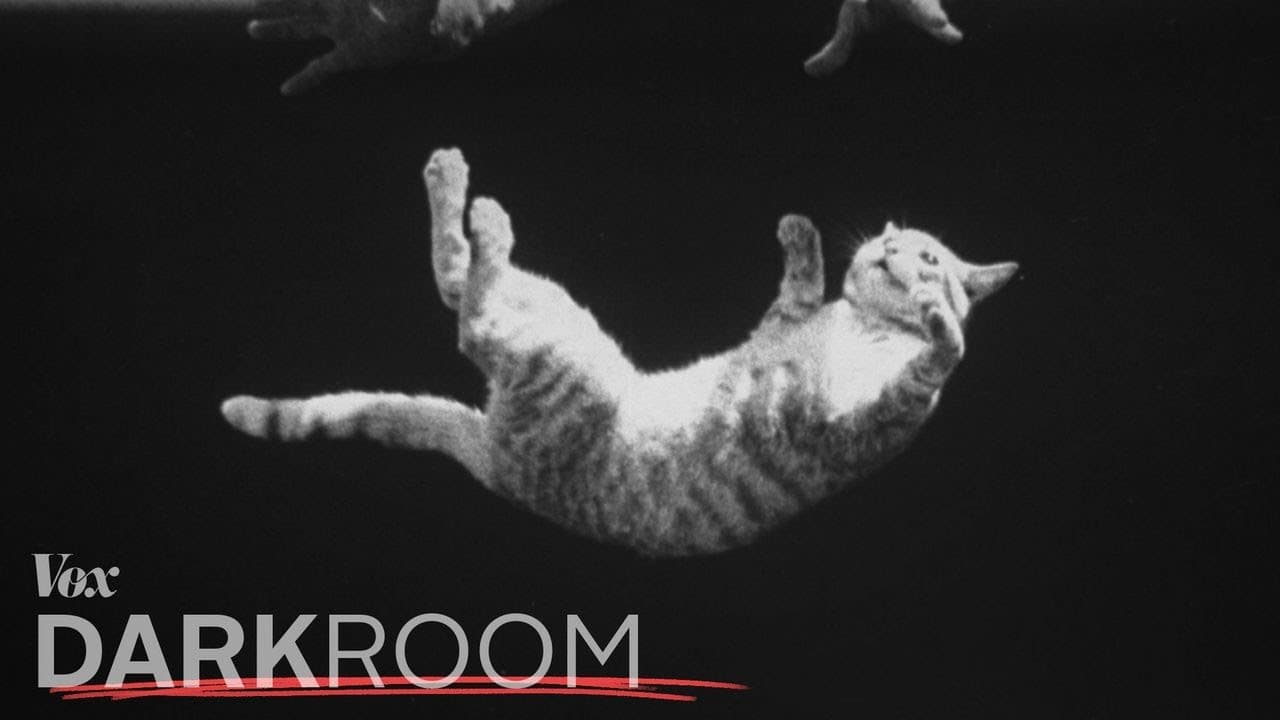
This is the first live cat recorded on film, and it’s being dropped to solve a physics problem: Why do cats always land on their feet? It’s a question that was driving 19th-century scientists nuts. Until one of them used an unexpected tool to solve the mystery: a camera. Étienne-Jules Marey was an obsessive scientist and inventor who analyzed how t... Read More
Key Insights
- Étienne-Jules Marey, a 19th-century scientist, used photography to study motion, focusing on how cats land on their feet.
- Marey's technique, chronophotography, involved capturing multiple stages of movement onto a single glass plate to analyze motion.
- The introduction of celluloid film allowed Marey to upgrade his technique, leading to the development of early cinematography.
- Marey's film showed that cats arch their backs and divide their bodies to rotate in the air, adhering to Newton's laws.
- The cat's rotation involves alternating movements of its front and back legs, similar to a figure skater's technique.
- Marey's findings were published in Nature in 1894, providing a scientific explanation for the falling cat problem.
- Photography played a crucial role in scientific discovery by capturing and preserving motion that the human eye cannot see.
- Marey's work parallels Eadweard Muybridge's motion photography, which proved that horses lift all four feet off the ground during a gallop.
Install to Summarize YouTube Videos and Get Transcripts
Explore YouTube Video Summarizer or Get YouTube Transcript Extractor
Questions & Answers
Q: How did Marey contribute to the study of motion?
Étienne-Jules Marey contributed to the study of motion by developing chronophotography, a technique that captured multiple stages of movement onto a single glass plate. This allowed for detailed analysis of motion, which was previously impossible to observe with the naked eye. His work laid the groundwork for the development of early cinematography.
Q: What problem did Marey solve using photography?
Marey solved the problem of understanding how cats manage to land on their feet when dropped. By using photography to capture the stages of a cat's fall, he demonstrated that cats arch their backs and use the inertia of their body weight to rotate midair, adhering to the law of conservation of angular momentum.
Q: What is chronophotography?
Chronophotography is a photographic technique developed by Étienne-Jules Marey that involves capturing multiple stages of movement onto a single glass plate. This method allowed scientists to analyze motion in detail by recording sequential images of a moving subject, revealing motion patterns that are not visible to the naked eye.
Q: How do cats manage to rotate in midair?
Cats rotate in midair by arching their backs, which divides their bodies into two parts that can move independently. By pulling in their front legs and extending their back legs, and then reversing the action, they create rotational forces that allow them to right themselves while adhering to Newton's laws of motion.
Q: What role did celluloid film play in Marey's work?
The introduction of celluloid film allowed Marey to upgrade his chronophotography technique by replacing the single glass plate with a roll of film that moved between exposures. This advancement enabled the continuous capture of motion, forming the basis of early cinematography and enhancing the study of dynamic subjects.
Q: Why was Marey's work significant in the context of scientific discovery?
Marey's work was significant because it demonstrated the power of photography in scientific discovery by capturing and preserving motion that the human eye cannot see. His research on cats' landing mechanics provided a scientific explanation for a long-standing physics problem and showcased the potential of photography in revealing unseen aspects of the natural world.
Q: How does Marey's work relate to Eadweard Muybridge's photography?
Marey's work is related to Eadweard Muybridge's photography as both used motion photography to reveal aspects of movement not visible to the naked eye. Muybridge famously proved that horses lift all four feet off the ground during a gallop, while Marey used similar techniques to study how cats land on their feet, highlighting photography's role in scientific exploration.
Q: What did Marey prove about the falling cat problem?
Marey proved that cats can rotate in midair without violating the law of conservation of angular momentum. By using chronophotography, he showed that cats arch their backs and use the inertia of their body parts to create opposing rotational forces, allowing them to right themselves without external support or violating Newtonian physics.
Summary & Key Takeaways
-
Étienne-Jules Marey used photography to study motion in the 19th century, focusing on the physics of cats landing on their feet. By capturing multiple stages of movement onto a single glass plate, he developed a technique called chronophotography, which laid the foundation for early cinematography.
-
Marey's research demonstrated that cats use their body inertia to rotate in the air without violating Newton's laws. By arching their backs and moving their legs independently, cats can right themselves midair. This discovery was published in Nature in 1894, offering a scientific explanation for the phenomenon.
-
Photography's role in scientific discovery is exemplified by Marey's work, which captured motion beyond human perception. His findings on cats' landing mechanics paralleled Eadweard Muybridge's work on horses' galloping, showcasing the power of photography in revealing unseen aspects of motion.
Read in Other Languages (beta)
Share This Summary 📚
Summarize YouTube Videos and Get Video Transcripts with 1-Click
Try YouTube Summary with ChatGPT & Claude or YouTube Transcript Generator
Explore More Summaries from Vox 📚


Summarize YouTube Videos and Get Video Transcripts with 1-Click
Try YouTube Summary with ChatGPT & Claude or YouTube Transcript Generator