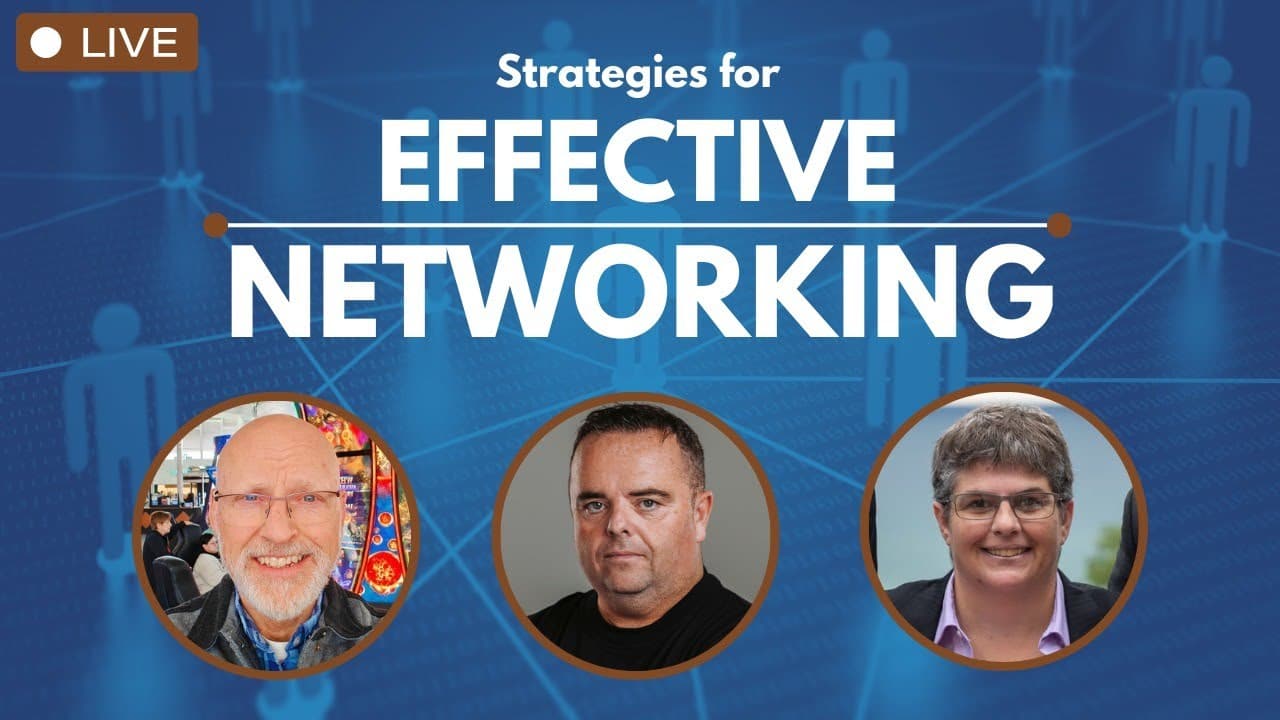
Strategies for Effective Networking at Conferences
TL;DR
Discusses effective networking strategies at conferences with personal anecdotes.
Transcript
super pissed good afternoon everyone welcome to today's session where we're going to be talking about strategies for Effective networking when you're at conferences which we so but before that do check out channel sponsor Mr Randy rode the logo the logo doesn't automatically pop up but I've now put it up right there right above ry's own head and th... Read More
Key Insights
- Networking is a crucial aspect of attending conferences, often providing the best opportunities for learning and collaboration.
- Smaller conferences, like SEO Spring Training, are more manageable for networking compared to massive events with thousands of attendees.
- Researching and targeting specific individuals to meet at conferences can enhance the networking experience.
- Social media can be a powerful tool for pre-conference networking, allowing attendees to engage with potential contacts beforehand.
- Organizing side events or masterminds can be an effective strategy at large conferences to connect with a targeted group of individuals.
- Introverts can manage conference networking by setting specific goals for who to meet and what to learn, and taking breaks as needed.
- Building a genuine reputation and giving more than taking can lead to successful networking relationships.
- Following up with contacts post-conference is important for maintaining and strengthening those connections.
Install to Summarize YouTube Videos and Get Transcripts
Explore YouTube Video Summarizer or Get YouTube Transcript Extractor
Questions & Answers
Q: How can introverts effectively network at conferences?
Introverts can effectively network by setting clear objectives on who they want to meet and what they want to learn. They should plan ahead and make a list of people to approach. Taking breaks to recharge is also important. It's crucial to focus on quality interactions rather than quantity and to follow up with contacts post-conference.
Q: What strategies are suggested for networking at large conferences?
At large conferences, organizing side events or masterminds can help connect with a targeted group. Using social media to engage with potential contacts before the event can also be beneficial. Attendees should research speakers and participants to identify who they want to meet and plan their approach accordingly.
Q: How can social media be used for networking before a conference?
Social media can be used to engage with potential contacts before a conference by following them, commenting on their posts, and starting conversations. This pre-engagement can make it easier to approach them during the event. Platforms like Twitter and Facebook are particularly effective for this type of networking.
Q: Why is it important to follow up with contacts after a conference?
Following up with contacts after a conference is important to maintain and strengthen the connections made. A simple message expressing appreciation for the meeting and reiterating any discussed points can solidify the relationship. This follow-up helps keep the connection alive and opens the door for future collaborations.
Q: What are the benefits of attending smaller conferences?
Smaller conferences offer a more manageable environment for networking, allowing attendees to have more personalized interactions. The intimate setting makes it easier to connect with speakers and fellow participants. Attendees can also have more meaningful discussions without the overwhelming nature of larger events.
Q: How can someone prepare for networking at a conference?
Preparation for networking at a conference involves researching attendees and speakers to identify who to meet. Setting specific goals for what to learn and who to connect with can help focus efforts. It's also beneficial to plan how to introduce oneself and what key points to discuss with potential contacts.
Q: What role does giving play in successful networking?
In successful networking, giving more than taking is crucial. Offering help, sharing insights, and being genuinely interested in others fosters goodwill and builds a strong reputation. This approach encourages reciprocity and can lead to more meaningful and beneficial relationships.
Q: How can someone use a conference to expand their professional network?
To expand their professional network at a conference, attendees should engage in both formal and informal interactions, attend side events, and participate in discussions. They should also leverage social media for pre- and post-event engagement and be proactive in reaching out to new contacts with follow-up communications.
Summary & Key Takeaways
-
Networking at conferences is essential for gaining valuable insights and forming connections. Smaller events are often better for personalized networking than larger ones with thousands of attendees. Attendees should research and plan who they want to meet to maximize their experience.
-
Social media is a useful tool for networking before a conference, allowing participants to engage with potential contacts. Organizing side events can also help in connecting with a specific audience, especially in larger conferences.
-
Introverts can successfully network by setting clear objectives and taking breaks when needed. Maintaining a genuine reputation and focusing on giving rather than taking can lead to fruitful networking relationships. Following up after the event is crucial for sustaining connections.
Read in Other Languages (beta)
Share This Summary 📚
Summarize YouTube Videos and Get Video Transcripts with 1-Click
Try YouTube Summary with ChatGPT & Claude or YouTube Transcript Generator
Explore More Summaries from Craig Campbell SEO 📚

Summarize YouTube Videos and Get Video Transcripts with 1-Click
Try YouTube Summary with ChatGPT & Claude or YouTube Transcript Generator