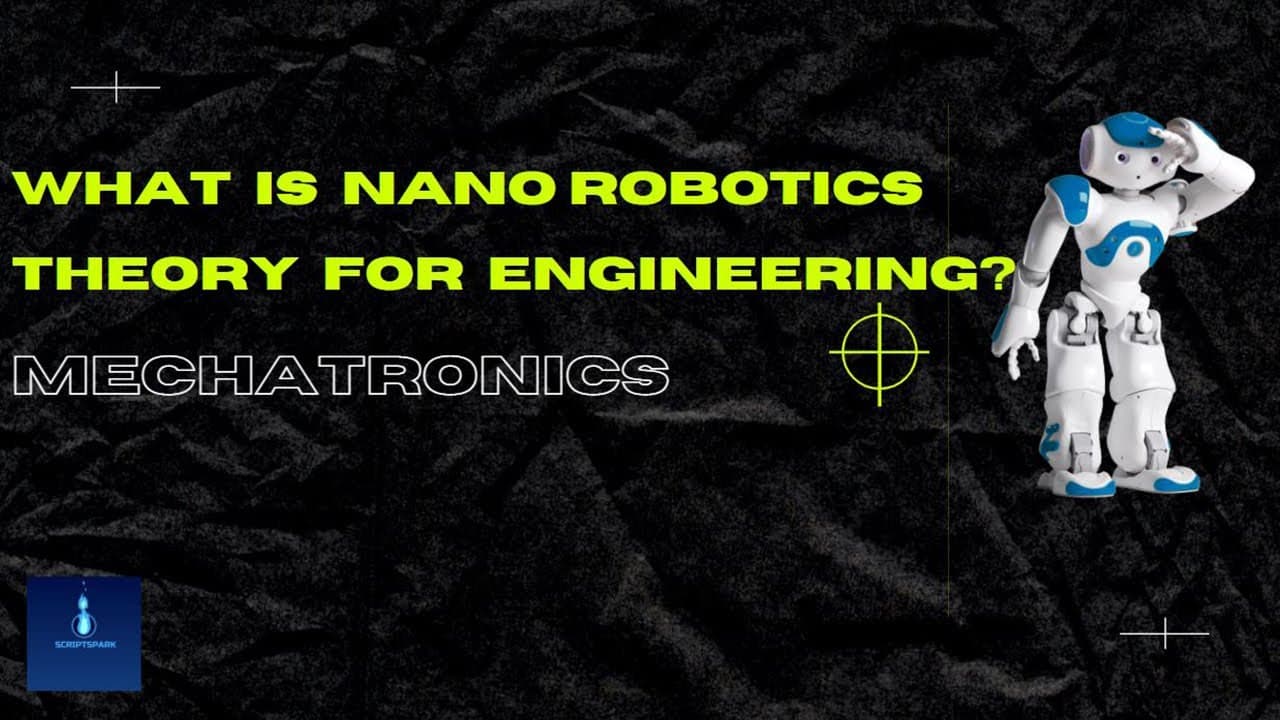
What is Nanorobotics theory for engineering?
TL;DR
Nanorobotics involves tiny machines with potential applications in medicine and environmental detection.
Transcript
Nanorobotics is an emerging technology field creating machines or robots whose components are at or near the scale of a nanometer. We know 1 nanometer = 10 invers 9 meter. More specifically, nanorobotics refers to the nanotechnology engineering discipline of designing and building nanorobots, with devices ranging in size from 0.1 to 10 micrometres ... Read More
Key Insights
- 🧑⚕️ Nanorobotics focuses on the creation of tiny machines that can operate at the nanoscale, crucial for health and environmental applications.
- 💻 The engineering of nanomachines incorporates various scientific principles, including molecular engineering and advanced computer modeling.
- 👨🔬 Current nanorobotics research emphasizes developing precise applications, particularly in medicine and toxicological monitoring.
- 🕵️ Some existing examples of nanomachines include sensors designed to detect specific molecules with remarkable accuracy.
- 🤨 The potential for swarms of nano-robots working together raises intriguing possibilities for complex tasks in various fields, such as medicine and materials science.
- 🤳 Ethical concerns and the challenge of self-replication in nanorobots must be addressed to prevent unintended consequences.
- ❓ The integration of advanced microscopy techniques in nanorobotics fundamentally shifts how we approach nanomanipulation and robotics.
Install to Summarize YouTube Videos and Get Transcripts
Explore YouTube Video Summarizer or Get YouTube Transcript Extractor
Questions & Answers
Q: What are nanorobots, and what size do they typically range from?
Nanorobots, or nanomachines, are machines designed to operate at the nanoscale, generally ranging in size from 0.1 to 10 micrometers. Their tiny size allows them to interact with biological systems and chemical environments at a molecular level, making them essential for applications like targeted medicine and environmental monitoring.
Q: How can nanorobots be applied in medical treatments?
In medicine, nanorobots hold the potential to identify and eliminate cancer cells with precision. For instance, biological machines could be engineered to recognize specific tumor markers, allowing them to deliver drugs directly to affected cells while minimizing damage to healthy tissue, revolutionizing cancer treatment approaches.
Q: What concerns are associated with the development of nanorobots, particularly regarding self-replication?
The self-replication capability of nanorobots raises concerns, particularly the "grey goo" scenario, where nanobots unintentionally replicate out of control, consuming resources. However, some proponents argue that safe constraints can be incorporated into designs to prevent such issues, focusing on controlled applications rather than free-foraging replicators.
Q: What theoretical framework does Richard Feynman provide concerning nanotechnology?
Richard Feynman introduced the concept of molecular machines in his 1959 essay "There's Plenty of Room at the Bottom," positing that tiny machines could perform intricate tasks within the body or environment. His ideas inspired further research into nanorobotics, emphasizing the potential to revolutionize medicine, with practical applications stemming from his theoretical framework.
Q: Can larger robots be considered nanorobots?
Yes, depending on their function and precision, larger robots can be referred to as nanorobots if they can operate with nanoscale resolution. For instance, an atomic force microscope can be configured for nanomanipulation tasks, thus classifying it within the realm of nanorobotics, as it allows very precise interaction with nanoscale objects.
Q: What current research developments are happening in the field of nanorobotics?
Current research in nanorobotics includes the development of primitive molecular machines and nanomotors, testing their applications in various fields. At Rice University, for example, researchers have created a single-molecule car actuated through environmental changes, demonstrating the potential for practical nanomachines in future technological applications.
Q: Why is nanomedicine seen as a promising area for nanorobots?
Nanomedicine is viewed as a promising application for nanorobots due to their ability to deliver drugs specifically to target sites and perform cellular tasks. This targeted approach can enhance treatment efficacy, lessen side effects, and allow for real-time monitoring of therapeutic processes, marking a significant advancement in medical technology.
Summary & Key Takeaways
-
Nanorobotics refers to the engineering of robots at the nanoscale, typically between 0.1 to 10 micrometers, using molecular components to perform specific tasks, primarily in research and development.
-
Potential applications of nanomachines include nanomedicine for identifying and destroying cancer cells, and environmental sensors that detect toxic chemicals, showcasing a profound impact on health and safety.
-
Theoretical discussions surrounding nanorobotics include concepts of design, navigation, and power, reflecting a need for advanced engineering to implement practical solutions effectively.
Read in Other Languages (beta)
Share This Summary 📚
Summarize YouTube Videos and Get Video Transcripts with 1-Click
Try YouTube Summary with ChatGPT & Claude or YouTube Transcript Generator
Explore More Summaries from script spark 📚





Summarize YouTube Videos and Get Video Transcripts with 1-Click
Try YouTube Summary with ChatGPT & Claude or YouTube Transcript Generator