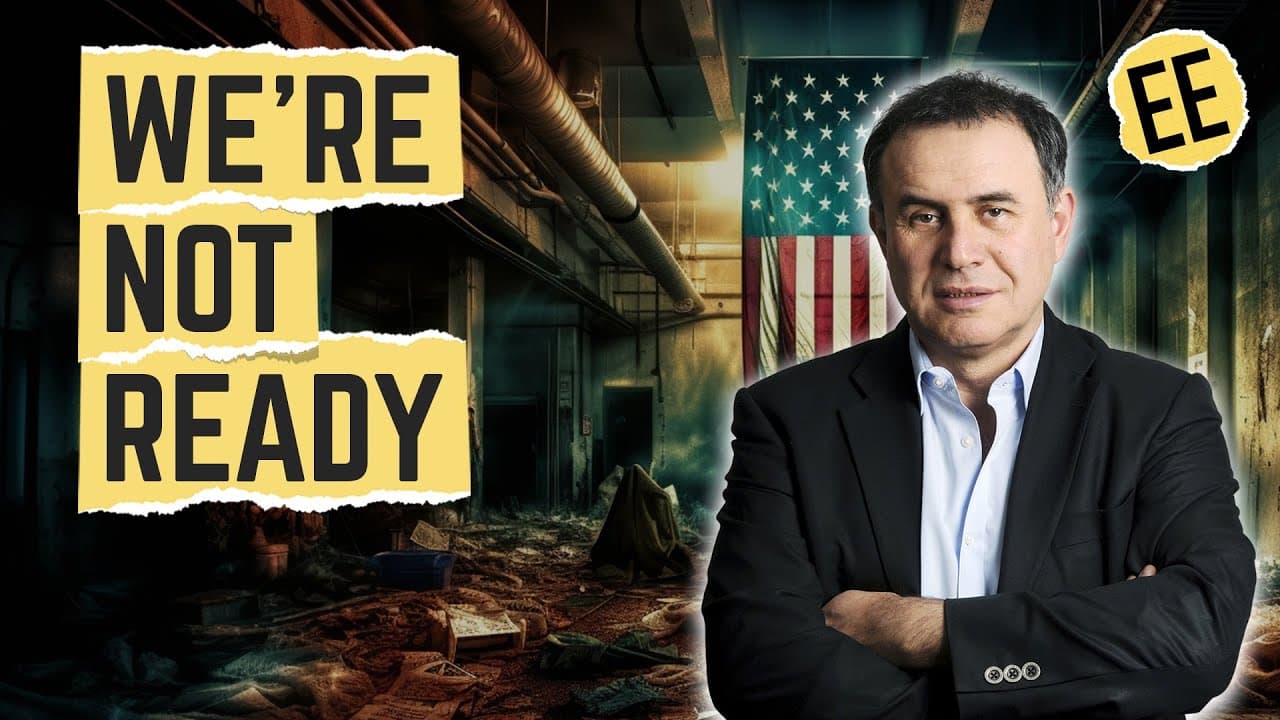
The Economic Megathreats That the World Has No Answers To | Economics Explained with Dr. Roubini
TL;DR
Economists discuss major global economic threats and potential solutions.
Transcript
the role of an economist is something that most people even career economists themselves don't always fully understand people that actually become career economists spend most of their time as advisors to decision makers in global companies organizations and governments economists are relied on to use their understanding of the social science to ma... Read More
Key Insights
- Economists play a crucial role in advising decision-makers on potential economic scenarios and solutions, despite their inability to predict the future.
- Globalization has significantly contributed to economic growth, but its reversal could lead to reduced prosperity and increased costs for all.
- The global economy faces a growing debt crisis, with both public and private sectors holding record levels of debt, exacerbated by rising interest rates.
- Emerging markets are particularly vulnerable to economic challenges, including debt crises and a move away from globalization, which threatens their growth prospects.
- Climate change poses a significant economic threat, requiring large investments in alternative energy and emissions reduction strategies, particularly challenging for poorer countries.
- Technological advancements, particularly in AI, could disrupt labor markets by making human labor redundant, posing challenges for worker-based economies.
- The free-rider problem complicates global efforts to address climate change, as countries may exploit others' sacrifices without making their own.
- Economists like Dr. Roubini emphasize the importance of addressing worst-case scenarios to mitigate potential economic threats, despite criticism of pessimism.
Install to Summarize YouTube Videos and Get Transcripts
Explore YouTube Video Summarizer or Get YouTube Transcript Extractor
Questions & Answers
Q: What role do economists play in global decision-making?
Economists are vital advisors to decision-makers in governments, organizations, and companies. They provide insights into potential economic scenarios, helping to prepare for and mitigate possible risks. While they cannot predict the future, their analysis of worst-case scenarios and proposed solutions is invaluable for informed decision-making and strategic planning.
Q: How does the reversal of globalization impact economies?
The reversal of globalization threatens to reduce economic prosperity by increasing production costs and limiting resource sharing. It could lead to less collaboration between countries and higher consumer prices, as companies adopt more expensive supply chain strategies. Emerging markets, which rely on globalization for growth, may face significant setbacks as trade dynamics shift.
Q: Why is the global debt crisis a significant concern?
The global debt crisis is concerning because both public and private sectors hold record levels of debt, exacerbated by rising interest rates. While advanced economies can manage higher debt levels, emerging markets face greater risks, as they often borrow in foreign currencies. Rising debt servicing costs threaten economic stability, particularly in vulnerable countries.
Q: What challenges do emerging markets face in the current economic climate?
Emerging markets face multiple challenges, including vulnerability to debt crises and the adverse effects of reduced globalization. These economies rely on low-cost manufacturing and service provision to advanced economies for growth. As globalization reverses and debts become costlier, emerging markets may struggle to sustain economic development and manage financial obligations.
Q: How does climate change pose an economic threat?
Climate change is a significant economic threat, necessitating large investments in alternative energy and emissions reduction. Poorer countries, in particular, may struggle to afford these investments, hindering their economic growth. Additionally, climate change exacerbates natural disasters, disproportionately affecting developing economies, which lack the resources to mitigate and recover from such events.
Q: What is the free-rider problem in addressing climate change?
The free-rider problem in climate change arises when countries benefit from others' efforts to reduce emissions without making their own sacrifices. This complicates global cooperation, as some nations may exploit others' investments in emissions reduction while continuing to rely on fossil fuels, undermining collective efforts to mitigate climate change impacts.
Q: How might technological advancements impact labor markets?
Technological advancements, particularly in AI, could disrupt labor markets by making human labor redundant. Unlike previous technological innovations that augmented labor productivity, AI has the potential to fully emulate human tasks, posing challenges for worker-based economies. This shift necessitates reevaluating economic structures and job markets to accommodate technological changes.
Q: Why is it important to address worst-case economic scenarios?
Addressing worst-case economic scenarios is crucial for preparedness and risk mitigation. Economists like Dr. Roubini emphasize the importance of considering potential threats to develop proactive solutions. While such analyses may seem pessimistic, they ensure that decision-makers are informed and prepared to implement strategies that prevent or mitigate economic crises.
Summary & Key Takeaways
-
Economists are essential advisors who assess potential economic scenarios and provide solutions, despite the inherent unpredictability of the future. The video explores significant threats to global economic prosperity, including the reversal of globalization, a growing debt crisis, and climate change.
-
Globalization has historically driven wealth by facilitating trade and technology sharing, but its decline could lead to economic stagnation. Emerging markets, which rely heavily on globalization, may face severe challenges as global trade dynamics shift.
-
The global debt crisis is exacerbated by rising interest rates, impacting both advanced and emerging economies. Climate change further complicates economic stability, requiring substantial investments in emissions reduction, which poorer countries may struggle to afford.
Read in Other Languages (beta)
Share This Summary 📚
Summarize YouTube Videos and Get Video Transcripts with 1-Click
Try YouTube Summary with ChatGPT & Claude or YouTube Transcript Generator
Explore More Summaries from Economics Explained 📚




Summarize YouTube Videos and Get Video Transcripts with 1-Click
Try YouTube Summary with ChatGPT & Claude or YouTube Transcript Generator