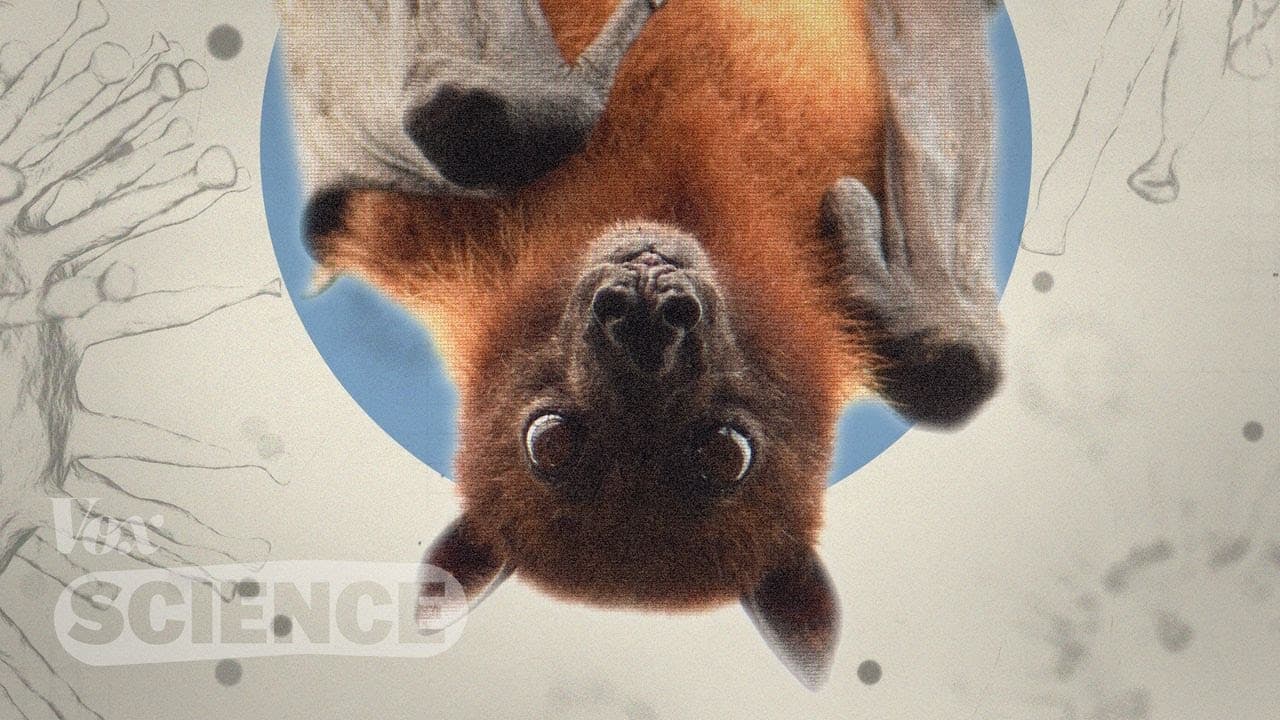
How bats carry deadly diseases without dying
TL;DR
Bats tolerate deadly diseases due to unique physiological adaptations.
Transcript
[whimsical music] I'm just going to come out and say it. I think bats are super weird. I mean that in an endearing way. I actually like them a lot. I think they're these like fluffy, flying mammals with a lot to offer, like tequila. They pollinate the agave plant. The trouble is, when bats hit the media it’s almost always over some deadly dise... Read More
Key Insights
- Bats are unique among mammals for their ability to fly, which has led to distinct physiological adaptations.
- Their high metabolic rate during flight helps them develop robust immune responses to viruses.
- Bats maintain high body temperatures during flight, nearing lethal limits for mammals, yet survive without issue.
- Their immune systems are adapted to prevent excessive inflammation, allowing them to host viruses without severe symptoms.
- Bats' long lifespans, despite high metabolic rates, indicate advanced mechanisms for cellular repair and longevity.
- Bats' ability to tolerate viruses may be linked to their evolutionary adaptations for flight and energy expenditure.
- Research into bats' immune responses is providing insights into new treatments for human diseases, including COVID-19.
- Conservation of bats is crucial, as stressed bats are more likely to shed viruses, posing a zoonotic threat to humans.
Install to Summarize YouTube Videos and Get Transcripts
Explore YouTube Video Summarizer or Get YouTube Transcript Extractor
Questions & Answers
Q: Why are bats able to tolerate deadly diseases better than humans?
Bats have evolved unique physiological and immune system adaptations due to their ability to fly, which requires high metabolic rates and body temperatures. These adaptations include mechanisms to prevent excessive inflammation, allowing bats to host viruses without severe symptoms, unlike humans who often experience harmful inflammatory responses.
Q: How does a bat's flight impact its immune response?
The energy-intensive nature of flight elevates bats' metabolic rates and body temperatures to extreme levels, similar to stressors that cause aging. This has led to the evolution of specialized immune responses that mitigate damage, prevent excessive inflammation, and allow bats to tolerate viruses without severe health impacts.
Q: What role do bats play in the spread of zoonotic diseases?
Bats can host numerous viruses without falling ill, making them potential reservoirs for zoonotic diseases. When stressed by factors like habitat loss or climate change, bats are more likely to shed viruses, increasing the risk of transmission to humans and other animals, highlighting the importance of bat conservation.
Q: How can studying bats contribute to human medicine?
Research into bats' immune systems and physiological adaptations offers insights into new treatments for human diseases. By understanding how bats tolerate viruses and avoid excessive inflammation, scientists can develop strategies to improve human immune responses, potentially leading to breakthroughs in treating viral infections and other diseases.
Q: What are the consequences of bats' unique metabolic rates?
Bats' high metabolic rates, necessary for flight, have led to the development of robust immune systems and cellular repair mechanisms. These adaptations allow them to live longer than expected for their size and tolerate viral infections without severe symptoms, making them a fascinating subject for medical research.
Q: Why is bat conservation important for public health?
Conserving bats is crucial because stressed bats are more likely to shed viruses, increasing zoonotic disease risks. Healthy bat populations contribute to ecological balance and provide valuable insights into disease tolerance, offering potential benefits for developing new medical treatments and improving public health.
Q: What are some current research efforts focused on bats?
Researchers globally are studying bat genomes and immune responses to understand their virus tolerance. Projects include examining molecular pathways, immune system adaptations, and potential applications for human medicine. These efforts aim to unlock new approaches to treating diseases and understanding bats' ecological roles.
Q: How do bats' immune systems differ from those of humans?
Bats' immune systems are adapted to prevent excessive inflammation, with alarm responses that are either always on or in overdrive. This allows them to control viral replication without triggering harmful inflammatory responses, unlike humans, whose immune responses can cause severe symptoms during viral infections.
Summary & Key Takeaways
-
Bats possess unique physiological traits due to their ability to fly, which require high metabolic rates and elevated body temperatures. These adaptations have co-evolved with their immune systems, allowing them to host deadly viruses without suffering severe symptoms, unlike humans who experience inflammation.
-
The remarkable lifespan of bats, despite their high energy expenditure, suggests advanced cellular repair mechanisms. This longevity and their ability to tolerate viruses make bats a valuable subject for research into human disease treatment, offering potential breakthroughs in medical science.
-
Bats' immune systems are fine-tuned to prevent excessive inflammation, allowing them to carry viruses without harm. This capability, coupled with their ecological role and conservation needs, highlights the importance of understanding and protecting bats for both ecological balance and human health.
Read in Other Languages (beta)
Share This Summary 📚
Summarize YouTube Videos and Get Video Transcripts with 1-Click
Try YouTube Summary with ChatGPT & Claude or YouTube Transcript Generator
Explore More Summaries from Vox 📚




Summarize YouTube Videos and Get Video Transcripts with 1-Click
Try YouTube Summary with ChatGPT & Claude or YouTube Transcript Generator