Easy English: How to pronounce the long vowel sound in words ending with ‘e’
TL;DR
Adding "e" changes vowel sounds in words, enhancing vocabulary and pronunciation skills.
Transcript
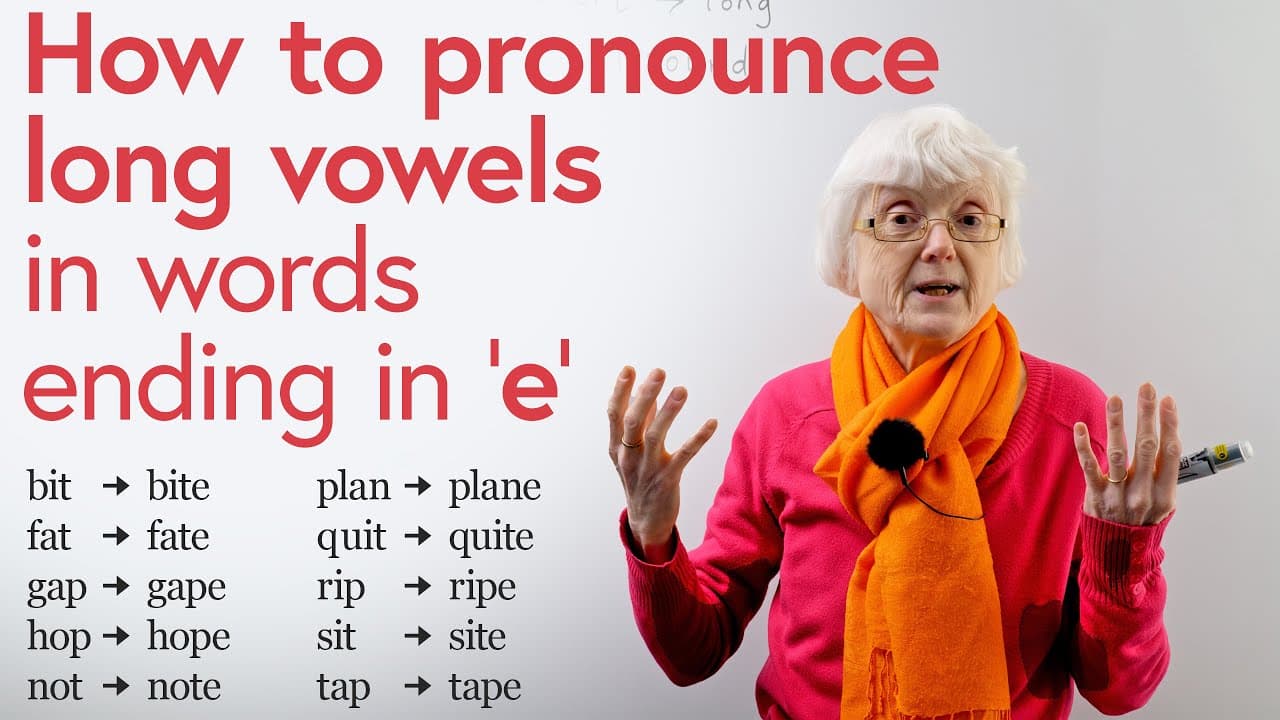
I'm Gill at engVid, and today we have a lesson on some pronunciation where you have words, if you add an "e", it changes the length of the vowel sound. So, for example, we've got the word "bit" with a short "i" sound, but then if you add an "e" on the end, of course it changes the meaning, but it also makes the pronunciation different by lengthenin... Read More
Key Insights
- 🚫 Adding "e" changes short vowel sounds to long ones, as demonstrated in words like "bit" to "bite."
- 👂 Vowel sound transformations enhance pronunciation and vocabulary skills, aiding language proficiency.
- 👂 Differentiating between short and long vowel sounds through word variations promotes linguistic precision and understanding.
- 👂 Understanding the impact of changing vowel sounds improves verbal communication and language fluency.
- 😒 Vocabulary enrichment through vowel sound modifications broadens language use and comprehension levels.
- 👂 Mastering vowel sound changes benefits pronunciation clarity and overall linguistic competence.
- 🔑 Practicing word transformations with added "e" promotes phonetic awareness and language learning efficiency.
Install to Summarize YouTube Videos and Get Transcripts
Explore YouTube Video Summarizer or Get YouTube Transcript Extractor
Questions & Answers
Q: How does adding "e" to words impact their pronunciation?
Adding "e" changes the vowel sound, making it longer and altering the word's meaning and pronunciation structure significantly.
Q: In what contexts can the transformed words be used?
Transformed words like "bit" to "bite" offer new vocabulary and pronunciation practice, enriching language skills in speech and writing.
Q: How do short and long vowel sounds affect word meanings?
Short and long vowel sounds differentiate meanings, as seen in examples like "fat" and "fate," showcasing the significance of pronunciation in language comprehension.
Q: How can mastering vowel sound changes enhance language proficiency?
Mastering vowel sound changes through adding "e" can improve pronunciation accuracy, vocabulary expansion, and overall communication skills in various contexts.
Summary & Key Takeaways
-
Adding "e" to words changes the vowel sound, transforming pronunciation.
-
Examples include "bit" becoming "bite", "hop" becoming "hope", demonstrating short to long vowel sounds.
-
This lesson enhances vocabulary and pronunciation skills through word transformations.
Read in Other Languages (beta)
Share This Summary 📚
Summarize YouTube Videos and Get Video Transcripts with 1-Click
Try YouTube Summary with ChatGPT & Claude or YouTube Transcript Generator
Explore More Summaries from Learn English with Gill · engVid 📚






Summarize YouTube Videos and Get Video Transcripts with 1-Click
Try YouTube Summary with ChatGPT & Claude or YouTube Transcript Generator