How to Draw a Lobster
TL;DR
Learn how to draw a lobster step by step with shading and details.
Transcript
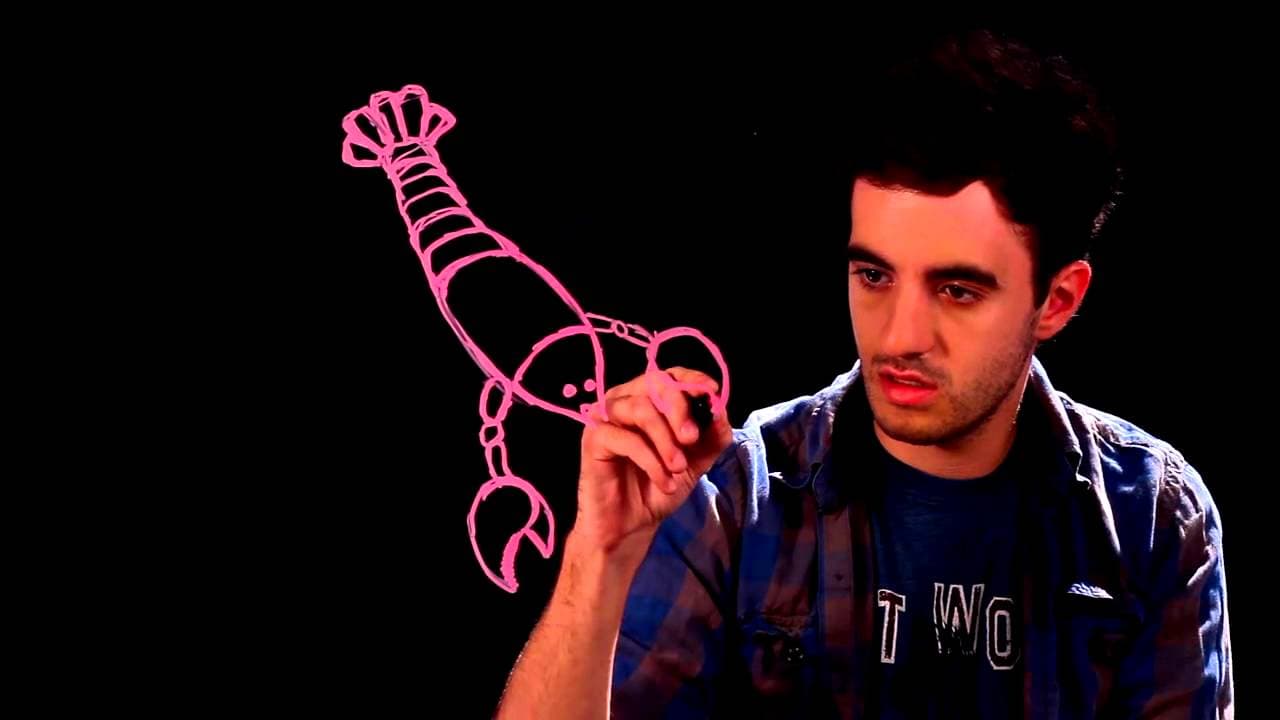
hi I'm Al Kowski and I'm an artist today I'm going to show you how to draw a lobster going to start off with the back and the head draw a curved line come out down here I'm going to put two points in the front then we're going to separate the back and the head so we're going to draw a curved line across so this is our back and this is our head then... Read More
Key Insights
- 🥳 The tutorial provides step-by-step guidance on drawing a complete lobster, covering its various body parts.
- 🫥 Attention to details like curved lines, points, and shading enhances the realism of the lobster drawing.
- 🆘 Drawing each body part separately helps maintain accuracy and focus throughout the illustration process.
- 🦿 Jagged edges are used to depict the spiky and rough texture of lobster claws and legs.
- 🪜 Adding shading to specific areas like the back, tail, and claws adds depth and dimension to the lobster drawing.
- 😃 Careful placement of antennae and eye details contributes to the overall appearance of the lobster.
- 🦞 The tutorial emphasizes practicing drawing each part separately before combining them for a complete lobster illustration.
Install to Summarize YouTube Videos and Get Transcripts
Explore YouTube Video Summarizer or Get YouTube Transcript Extractor
Questions & Answers
Q: What are the basic steps involved in drawing a lobster?
The basic steps include outlining the back, head, tail, eyes, claws, legs, and antennae of the lobster with careful attention to details like curved lines and jagged edges.
Q: How can shading be used to enhance a lobster drawing?
Shading can be applied to the back, tail, head, and claws of the lobster drawing to add depth and realism, making the illustration more visually appealing and lifelike.
Q: Why is it important to draw each lobster body part separately?
Drawing each body part separately allows for better focus and precision, ensuring that each detail, like the legs, claws, and antennae, is accurately depicted to create a cohesive and realistic lobster drawing.
Q: Why are curved lines and points essential in drawing a lobster?
Curved lines and points help in creating the organic and natural shape of a lobster, capturing its unique features like the tail fan, spiky legs, and distinctive claws with precision and accuracy.
Summary & Key Takeaways
-
Artist Al Kowski demonstrates how to draw a lobster with detailed instructions.
-
The tutorial covers drawing the back, head, tail, eyes, claws, legs, and antennae of the lobster.
-
Shading is added to enhance the appearance of the lobster drawing.
Read in Other Languages (beta)
Share This Summary 📚
Summarize YouTube Videos and Get Video Transcripts with 1-Click
Try YouTube Summary with ChatGPT & Claude or YouTube Transcript Generator
Explore More Summaries from ehow 📚



Summarize YouTube Videos and Get Video Transcripts with 1-Click
Try YouTube Summary with ChatGPT & Claude or YouTube Transcript Generator