Is It Actually Important to Stay Conscious When Seriously Injured as Depicted by Hollywood?
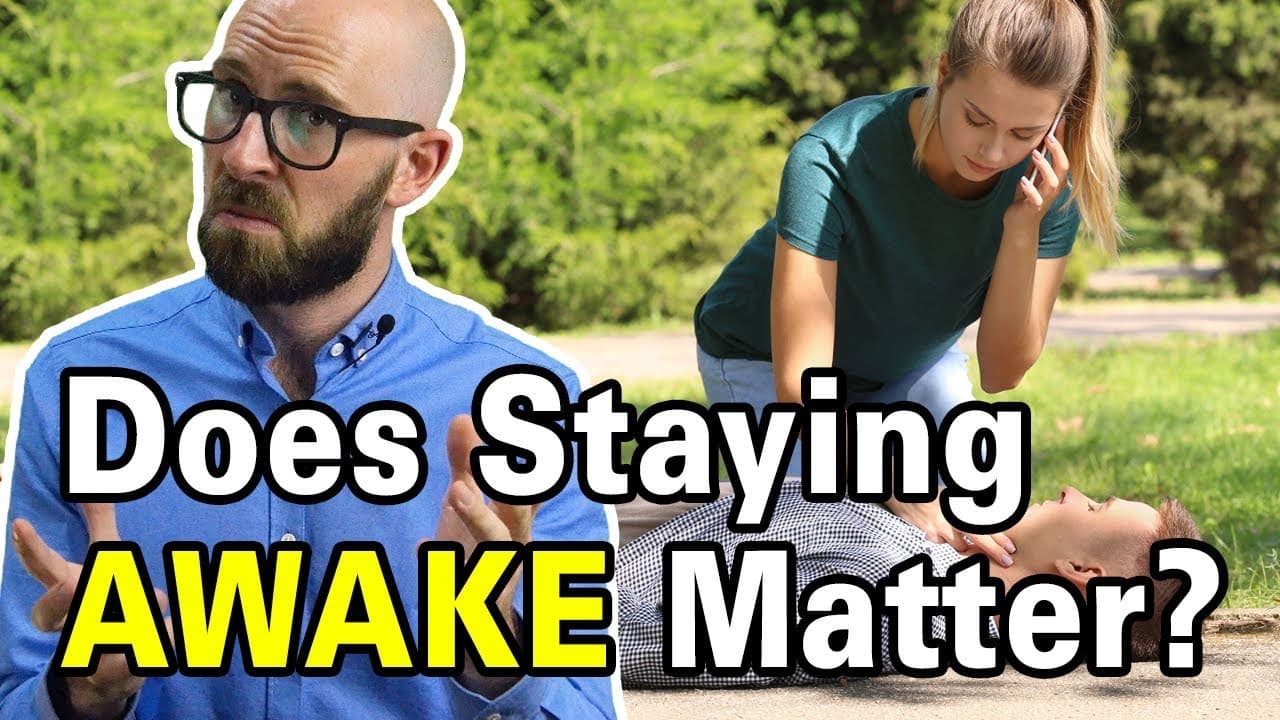
TL;DR
Staying conscious does not significantly benefit someone who is seriously injured; communication and medical history become important while treating the patient.
Transcript
We’ve all seen movie scenes where someone is seriously injured and slowly drifting in and out of consciousness. Someone else there will inevitably yell something like, “Stay with me DAMMIT!!!” It’s even sometimes explicitly stated that it’s important for the person to stay awake to keep the Grim Reaper away. Towards this end, the person with them m... Read More
Key Insights
- 🚨 Unconsciousness can conserve energy and resources in the body during a critical emergency.
- 😷 Communication and medical history play a crucial role in determining the best treatment strategy.
- 🎚️ The Glasgow Coma Scale helps assess the level of impairment in a patient's consciousness.
- 😷 The causes of unconsciousness in critical emergencies can be traumatic injury or medical issues.
- 🥳 Applying direct pressure to bleeding areas and immobilizing body parts is more effective than attempting to keep someone conscious through slapping or shaking.
- 😷 Medical professionals consider various factors and potential causes when treating a patient with an altered level of consciousness.
- 🍗 The body has compensatory mechanisms in place to try to stay conscious in critical situations.
Install to Summarize YouTube Videos and Get Transcripts
Explore YouTube Video Summarizer or Get YouTube Transcript Extractor
Questions & Answers
Q: Does staying conscious provide any benefits to someone who is seriously injured?
No, staying conscious does not significantly benefit a seriously injured person. Unconsciousness can conserve energy in the body and may be beneficial in some cases.
Q: Why is communication important for a seriously injured person?
Communication allows a medical provider to understand the cause of the situation, the specific pain experienced, and any relevant medical history. This information helps them provide rapid and effective treatment.
Q: How does the Glasgow Coma Scale determine treatment?
The Glasgow Coma Scale assesses a patient's level of consciousness based on eye-opening, verbal response, and motor response. The score guides medical providers in determining the appropriate treatment strategy.
Q: What are the main causes of unconsciousness in critical emergencies?
The two main causes of unconsciousness in critical emergencies are traumatic injury and medical issues. Traumatic injuries can result in exsanguination or traumatic brain injury, while medical issues can have various underlying causes.
Summary & Key Takeaways
-
Staying conscious may not provide any significant benefits to a seriously injured person.
-
Unconsciousness can actually help conserve energy and resources in the body.
-
However, staying awake and communicating can help medical professionals determine the best treatment strategy.
Read in Other Languages (beta)
Share This Summary 📚
Summarize YouTube Videos and Get Video Transcripts with 1-Click
Try YouTube Summary with ChatGPT & Claude or YouTube Transcript Generator
Explore More Summaries from Today I Found Out 📚






Summarize YouTube Videos and Get Video Transcripts with 1-Click
Try YouTube Summary with ChatGPT & Claude or YouTube Transcript Generator