Acute Calcium Disorder by Dr Manotosh Sutradhar
TL;DR
Dr. Sutradhar discusses calcium metabolism, disorders, and management.
Transcript
today's topic is accurate calcium disorder pathophysiology and management myself doctor monitor bengal medical education service so objective of the session you need to know calcium metabolism role of the parathyroid hormone rule of vitamin d and role of calcitonin then we will go for the management of acute calcium disorder because you nee... Read More
Key Insights
- Calcium metabolism involves the parathyroid hormone, vitamin D, and calcitonin, which play crucial roles in maintaining calcium levels in the body.
- Calcium regulation is achieved through intestinal absorption, renal excretion, and bone storage, with 99% of calcium found in bones.
- Vitamin D is synthesized through skin exposure to sunlight and dietary intake, transforming into its active form in the liver and kidneys.
- Hypocalcemia can result from parathyroid gland removal, vitamin D deficiency, or chronic kidney disease, requiring calcium and vitamin D supplementation.
- Hypercalcemia might be due to parathyroid adenomas, malignancies, or vitamin D intoxication, needing hydration and bisphosphonate treatment.
- Management of hypercalcemia includes IV saline, loop diuretics, and bisphosphonates, with consideration of underlying causes.
- Hypocalcemia management involves calcium gluconate infusion, monitoring, and vitamin D supplementation to stabilize calcium levels.
- Osteoporosis treatment focuses on lifestyle changes, vitamin D optimization, and medications like bisphosphonates and hormone replacement therapy.
Install to Summarize YouTube Videos and Get Transcripts
Explore YouTube Video Summarizer or Get YouTube Transcript Extractor
Questions & Answers
Q: What are the main hormones involved in calcium metabolism?
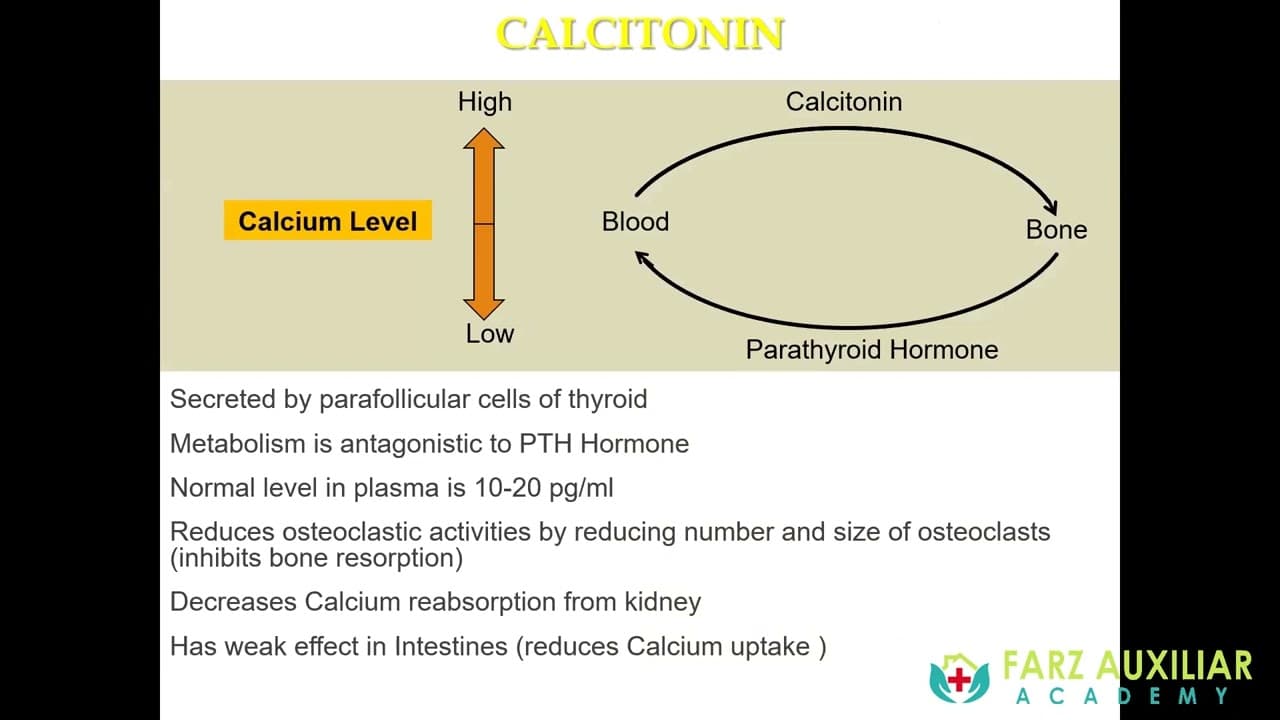
The main hormones involved in calcium metabolism are the parathyroid hormone (PTH), vitamin D, and calcitonin. PTH is secreted by the parathyroid glands and increases calcium levels by stimulating bone resorption and renal reabsorption. Vitamin D enhances intestinal calcium absorption, while calcitonin, secreted by the thyroid gland, lowers calcium levels by inhibiting bone resorption.
Q: How is vitamin D synthesized and activated in the body?
Vitamin D synthesis begins in the skin as cholecalciferol (vitamin D3) upon exposure to sunlight. It is then converted in the liver to 25-hydroxycholecalciferol and further transformed in the kidneys to its active form, 1,25-dihydroxyvitamin D (calcitriol). This active form is crucial for calcium absorption in the intestines and regulation of calcium levels in the blood.
Q: What are the common causes of hypocalcemia?
Hypocalcemia can be caused by several factors, including surgical removal of the parathyroid glands, vitamin D deficiency, chronic kidney disease, and magnesium deficiency. It may also result from pseudohypoparathyroidism, where the body's tissues are resistant to the effects of the parathyroid hormone, leading to low calcium levels despite normal or elevated PTH levels.
Q: What are the symptoms and treatment options for hypercalcemia?
Symptoms of hypercalcemia include polyuria, polydipsia, constipation, and neurological issues like confusion. Treatment involves hydration with IV saline, loop diuretics like furosemide, and bisphosphonates to reduce calcium levels. Identifying and addressing the underlying cause, such as malignancy or hyperparathyroidism, is crucial for effective management.
Q: How does osteoporosis relate to calcium metabolism?
Osteoporosis is characterized by bone loss with normal calcium levels, often due to inadequate calcium and vitamin D intake or hormonal changes, especially in postmenopausal women. It is managed by optimizing calcium and vitamin D levels, engaging in weight-bearing exercises, and using medications like bisphosphonates to prevent bone resorption.
Q: What is the role of bisphosphonates in treating calcium disorders?
Bisphosphonates are used in treating hypercalcemia and osteoporosis by inhibiting osteoclast-mediated bone resorption. They help lower elevated calcium levels in hypercalcemia and strengthen bones in osteoporosis, reducing the risk of fractures. In hypercalcemia, intravenous bisphosphonates like zoledronic acid are preferred for rapid action.
Q: What are the ECG findings associated with calcium imbalances?
In hypercalcemia, ECG findings include a shortened QT interval due to increased calcium levels. Conversely, hypocalcemia is associated with a prolonged QT interval, reflecting delayed ventricular repolarization. Monitoring ECG changes is essential in managing patients with calcium imbalances to prevent cardiac complications.
Q: How is hypocalcemia managed in an acute setting?
Acute hypocalcemia is managed by stabilizing the patient and administering intravenous calcium gluconate to quickly raise serum calcium levels. Continuous cardiac monitoring and frequent calcium level checks are necessary. Once stabilized, oral calcium and vitamin D supplementation are initiated to maintain normal calcium levels and prevent recurrence.
Summary & Key Takeaways
-
Dr. Manotosh Sutradhar explains the pathophysiology and management of acute calcium disorders, focusing on metabolism and hormonal regulation. He highlights the roles of the parathyroid hormone, vitamin D, and calcitonin in maintaining calcium balance, and discusses the implications of hypercalcemia and hypocalcemia.
-
Calcium disorders are managed through understanding the underlying causes, such as parathyroid dysfunction or vitamin D deficiency. Treatment strategies include dietary and lifestyle modifications, medication, and monitoring of calcium and vitamin D levels to prevent complications like osteoporosis.
-
The session emphasizes the importance of diagnosing and treating acute calcium disorders in clinical settings, particularly in ICUs. Dr. Sutradhar provides insights into the biochemical and physiological processes involved in calcium regulation and the therapeutic approaches to address imbalances effectively.
Read in Other Languages (beta)
Share This Summary 📚
Summarize YouTube Videos and Get Video Transcripts with 1-Click
Try YouTube Summary with ChatGPT & Claude or YouTube Transcript Generator
Explore More Summaries from Farz Auxiliar Academy 📚
Summarize YouTube Videos and Get Video Transcripts with 1-Click
Try YouTube Summary with ChatGPT & Claude or YouTube Transcript Generator