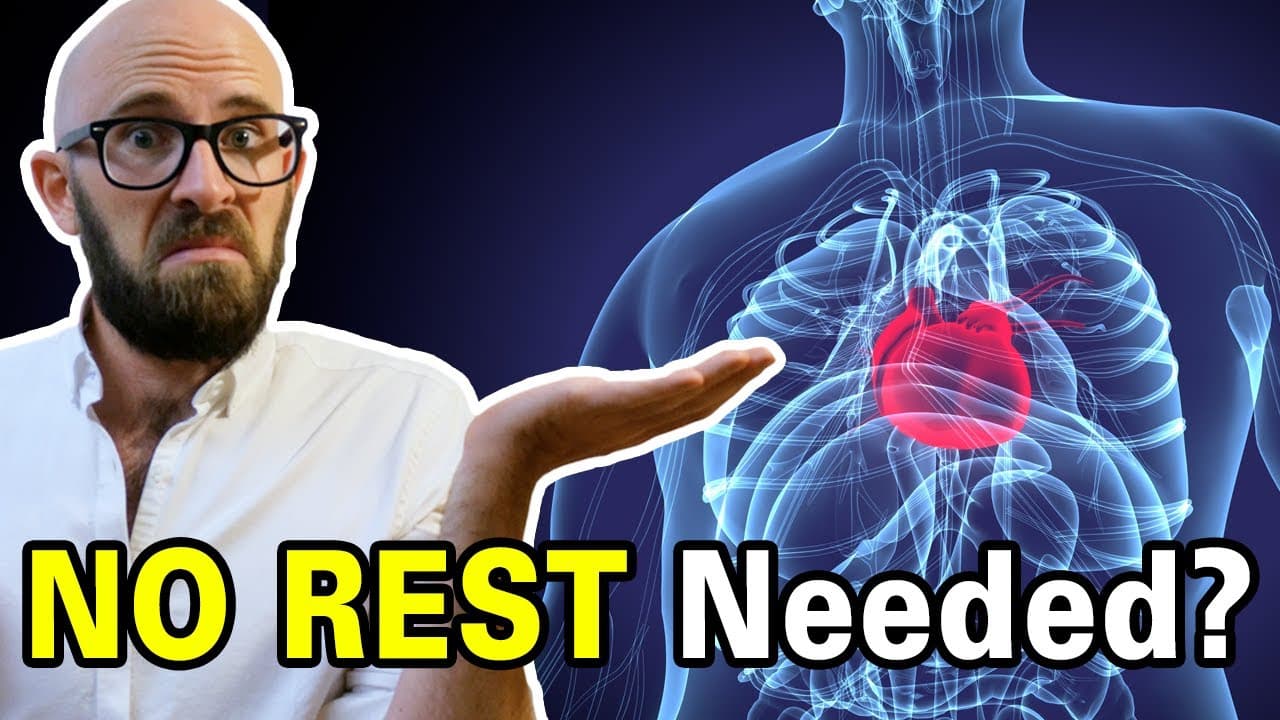
Why Doesn't the Heart Get Tired and Need to Rest Like Other Muscles?
TL;DR
The heart doesn't get tired because of its high density of mitochondria, which produce ATP, and its reliance on aerobic respiration.
Transcript
this video is brought to you by Quito taking the guesswork out of a keto diet track your results and whether you are in ketosis using keto gotta get keto comm /tphoe to get 20% off more on them in a bit in the video today we're answering a viewer question because Mindy and asks us after a long run my leg muscles are tired but my heart is not why do... Read More
Key Insights
- 💪 Skeletal muscles derive energy from ATP through various metabolic processes.
- 🥰 Mitochondria play a crucial role in the heart's ability to continue functioning without getting tired.
- 🥰 The heart's reliance on aerobic respiration and its high density of mitochondria allow it to produce ATP efficiently.
- 😘 The heart can suffer damage if subjected to extreme physical activity or low-oxygen environments for extended periods.
- 🥰 The heart's unique electrical system, involving the sinoatrial node and other specialized cells, allows for its rhythmic contractions.
- 🥰 Sodium and potassium are the main electrolytes involved in the heart's electrical shock.
- 💪 Cardiac muscle has a higher density of mitochondria compared to other muscle types.
Install to Summarize YouTube Videos and Get Transcripts
Explore YouTube Video Summarizer or Get YouTube Transcript Extractor
Questions & Answers
Q: Why doesn't the heart get tired?
The heart has a high density of mitochondria, which allows it to produce ATP efficiently and continue functioning without getting tired. It also relies on aerobic respiration for energy.
Q: What are the main electrolytes involved in the heart's electrical shock?
The main electrolytes involved are sodium and potassium. Potassium sits inside the cell, while sodium sits outside it. This creates a different electrical potential, which leads to the heart's contraction.
Q: Can the heart get tired during extreme physical activity or low-oxygen environments?
Yes, the heart can get tired and suffer damage if subjected to extreme physical activity or low-oxygen environments for extended periods. However, in most cases, the heart will give out before the muscles.
Q: What is the role of mitochondria in the heart?
Mitochondria in the heart produce ATP, which provides the energy needed for the heart to function. The higher density of mitochondria in cardiac muscles allows for more efficient ATP production.
Summary & Key Takeaways
-
The human body is composed of three types of muscles: skeletal, smooth, and cardiac.
-
Skeletal muscles derive energy from ATP, which is produced through a series of chemical reactions.
-
Cardiac muscle, unlike skeletal muscles, has a high density of mitochondria, allowing it to continue functioning without getting tired.
Read in Other Languages (beta)
Share This Summary 📚
Summarize YouTube Videos and Get Video Transcripts with 1-Click
Try YouTube Summary with ChatGPT & Claude or YouTube Transcript Generator
Explore More Summaries from Today I Found Out 📚






Summarize YouTube Videos and Get Video Transcripts with 1-Click
Try YouTube Summary with ChatGPT & Claude or YouTube Transcript Generator