The Supply of Money | Macroeconomics
TL;DR
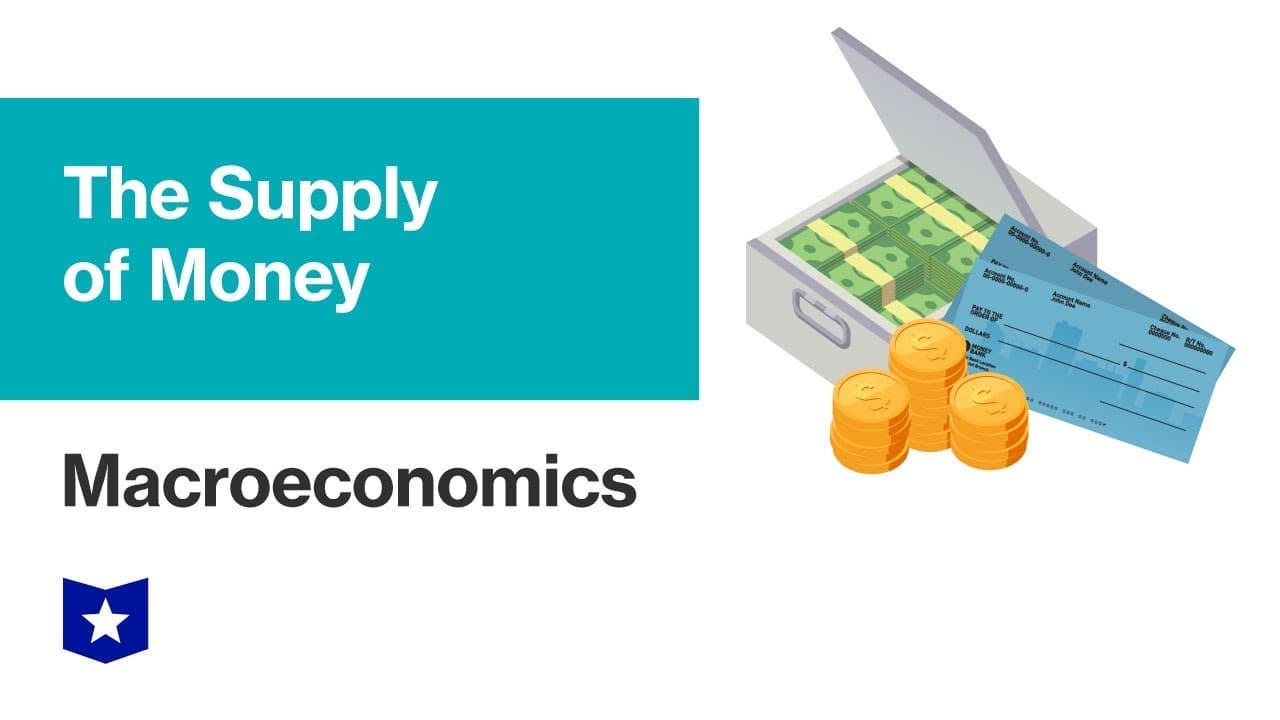
The Federal Reserve manages the money supply through M1 and M2 definitions, impacting economic stability and employment.
Transcript
the Federal Reserve is the central bank of the United States a central bank provides financial and banking services for its country's government and commercial banking system implements monetary policy and issues currency one of the central bank's most important roles is to manage the economy so that there is full employment and stable prices one o... Read More
Key Insights
- 🤑 The Federal Reserve manages the money supply to achieve economic goals like full employment and stable prices.
- 🫗 M1 includes the most liquid assets for daily transactions, while M2 encompasses less liquid forms like savings deposits.
- 💳 Credit cards are not considered money as they defer payments, unlike debit cards connected to checkable deposits.
- 💵 The majority of money in the US economy is held in deposits at banks, not in physical currency.
- 🤑 The Fed's control of the money supply through M1 and M2 definitions impacts economic stability and financial transactions.
- 🤑 Understanding the role of the Federal Reserve in managing the money supply is crucial for grasping economic dynamics.
- 🤑 Individuals hold a significant portion of money in less liquid forms like savings accounts and small deposits.
Install to Summarize YouTube Videos and Get Transcripts
Explore YouTube Video Summarizer or Get YouTube Transcript Extractor
Questions & Answers
Q: What is the role of the Federal Reserve in the US economy?
The Federal Reserve acts as the central bank, managing the money supply, implementing monetary policy, and ensuring economic stability through full employment and stable prices.
Q: What is the difference between M1 and M2 definitions of money supply?
M1 includes liquid forms like currency and checkable deposits used for daily transactions, while M2 adds less liquid assets such as savings deposits and money market funds.
Q: Why are credit cards not considered money in the economy?
Credit cards defer payments to a later date, making them a tool for purchases but not a store of value, unlike debit cards directly linked to checkable deposits.
Q: How does the Federal Reserve determine the quantity of money in the economy?
The Fed sets the money supply independently of interest rates, ensuring economic stability by controlling the amount of money available through M1 and M2 definitions.
Summary & Key Takeaways
-
The Federal Reserve is the central bank of the US, managing the money supply to achieve full employment and stable prices.
-
M1 includes currency, checkable deposits, and traveler's checks, while M2 encompasses savings deposits, money market funds, and CDs.
-
Credit cards aren't considered money as they defer payment, unlike debit cards directly linked to checkable deposits.
Read in Other Languages (beta)
Share This Summary 📚
Summarize YouTube Videos and Get Video Transcripts with 1-Click
Try YouTube Summary with ChatGPT & Claude or YouTube Transcript Generator
Explore More Summaries from Course Hero 📚




Summarize YouTube Videos and Get Video Transcripts with 1-Click
Try YouTube Summary with ChatGPT & Claude or YouTube Transcript Generator