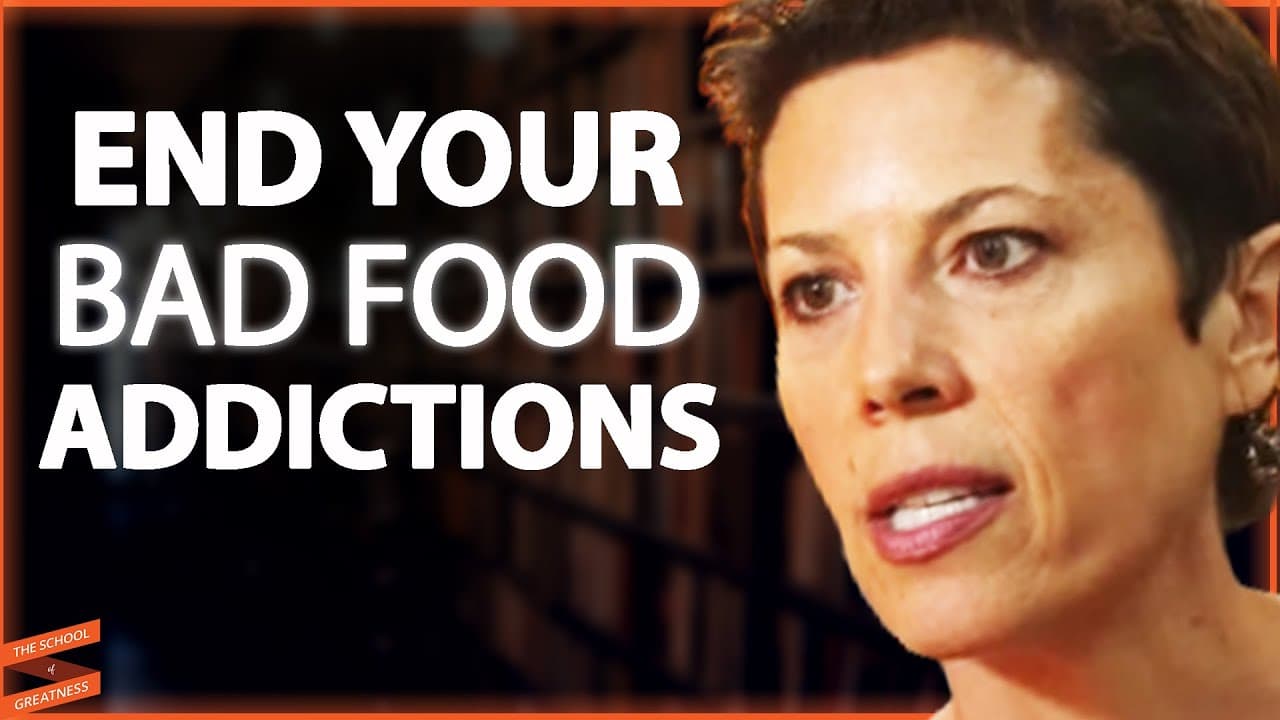
How To Break Your FOOD ADDICTION To Lose Weight & LIVE LONGER! | Susan Thompson & Lewis Howes
TL;DR
Bright Line Eating offers a structured program to overcome food addiction and achieve weight loss success through clear boundaries and pre-planned meals.
Transcript
food is wired in to our brains in such a way that you can't not eat what your brain is demanding that you need to eat any more than you could not breathe the air that your brain thinks that you need to breathe it changes your hormonal profile to force you to eat but here's what happens I think you gotta have a dream the school of greatness how did ... Read More
Key Insights
- 😋 Food addiction is a complex issue influenced by genetic susceptibility, environmental factors, trauma, and personal choices.
- 😋 Overcoming food addiction requires a structured program that includes clear boundaries, pre-planned meals, and support from a community.
- 😋 Bright Line Eating offers a comprehensive approach to tackling food addiction and achieving weight loss success.
- 🏋️ Research shows that Bright Line Eating can lead to significant weight loss results, surpassing other popular weight loss programs.
- 🥰 Food addiction is a significant issue affecting a large percentage of the population, leading to numerous health problems such as obesity, diabetes, and heart disease.
- 😋 Society's obsession with food and marketing tactics make it even more challenging for individuals to break free from food addiction.
- 😋 Overcoming food addiction requires discipline, self-reflection, and a commitment to a healthier lifestyle.
- 🎮 Trauma can contribute to addiction, but it is not the sole cause. Other factors, such as genetics and environmental influences, also play a significant role.
Install to Summarize YouTube Videos and Get Transcripts
Explore YouTube Video Summarizer or Get YouTube Transcript Extractor
Questions & Answers
Q: How does food addiction differ from other types of addiction?
Food addiction is unique in that our brains are hardwired to desire food, making it difficult to completely abstain. Unlike drugs or alcohol, which one can avoid, we must eat to survive.
Q: Can anyone become addicted to food, even without genetic susceptibility?
While genetic susceptibility increases the likelihood of addiction, not everyone with the genetic predisposition will become addicted. Environmental factors, trauma, and personal choices also play a role.
Q: How does trauma relate to food addiction?
Trauma can contribute to addiction in some cases, but it's not the sole cause. Trauma can create emotional and psychological challenges that drive individuals to seek solace in food or other addictive substances.
Q: What makes sugar and flour addictive?
Sugar and flour can trigger the brain's dopamine reward system, causing addiction. The refined and purified forms of these substances make them extremely potent and create a cycle of cravings and desire for more.
Summary & Key Takeaways
-
Food addiction is a complex issue that is wired into our brains, making it challenging to control our eating habits.
-
Some people have a genetic susceptibility to addiction, while environmental factors and trauma can also play a role.
-
Research shows that around one-third of people are highly susceptible to addiction, while another third is moderately susceptible.
-
Addiction to food, especially sugar and flour, is even more challenging to overcome than addiction to drugs or alcohol.
Read in Other Languages (beta)
Share This Summary 📚
Summarize YouTube Videos and Get Video Transcripts with 1-Click
Try YouTube Summary with ChatGPT & Claude or YouTube Transcript Generator
Explore More Summaries from Lewis Howes 📚






Summarize YouTube Videos and Get Video Transcripts with 1-Click
Try YouTube Summary with ChatGPT & Claude or YouTube Transcript Generator