The secret to scientific discoveries? Making mistakes | Phil Plait
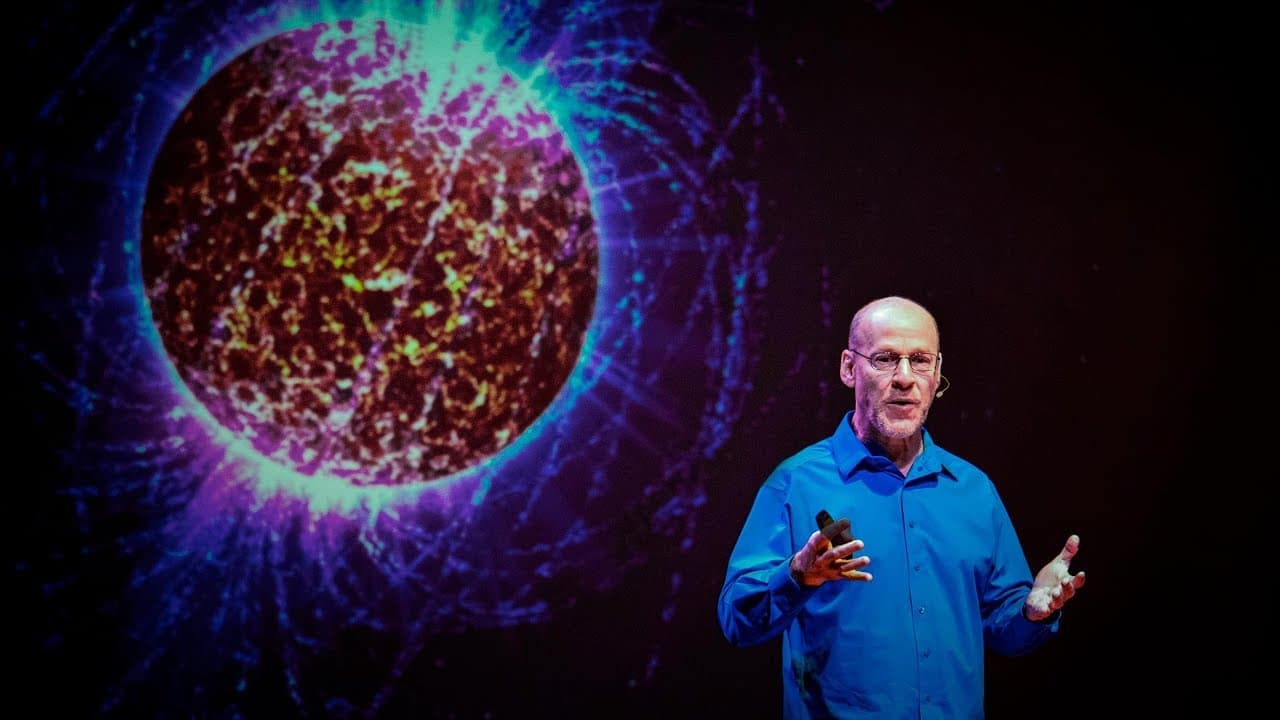
TL;DR
In this TED Talk, the speaker discusses the process of science, including gathering evidence, testing hypotheses, admitting mistakes, and ultimately, seeking the truth.
Transcript
Now, people have a lot of misconceptions about science -- about how it works and what it is. A big one is that science is just a big old pile of facts. But that's not true -- that's not even the goal of science. Science is a process. It's a way of thinking. Gathering facts is just a piece of it, but it's not the goal. The ultimate goal of science i... Read More
Key Insights
- 🌌 Science is a process of understanding objective reality based on evidence, rather than just a collection of facts.
- 🔬 The scientific method involves observation, questioning, hypothesis formation, testing, and peer review.
- 💡 Scientists are human and prone to bias, so part of the scientific process is minimizing bias and admitting when you're wrong.
- 💫 Admitting when you're wrong is crucial for progress and understanding in science, as it leads to new discoveries and knowledge.
- 🌟 Scientists are praised for their honesty and integrity when they admit their mistakes, as it allows others to build on their work and improve understanding.
- 🔭 Scientists have successfully discovered thousands of exoplanets using clever techniques and observatories designed for this purpose.
- 🌍 Planets may outnumber stars in the galaxy, which is a profound statement made possible by science and the scientists who drive it.
- 📚 Science is most effective when it embraces the human element and encourages collaboration, learning from mistakes, and building on previous knowledge.
Install to Summarize YouTube Videos and Get Transcripts
Explore YouTube Video Summarizer or Get YouTube Transcript Extractor
Questions & Answers
Q: What is science?
Science is a process and a way of thinking, not just a collection of facts. Its ultimate goal is to understand objective reality based on evidence.
Q: What is the first step in the scientific process?
The first step in the scientific process is observation. Scientists observe something and question why it happens or what causes it.
Q: What is the role of a hypothesis in science?
A hypothesis is an explanation or idea that may explain the observed phenomenon. It is developed based on the initial observation and serves as a starting point for further investigation.
Q: How are hypotheses tested in the scientific process?
Hypotheses are tested by making predictions based on them. Scientists devise experiments or gather additional data to test these predictions and gather evidence to support or refute the hypotheses.
Q: Why is peer review important in science?
Peer review involves sharing research findings and ideas with other scientists who review and provide feedback. It helps minimize biases and errors, improves the quality of scientific work, and saves time and resources by receiving input from different perspectives.
Q: What does it mean to admit when you're wrong in science?
Admitting when you're wrong is a crucial part of the scientific process. It shows intellectual integrity and allows scientists to revise and improve their hypotheses and theories based on new evidence or better explanations.
Q: Can you provide an example of a scientific discovery that demonstrates the importance of admitting mistakes?
The discovery of exoplanets (planets outside our solar system) illustrates the significance of admitting mistakes. Initially, a scientist claimed to have found a planet orbiting a pulsar, but it was later discovered that a mistake was made. Despite the initial error, another scientist admitted the mistake and subsequently discovered the first confirmed exoplanets, leading to a flood of new discoveries in this field.
Q: How has science helped us understand the universe better?
Science, with its rigorous methodology and continuous self-correction, has provided us with a remarkable understanding of the universe. Through careful observation, testing, peer review, and admitting mistakes, scientists have uncovered vast knowledge about our place in the cosmos, including the existence of exoplanets and the possibility that planets may outnumber stars in our galaxy.
Summary & Key Takeaways
-
Science is a process and a way of understanding objective reality based on evidence, not just a collection of facts.
-
Scientists use observation, hypothesis, prediction, and testing to develop and refine their ideas, always seeking to minimize bias.
-
Admitting when you're wrong is an integral part of the scientific process and leads to knowledge and understanding.
Read in Other Languages (beta)
Share This Summary 📚
Summarize YouTube Videos and Get Video Transcripts with 1-Click
Try YouTube Summary with ChatGPT & Claude or YouTube Transcript Generator
Explore More Summaries from TED 📚


Summarize YouTube Videos and Get Video Transcripts with 1-Click
Try YouTube Summary with ChatGPT & Claude or YouTube Transcript Generator