How this house took over the US
TL;DR
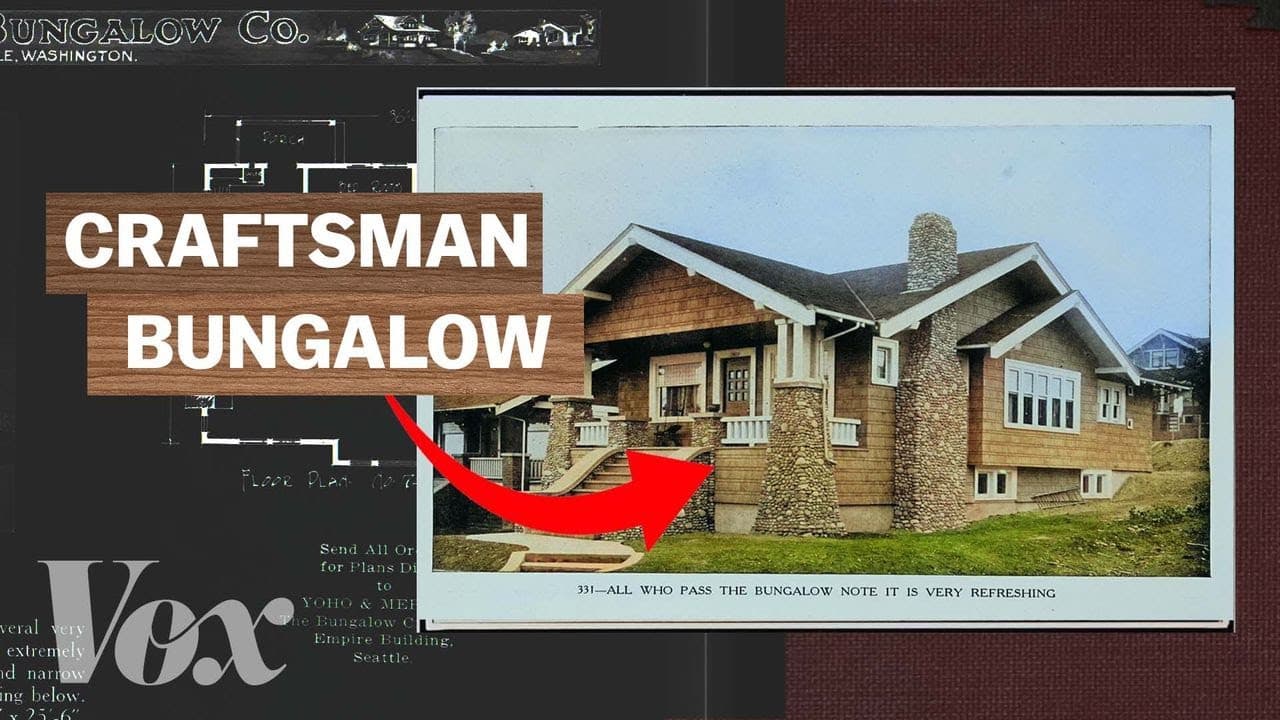
The Craftsman bungalow became a mass-market phenomenon through evolution and commercialization.
Transcript
In a historic district in Pasadena, California, boundedby a Domino’s Pizza on one corner and a 7-11 on the other you’ll find heaven. Bungalow Heaven. This type of house, the bungalow and particularly the Craftsman bungalow is now celebrated in historic districts from Raleigh, North Carolina to Seattle, Washington. But the Craftsman bungalow only... Read More
Key Insights
- The Craftsman bungalow, celebrated in historic districts across the US, evolved from a socialist artist's philosophy into a mass-market phenomenon.
- Gustav Stickley, the American founder of the Craftsman movement, played a key role in promoting the Arts and Crafts movement in America through his magazine, The Craftsman.
- Craftsman bungalows are characterized by their low, wide structure, overhanging roofs, open floor plans, and use of natural materials, contrasting with the ornate Queen Anne Victorian style.
- The Arts and Crafts movement, led by figures like William Morris, reacted against industrialization, advocating for craftsmanship and beauty over mass production.
- The term 'Craftsman' became a brand, leading to the commercialization of the style, with companies like Sears selling kit homes and floor plans.
- Entrepreneurs like Jud Yoho capitalized on the Craftsman trend, selling homes with little affiliation to the original movement's philosophy.
- The Craftsman bungalow's popularity led to its commodification, with the style becoming a symbol of both artistic expression and commercial exploitation.
- Historic districts and enthusiasts continue to celebrate and preserve Craftsman bungalows, highlighting their architectural and cultural significance.
Install to Summarize YouTube Videos and Get Transcripts
Explore YouTube Video Summarizer or Get YouTube Transcript Extractor
Questions & Answers
Q: What distinguishes a Craftsman bungalow from other architectural styles?
A Craftsman bungalow is distinguished by its low, wide structure, overhanging roofs, and open floor plans. It emphasizes the use of natural materials like wood and stone, contrasting with the ornate and expansive Queen Anne Victorian style. The design reflects the Arts and Crafts movement's values of simplicity, craftsmanship, and a connection to nature.
Q: Who was Gustav Stickley, and what was his role in the Craftsman movement?
Gustav Stickley was an American furniture maker and a key figure in the Craftsman movement. He promoted the Arts and Crafts movement in America through his magazine, The Craftsman. The publication featured house plans and advocated for craftsmanship and beauty, aligning with the movement's ideals. Stickley's work helped popularize the Craftsman bungalow style.
Q: How did the Arts and Crafts movement influence the Craftsman bungalow?
The Arts and Crafts movement, led by figures like William Morris, influenced the Craftsman bungalow by advocating for craftsmanship and beauty in response to industrialization. The movement emphasized simplicity, natural materials, and intentional construction. These principles were integrated into the Craftsman bungalow's design, distinguishing it from more ornate and mass-produced architectural styles.
Q: How did the Craftsman bungalow become a mass-market phenomenon?
The Craftsman bungalow became a mass-market phenomenon through commercialization and branding. Entrepreneurs and companies, like Jud Yoho and Sears, capitalized on the style's popularity by selling kit homes and floor plans. This commodification allowed for widespread adoption across the United States, turning the Craftsman into a recognizable and desirable brand.
Q: What role did Sears play in popularizing the Craftsman bungalow?
Sears played a significant role in popularizing the Craftsman bungalow by selling kit homes through their catalog. Between 1908 and 1940, they sold 70,000 kit homes, including many bungalows with Craftsman flair. This made the style accessible to a broad audience, contributing to its widespread adoption and commodification across the United States.
Q: Who was Jud Yoho, and how did he influence the Craftsman bungalow trend?
Jud Yoho was an entrepreneur in Seattle who capitalized on the Craftsman bungalow trend by selling homes with little affiliation to the original Arts and Crafts movement. He turned 'Craftsman' into a volume business, contributing to the style's commercialization and widespread adoption. His actions exemplified the commodification of the Craftsman brand.
Q: How did the Craftsman bungalow reflect the values of the Arts and Crafts movement?
The Craftsman bungalow reflected the values of the Arts and Crafts movement by emphasizing simplicity, craftsmanship, and the use of natural materials. The design focused on intentional construction and a connection to nature, contrasting with industrialization and mass production. These principles were central to the movement, advocating for beauty and craftsmanship in everyday life.
Q: What is the significance of historic districts in preserving Craftsman bungalows?
Historic districts play a significant role in preserving Craftsman bungalows by recognizing and celebrating their architectural and cultural significance. These districts help maintain the integrity of the original designs and promote awareness of the style's historical context. Preservation efforts ensure that the values and aesthetics of the Craftsman movement continue to be appreciated and understood.
Summary & Key Takeaways
-
The Craftsman bungalow, a hallmark of American architecture, became popular through the evolution from a socialist artist's philosophy to a mass-market commodity. Its distinctive low, wide structure and use of natural materials contrast sharply with the ornate Victorian style, reflecting the Arts and Crafts movement's values.
-
Gustav Stickley, a key figure in the Craftsman movement, promoted the style through his magazine, The Craftsman. This publication featured house plans and advocated for craftsmanship over industrialization, aligning with the ideals of the Arts and Crafts movement led by figures like William Morris.
-
The commercialization of the Craftsman bungalow saw entrepreneurs like Jud Yoho and companies like Sears exploiting the style's popularity. By selling kit homes and floor plans, they turned the Craftsman into a brand, leading to its widespread adoption and eventual commodification across the United States.
Read in Other Languages (beta)
Share This Summary 📚
Summarize YouTube Videos and Get Video Transcripts with 1-Click
Try YouTube Summary with ChatGPT & Claude or YouTube Transcript Generator
Explore More Summaries from Vox 📚




Summarize YouTube Videos and Get Video Transcripts with 1-Click
Try YouTube Summary with ChatGPT & Claude or YouTube Transcript Generator