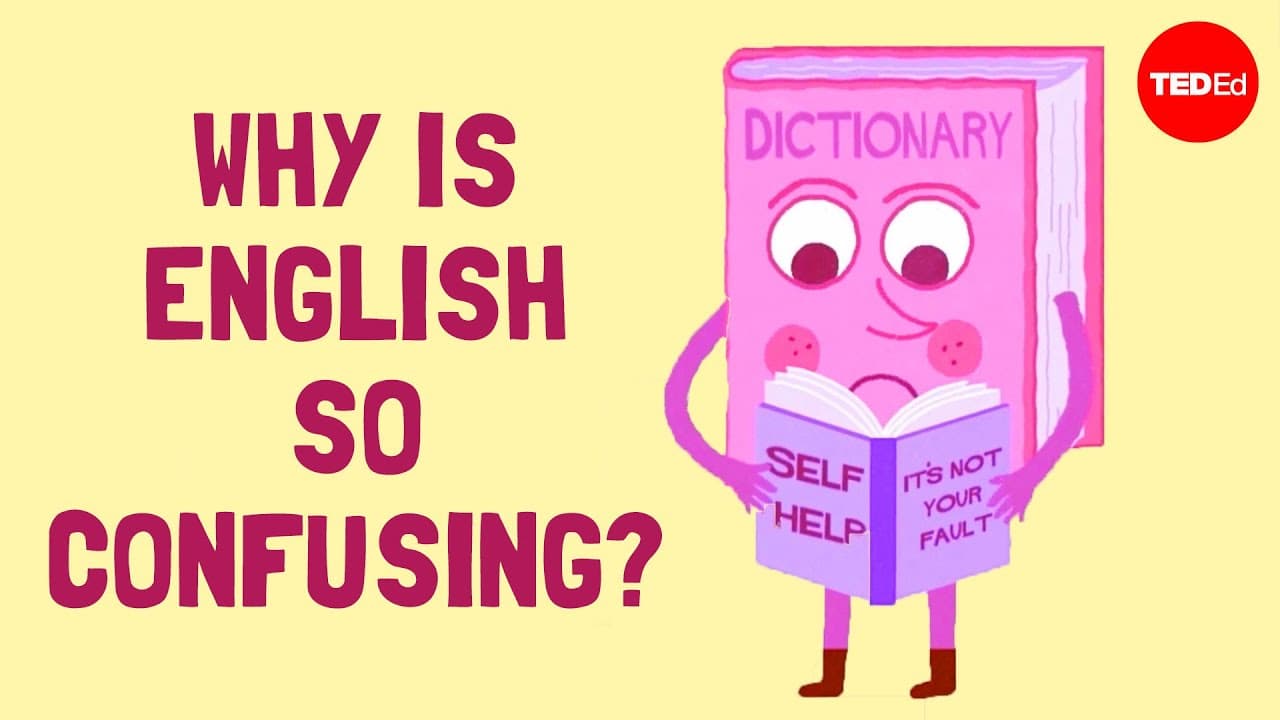
Why Don't Tough and Dough Rhyme in English?
TL;DR
Tough and dough don't rhyme due to the complex evolution of English spelling, influenced by Old English, Latin, and French. Historical shifts, such as the Great Vowel Shift and the standardization brought by the printing press, led to differing pronunciations and inconsistent spellings for words with similar letter combinations. This irregularity makes English particularly challenging for learners.
Transcript
It was June 2010. Inside the Scripps National Spelling Bee, contestants between 8- and 15-years-old wrestled words like brachydactylous and leguleian. Outside, a crowd protested the complexity of English spelling conventions. Indeed, spelling reformers have been around for centuries, advocating for overarching changes to make English spelling more ... Read More
Key Insights
- ❓ English spelling reformers have advocated for a more intuitive and consistent spelling system.
- 🍟 The evolution of English from Germanic, Latin, and French influences contributed to its complex spelling rules.
- 😑 The printing press, introduced in England in 1476, led to the standardization of inconsistent spellings.
- 💱 The Great Vowel Shift caused significant changes in the pronunciation of vowels, further complicating English spelling.
Install to Summarize YouTube Videos and Get Transcripts
Explore YouTube Video Summarizer or Get YouTube Transcript Extractor
Questions & Answers
Q: Why is English spelling so complex?
English spelling is complex due to its historical evolution. Influences from Germanic, Latin, and French languages, as well as the printing press and the Great Vowel Shift, have all contributed to its irregularities.
Q: Why did French and Latin influence English spelling?
French and Latin influence on English spelling occurred because of the Norman invasion in 1066 and the presence of the Roman missionaries. French became the language of authority, and Latin was studied through the church and formal education.
Q: How did the printing press impact English spelling?
The printing press arrived in England in 1476, leading to further inconsistencies in English spelling. Different writers used various spellings, resulting in the standardization of diverse spellings that no longer reflected the actual pronunciation.
Q: What was the Great Vowel Shift?
The Great Vowel Shift, which took place between the 14th and 18th centuries, led to significant changes in the pronunciation of many vowels in English. This shift further complicated the spelling of words, as their pronunciations shifted while the spellings remained the same.
Summary & Key Takeaways
-
English spelling has irregularities and complex conventions, leading to calls for spelling reform.
-
The English language evolved from the Germanic tribes in the British Isles, blended with Latin and French influences.
-
The printing press and the Great Vowel Shift further contributed to the complexity of English spelling.
Read in Other Languages (beta)
Share This Summary 📚
Summarize YouTube Videos and Get Video Transcripts with 1-Click
Try YouTube Summary with ChatGPT & Claude or YouTube Transcript Generator
Explore More Summaries from TED-Ed 📚





Summarize YouTube Videos and Get Video Transcripts with 1-Click
Try YouTube Summary with ChatGPT & Claude or YouTube Transcript Generator