Is Religion Good or Bad? Here's What You Need to Know
TL;DR
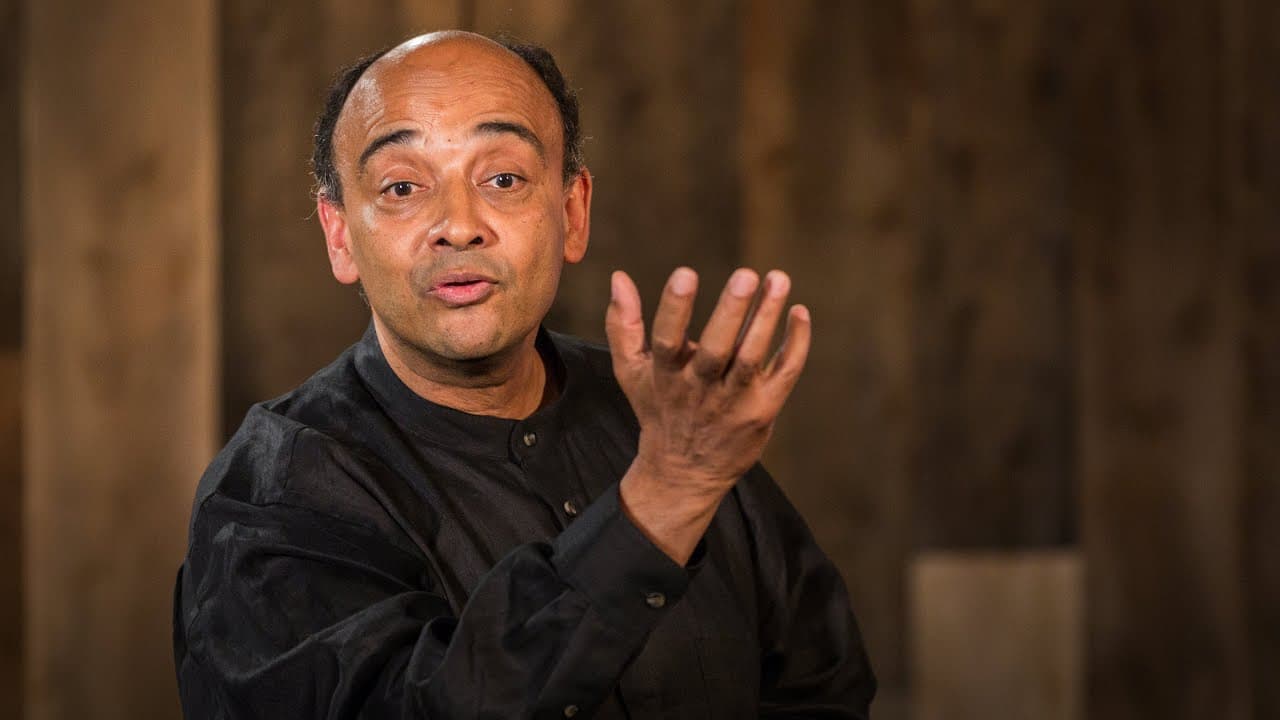
Religion cannot be categorized as simply good or bad because there is no singular definition of it. Different cultures interpret religion in diverse ways, often including beliefs beyond theism, such as atheistic Judaism or Buddhism. Additionally, in many societies, religion and science remain intertwined, challenging the notion of a clear separation between the two.
Transcript
People say things about religion all the time. (Laughter) The late, great Christopher Hitchens wrote a book called "God Is Not Great" whose subtitle was, "Religion Poisons Everything." (Laughter) But last month, in Time magazine, Rabbi David Wolpe, who I gather is referred to as America's rabbi, said, to balance that against that negative character... Read More
Key Insights
- 🤔 There is an age-old debate about the nature of religion and its classification as good or bad, but the speaker argues that there is no singular definition of religion.
- ❌ The traditional definition of religion as belief in gods or spiritual beings does not hold up in all cases, such as atheistic Judaism or atheistic Hinduism.
- 💡 Our concept of religion is based on a list of paradigm religions, and anything new that claims to be a religion is evaluated based on its similarity to the existing list.
- ⚖️ The concept of religion likely emerged as European travelers encountered non-Christian cultures and sought to understand what they had instead.
- ✝️ Christianity has a specific history that includes a focus on creed and belief, which is not necessarily present in all religions.
- 🔍 The late 19th century brought a divide between science and religion, allowing for intellectual pursuits outside the constraints of religious beliefs.
- 🌍 In some parts of the world, the separation between religion and science has not occurred, and religion continues to play a significant role in various aspects of life.
- ✨ Taking into account the diversity and complexities of religious practices and beliefs, it may be more accurate to approach the topic without assuming a single definition or generalization.
Install to Summarize YouTube Videos and Get Transcripts
Explore YouTube Video Summarizer or Get YouTube Transcript Extractor
Questions & Answers
Q: What is the main argument presented in the video?
The main argument presented in the video is that the concept of religion is not a singular, universal entity but rather a collection of practices and beliefs that differ across cultures and societies. The speaker challenges the notion of a single definition of religion and argues that religious experiences, beliefs, and practices vary widely, making it impossible to make broad generalizations about religion as a whole.
Q: How does the speaker challenge traditional definitions of religion?
The speaker challenges traditional definitions of religion by providing examples of religious practices and beliefs that do not fit the typical definition of belief in gods or spiritual beings. For instance, the speaker highlights the case of an atheistic Jewish rabbi and the Dalai Lama, who does not believe in God. These examples demonstrate that the traditional definition of religion as belief in gods is not applicable to all religious traditions.
Q: How does the speaker explain the origins of the concept of religion?
The speaker suggests that the concept of religion emerged from European travelers encountering societies that did not practice Christianity. These travelers questioned what these societies had instead of Christianity and constructed a list of practices and beliefs that were seen as alternative to Christianity. This list became the basis for defining what is considered religion, but it is limited in its perspective and does not encompass all religious traditions.
Q: How does the speaker argue that religion and science have been separated in Western societies?
The speaker argues that in Western societies, there was a division of labor between science and religion in the late 19th century. This division allowed intellectuals and scholars to pursue scientific and intellectual pursuits without being constrained by religious beliefs. This separation between science and religion solidified over time, leading to a clear distinction between the two in Western societies.
Summary & Key Takeaways
-
The concept of religion is debated and often misunderstood, with differing definitions and perspectives.
-
The idea that religion involves belief in gods or spiritual beings is challenged by examples such as atheistic Judaism and atheistic Buddhism.
-
The concept of religion has been shaped by European travelers and their encounters with different cultures, but this perspective may not apply to all societies. Religion and science have not always been separate, and in many parts of the world, they still coexist.
Read in Other Languages (beta)
Share This Summary 📚
Summarize YouTube Videos and Get Video Transcripts with 1-Click
Try YouTube Summary with ChatGPT & Claude or YouTube Transcript Generator
Explore More Summaries from TED 📚





Summarize YouTube Videos and Get Video Transcripts with 1-Click
Try YouTube Summary with ChatGPT & Claude or YouTube Transcript Generator