What Can Your Fingerprints Say About You?
TL;DR
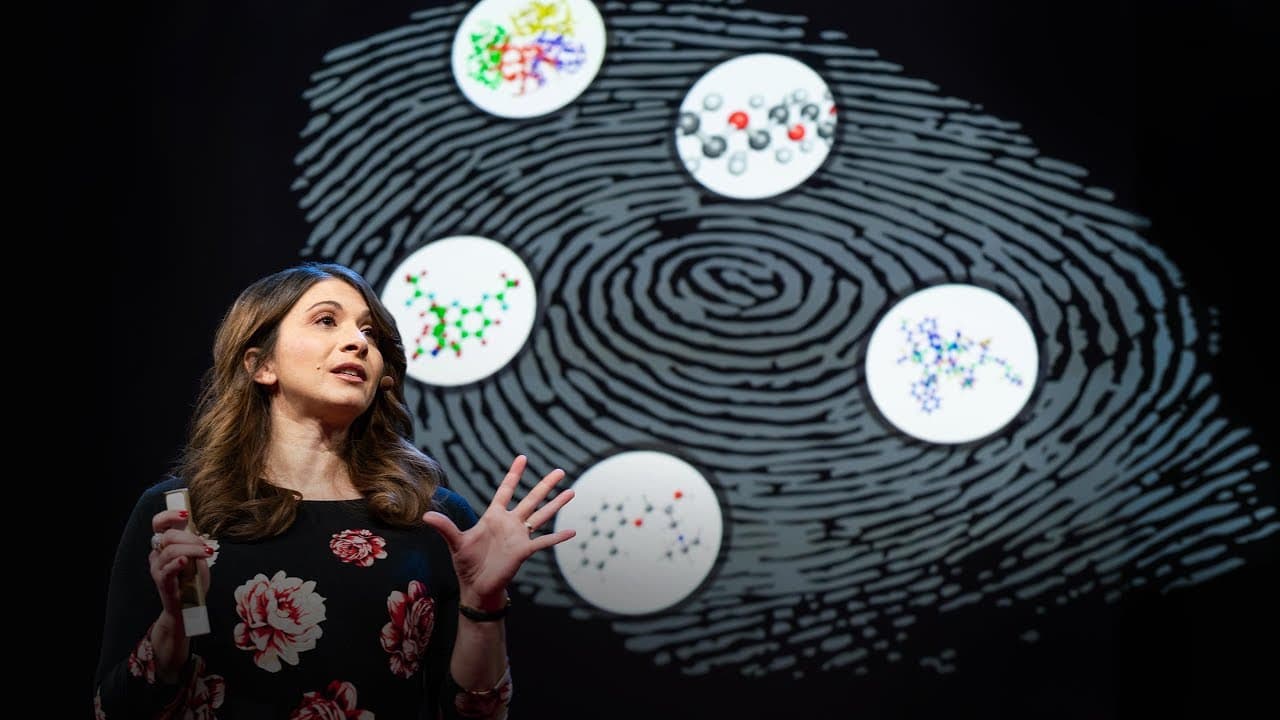
Your fingerprints reveal crucial information about your health and activities, including substances you've come into contact with. Advanced mass spectrometry imaging can analyze these prints to identify unique molecules, aiding criminal investigations by distinguishing overlapping prints and linking them to suspects based on the molecular evidence detected.
Transcript
Do you ever stop and think, during a romantic dinner, "I've just left my fingerprints all over my wine glass." (Laughter) Or do you ever worry, when you visit a friend, about leaving a little piece of you behind on every surface that you touch? And even this evening, have you paid any attention to sit without touching anything? Well, you're not alo... Read More
Key Insights
- 🔬 Fingerprints are made up of molecules that can provide a wealth of information about an individual's activities, including sweat molecules, molecules from the body, and substances that may contaminate the fingertips.
- 🔐 Traditional fingerprint analysis may not be able to identify faint and overlapping prints, but new technology using mass spectrometry imaging can provide valuable insights and evidence.
- 💉 By analyzing the molecules in a fingerprint, it is possible to detect the presence of substances like condom lubricants, antidepressants, and even determine if someone consumed alcohol and cocaine together.
- 🔎 Mass spectrometry imaging can locate specific molecules on a fingerprint, helping to identify which fingerprint belongs to which individual and providing crucial evidence in criminal investigations.
- 🛠️ The technology can generate multiple images of the same fingerprint, allowing for the separation of overlapping prints and improving the clarity and continuity of the ridge pattern.
- 🔍 By superimposing hundreds of images of the same fingerprint, a clear and detailed image can be created, which can then be checked against a database for identification purposes.
- 📚 This technology has the potential to revolutionize criminal profiling, combining expert recognition of behavioral patterns with the molecular makeup of fingerprints to build a more comprehensive identikit.
- 🚀 As of 2017, this technology is being used to contribute to police investigations, marking a new era for fingerprint analysis and criminal profiling.
Install to Summarize YouTube Videos and Get Transcripts
Explore YouTube Video Summarizer or Get YouTube Transcript Extractor
Questions & Answers
Q: What are the three classes of molecules that make up fingerprints?
Fingerprints are made up of molecules belonging to three classes. First, sweat molecules that we all produce in very different amounts. Second, molecules that we introduce into our body and then sweat out. Third, molecules that we may contaminate our fingertips with when we touch substances like blood, paint, and grease, as well as invisible substances.
Q: How are fingerprints formed and what makes them informative?
Beyond the unique pattern of lines, a fingerprint holds an entire world of information in a small, often invisible deposit. It is built from the molecules we produce, ingest, and pick up by contact. As Francese puts it, molecules are the storytellers of who we are and what we have been up to, so the right technology can make them talk.
Q: How does mass spectrometry imaging analyze a fingerprint?
Scientists fire a UV laser at the print, causing the molecules to desorb so they can be captured by a mass spectrometer. The instrument measures the weight, or mass, of each molecule, and those masses reveal which molecules are present, distinguishing something harmless like paracetamol from something more forensically significant.
Q: What can the molecules in a fingerprint reveal about a person?
The analysis can detect substances a person came into contact with, including condom lubricants, and protocols can even suggest which brand of condom was used. It can also reveal an antidepressant and a special molecule that only forms in the body when someone drinks alcohol and consumes cocaine at the same time, hinting at the person's state of mind.
Q: How was this technology used to solve the murder case in the talk?
In Katie's case, the only evidence was two very faint, overlapping fingerprints on tape wrapped around her neck. The lab detected condom lubricants that matched a brand found in a suspect's premises, plus an antidepressant and the alcohol-and-cocaine molecule. These molecular findings aligned with police intelligence about the suspect Thomson, who was a drug addict with a medical record for psychotic episodes.
Q: How can the technology separate two overlapping fingerprints?
Because overlapping prints from different individuals rarely share an identical molecular composition, the software can be asked to visualize the unique molecules present in only one mark and not the other. This separates the two ridge patterns. In the case, this let police identify one print as Katie's by comparing it with a print taken from her posthumously, leaving only the killer's print to analyze.
Q: How is a clear enough fingerprint image produced for identification?
The technology can generate multiple images of the same mark, in theory hundreds, one for each detected molecule. By superimposing these many images of the same fingerprint, a clearer and more continuous ridge pattern is built up, which can then be checked against a database for identification.
Q: Is this fingerprint technology actually used in real investigations?
Yes. Francese describes it as an existing form of mass spectrometry imaging that her team further developed and adapted specifically for the molecular and imaging analysis of fingerprints. It is being used to contribute to real police investigations, combining molecular evidence with behavioral profiling to build a fuller picture of a suspect.
Summary & Key Takeaways
-
Fingerprints contain molecules that can provide information about a person's lifestyle and actions, including substances they have come into contact with.
-
A new technology called mass spectrometry imaging can analyze fingerprints and identify unique molecules present in them.
-
This technology can be used in criminal investigations to identify suspects and gather information about their activities and state of mind.
Read in Other Languages (beta)
Share This Summary 📚
Summarize YouTube Videos and Get Video Transcripts with 1-Click
Try YouTube Summary with ChatGPT & Claude or YouTube Transcript Generator
Explore More Summaries from TED 📚






Summarize YouTube Videos and Get Video Transcripts with 1-Click
Try YouTube Summary with ChatGPT & Claude or YouTube Transcript Generator