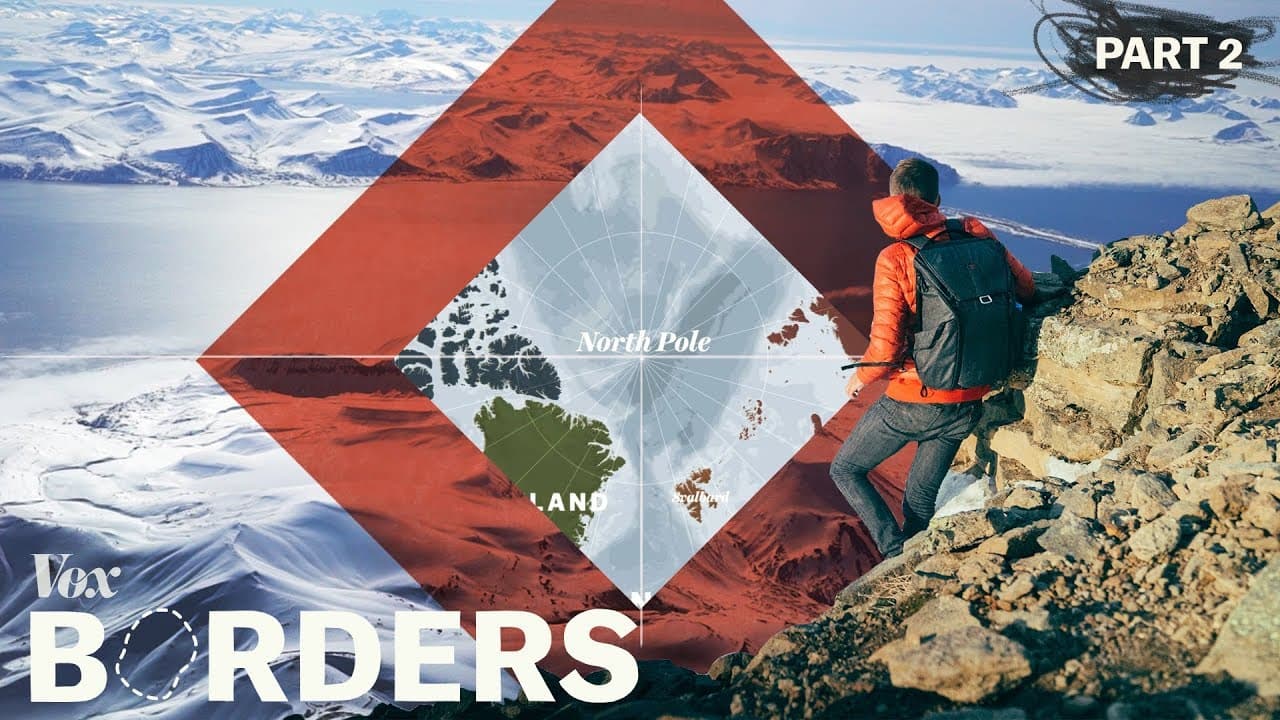
Who Owns the Arctic Ocean?
TL;DR
The Arctic's melting ice is opening new economic opportunities, leading to increased geopolitical interest, particularly from Russia. As nations vie for control over resources and trade routes, Russia is leveraging both military and cultural strategies to assert influence. The situation remains complex, with overlapping territorial claims and the potential for conflict.
Transcript
I'm on an island near the North Pole and I'm here to find out who owns the Arctic. As the ice melts more and more in this region, you can see just how dramatic the ice has been shrinking. One of these countries has shown that they're willing to fight for it. Russia's making a new push into the Arctic. This is the Wild West. Investment opportunities... Read More
Key Insights
- The Arctic ice is melting, creating new economic opportunities such as trade routes and access to natural resources.
- Russia is aggressively pursuing claims in the Arctic, using both military buildup and cultural influence.
- The Arctic region holds an estimated 30% of the world's undiscovered natural gas and 13% of its oil.
- Countries are using scientific data to claim extended continental shelves, which could expand their territories.
- The UN committee evaluates these claims based on scientific validity, but negotiations are needed for overlapping claims.
- Russia's activities in the Arctic include reopening military bases and conducting exercises to project power.
- The Svalbard Treaty allows multiple countries to exploit resources on Svalbard, but military presence is prohibited.
- Russia's strategy includes soft power through cultural and tourism initiatives in Barentsburg, Svalbard.
Install to Summarize YouTube Videos and Get Transcripts
Explore YouTube Video Summarizer or Get YouTube Transcript Extractor
Questions & Answers
Q: How is the melting Arctic ice impacting geopolitical dynamics?
The melting Arctic ice is creating new economic opportunities by opening up trade routes and access to vast natural resources, such as oil and gas. This has heightened geopolitical interest, particularly from Arctic nations, leading to overlapping territorial claims and increased military presence, notably by Russia, which seeks to assert influence and control over the region.
Q: What role does the UN play in Arctic territorial claims?
The UN plays a crucial role in Arctic territorial claims through a committee that evaluates the scientific validity of countries' claims to extended continental shelves. These claims can significantly expand a nation's territory, allowing access to underwater resources. However, overlapping claims require diplomatic negotiations to resolve, as the UN only validates the scientific basis, not the political outcomes.
Q: Why is Russia interested in the Arctic region?
Russia is interested in the Arctic region due to its vast untapped natural resources, including significant reserves of oil and natural gas, and new shipping routes that reduce travel time between markets. Russia is employing both military and cultural strategies to strengthen its claim and influence in the Arctic, viewing it as a strategic and economic frontier with immense potential.
Q: How does the Svalbard Treaty affect territorial claims?
The Svalbard Treaty, signed in 1920, allows multiple countries to exploit resources on Svalbard for commercial purposes, while prohibiting military presence. This complicates territorial claims as it grants economic rights to 45 signatory countries, including Russia, which uses Svalbard strategically to assert influence and maintain a presence in the Arctic without breaching military restrictions.
Q: What is Russia's strategy in Barentsburg, Svalbard?
Russia's strategy in Barentsburg, Svalbard, involves using soft power through cultural and tourism initiatives to maintain a presence and assert influence in the Arctic. By investing in infrastructure and promoting Russian cultural identity, Russia aims to strengthen its strategic position and economic claims in the region, leveraging Barentsburg as a geopolitical bargaining chip.
Q: What are the economic potentials of the Arctic region?
The Arctic region holds significant economic potential due to its estimated 30% of the world's undiscovered natural gas and 13% of its oil reserves. Additionally, melting ice is opening new shipping routes, reducing travel time between Asian and Western markets. These factors make the Arctic a lucrative frontier for resource extraction and trade, attracting global interest and investment.
Q: How is Russia projecting power in the Arctic?
Russia is projecting power in the Arctic through a combination of military buildup and cultural influence. It has reopened and fortified military bases, conducted exercises, and increased its military presence with air patrols and troops. Simultaneously, Russia is investing in cultural and tourism projects in places like Barentsburg to assert soft power and strengthen its geopolitical claims.
Q: What challenges do Arctic nations face in territorial negotiations?
Arctic nations face challenges in territorial negotiations due to overlapping claims on extended continental shelves, which require scientific validation and diplomatic resolution. The melting ice and changing geography complicate existing treaties and norms, necessitating new agreements to manage resource access and avoid conflict. Russia's assertive strategies further complicate negotiations, requiring careful diplomacy.
Summary & Key Takeaways
-
Melting Arctic ice is unlocking new economic opportunities, prompting nations to expand territorial claims. Russia is leading this charge with a mix of military and cultural strategies, asserting influence in the region. The Arctic holds vast untapped natural resources, making it a geopolitical hotspot as countries vie for control over this emerging frontier.
-
Countries are claiming extended continental shelves based on scientific data, reviewed by a UN committee. Russia's aggressive Arctic strategy includes military exercises and cultural initiatives, such as tourism in Svalbard. The Svalbard Treaty allows economic exploitation by multiple countries, but prohibits military assets, complicating territorial claims.
-
Russia's Arctic ambitions are driven by potential economic gains from natural resources and new shipping routes. While Russia follows UN protocols for territorial claims, its military buildup signals a readiness to assert dominance. The Arctic's changing landscape poses challenges to existing treaties, necessitating diplomatic solutions to avoid conflict.
Read in Other Languages (beta)
Share This Summary 📚
Summarize YouTube Videos and Get Video Transcripts with 1-Click
Try YouTube Summary with ChatGPT & Claude or YouTube Transcript Generator
Explore More Summaries from Vox 📚



Summarize YouTube Videos and Get Video Transcripts with 1-Click
Try YouTube Summary with ChatGPT & Claude or YouTube Transcript Generator