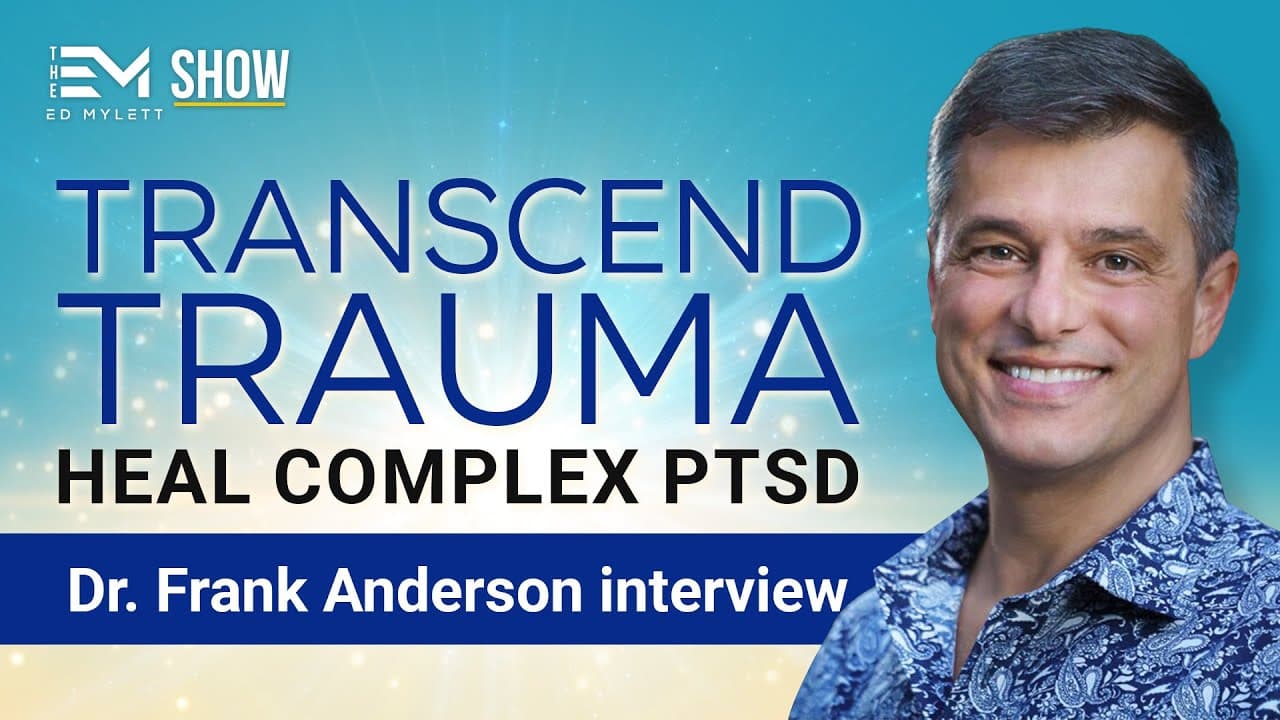
How To Heal Your Emotional Trauma & Past Wounds w/ Dr Frank Anderson
TL;DR
Dr. Frank Anderson discusses healing trauma and self-awareness.
Transcript
our wounds are looking for redemption unless they're healed okay you keep going for the same guy or the same girl maybe it's an upgraded version but it's the redemption of our wounds is why there's a 50 divorce rate in the world honestly because we keep looking for you're going to be the father of the mother that i never had you're going to love me... Read More
Key Insights
- Dr. Frank Anderson emphasizes the importance of healing emotional trauma to break repetitive patterns in relationships and life decisions.
- Trauma is described as a spectrum disorder, where experiences are subjective and can range from minor incidents to severe events.
- Internal Family Systems (IFS) therapy is highlighted as a method to address trauma by understanding and integrating different parts of oneself.
- Self-energy, characterized by compassion, calm, and curiosity, is inherent in everyone and can be accessed to heal internal wounds.
- Corrective emotional experiences, whether internal or through relationships, can provide healing by redoing past patterns differently.
- Awareness of one's protective mechanisms and their positive intentions can lead to healthier coping strategies and self-forgiveness.
- Decision-making fears often stem from an inability to tolerate emotions related to potential loss or others' perceptions.
- Family gatherings can trigger old roles and expectations, but focusing on commonalities and realistic expectations can improve interactions.
Install to Summarize YouTube Videos and Get Transcripts
Explore YouTube Video Summarizer or Get YouTube Transcript Extractor
Questions & Answers
Q: What is trauma and how does it affect people?
Trauma is described as a spectrum disorder that encompasses a range of overwhelming life experiences, from minor incidents to severe events. It affects individuals differently based on their perception and can manifest in various forms such as PTSD, anxiety, and depression. Trauma impacts mental health by creating patterns and triggers that influence behavior and relationships.
Q: How can Internal Family Systems (IFS) therapy help with trauma?
IFS therapy helps by identifying and integrating different parts of oneself that have developed as protective mechanisms against trauma. It focuses on accessing self-energy, which includes qualities like compassion and calmness, to heal internal wounds. This approach allows individuals to understand their protective parts, address their trauma, and develop healthier coping strategies.
Q: What is self-energy and how does it aid in healing?
Self-energy is an inherent state of being characterized by qualities such as compassion, calm, and curiosity. It is believed to be present in everyone and can be accessed to heal internal wounds. By fostering self-awareness and connection, individuals can use self-energy to address past traumas, leading to emotional healing and healthier relationships.
Q: What are corrective emotional experiences and their significance?
Corrective emotional experiences are moments when individuals break past patterns by responding differently to situations. These experiences can be internal, through self-compassion and connection, or external, through relationships. They are significant because they provide opportunities for healing by allowing individuals to process past traumas in a new, healthier way.
Q: How can one identify if they have PTSD or trauma-related issues?
Signs of PTSD or trauma-related issues include repetitive patterns of behavior, anxiety, mood swings, and difficulty in relationships. Individuals may feel overwhelmed, reactive, or experience periods of depression. Recognizing these patterns and their impact on daily life can indicate underlying trauma, prompting the need for self-reflection or professional help.
Q: What role does self-forgiveness play in healing trauma?
Self-forgiveness is crucial in healing trauma as it involves understanding the positive intentions behind protective mechanisms, even if they resulted in negative outcomes. By acknowledging and forgiving these parts of oneself, individuals can release the burdens of past actions and develop healthier coping strategies, leading to emotional healing and personal growth.
Q: How can one deal with anxiety and fear in decision-making?
Anxiety and fear in decision-making often stem from an inability to tolerate emotions related to potential loss or others' perceptions. To address this, individuals should identify the root cause of their fear, whether it's fear of loss or disappointing others, and work on developing emotional resilience and self-awareness to make more confident decisions.
Q: What strategies can help in handling family gatherings with potential triggers?
To handle family gatherings with potential triggers, individuals should manage expectations realistically and focus on commonalities rather than differences. Engaging in self-reflection, understanding personal triggers, and setting boundaries can help maintain emotional stability. Additionally, open communication and emphasizing shared values can foster better connections during such gatherings.
Summary & Key Takeaways
-
Dr. Frank Anderson discusses the pervasive nature of trauma and its impact on mental health, emphasizing the need for healing and self-awareness. He outlines trauma as a spectrum disorder and introduces Internal Family Systems therapy as a method to address it.
-
The concept of self-energy is central to healing, involving qualities like compassion and calmness that everyone possesses. Corrective emotional experiences, both internal and external, are vital for breaking repetitive patterns and achieving emotional healing.
-
Awareness of one's coping mechanisms and self-forgiveness are crucial steps in healing. Dr. Anderson highlights the importance of self-reflection and realistic expectations in relationships, particularly in family settings, to foster better connections and personal growth.
Read in Other Languages (beta)
Share This Summary 📚
Summarize YouTube Videos and Get Video Transcripts with 1-Click
Try YouTube Summary with ChatGPT & Claude or YouTube Transcript Generator
Explore More Summaries from Ed Mylett 📚

Summarize YouTube Videos and Get Video Transcripts with 1-Click
Try YouTube Summary with ChatGPT & Claude or YouTube Transcript Generator