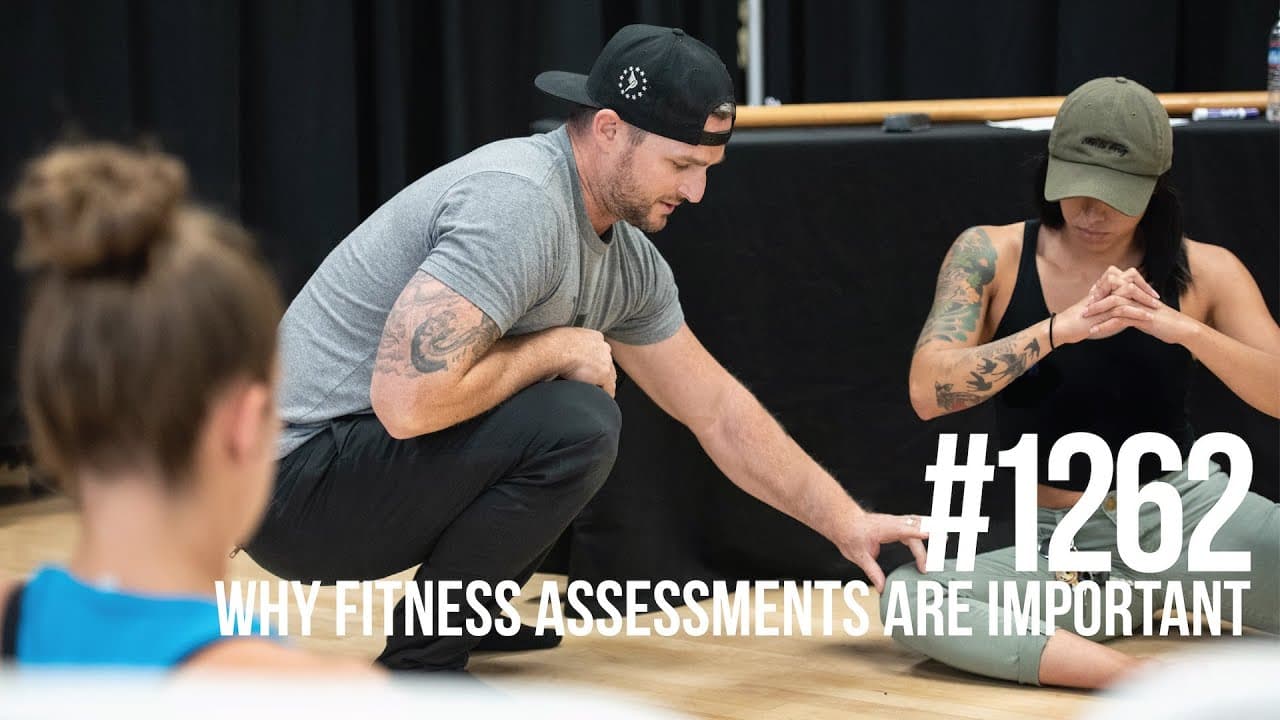
#1262 | Why Fitness Assessments are Important
TL;DR
Fitness assessments guide personalized exercise plans and prevent injuries.
Transcript
in this episode of mine pump we talk about fitness assessments and why they are essential for everyone okay an assessment is what's gonna give you your map to get to your goal so you know where to go we're not to go what exercises to apply and which ones to avoid without a good assessment you not only will not progress nearly as fast as you could b... Read More
Key Insights
- Fitness assessments create a personalized map for achieving fitness goals, helping identify which exercises to perform and avoid.
- Without proper assessments, individuals risk slower progress and higher chances of injury during workouts.
- Movement assessments help identify muscle imbalances and poor movement patterns that need correction for optimal performance.
- Trainers should prioritize assessments to provide clients with tailored exercise plans, especially in virtual settings.
- Specific fitness goals and honest self-assessment of fitness levels are crucial for effective workout planning.
- Common issues like forward head posture and rounded shoulders can be addressed with specific exercises like rows and wall slides.
- The windmill test assesses hip hinging and spinal rotation, critical for preventing lower back pain during dynamic movements.
- Squat tests reveal ankle and hip mobility issues, which can be corrected with exercises like combat stretches and 90/90 variations.
Install to Summarize YouTube Videos and Get Transcripts
Explore YouTube Video Summarizer or Get YouTube Transcript Extractor
Questions & Answers
Q: Why are fitness assessments important?
Fitness assessments are vital because they provide a personalized map to achieve fitness goals. They help identify which exercises are beneficial and which should be avoided, reducing the risk of injury and ensuring faster progress. They also address muscle imbalances and poor movement patterns.
Q: What are the key components of a fitness assessment?
Key components of a fitness assessment include evaluating movement patterns through tests like the wall test, windmill test, and squat test. These assessments help identify issues like poor posture, limited mobility, and muscle imbalances, which can then be corrected through targeted exercises.
Q: How can fitness assessments prevent injuries?
Fitness assessments prevent injuries by identifying poor movement patterns and muscle imbalances that increase injury risk. By correcting these issues with specific exercises, individuals can improve their movement quality, reduce strain on joints, and safely progress in their fitness journey.
Q: What exercises help correct forward head posture and rounded shoulders?
Exercises like seated rows and wall slides are effective for correcting forward head posture and rounded shoulders. These exercises strengthen the upper back muscles and improve shoulder mobility, helping to counteract the effects of prolonged sitting and poor posture.
Q: How does the windmill test benefit fitness assessments?
The windmill test benefits fitness assessments by evaluating hip hinging and spinal rotation capabilities. These are critical for dynamic movements and preventing lower back pain. The test helps identify limitations in these areas, allowing for targeted corrective exercises to improve performance and reduce injury risk.
Q: What common issues are revealed by the squat test?
The squat test often reveals issues with ankle and hip mobility, such as heels lifting off the ground or knees caving in. These issues can be addressed with exercises like combat stretches for ankle mobility and 90/90 variations for hip rotation, leading to better squat form and reduced injury risk.
Q: How can trainers effectively use fitness assessments in virtual settings?
In virtual settings, trainers can use fitness assessments by guiding clients through self-assessment tests and providing feedback based on their performance. Programs like Maps Prime and Prime Pro offer structured assessments and corrective exercises that clients can follow independently to address identified issues.
Q: Why is it important to have specific fitness goals?
Having specific fitness goals is important because it provides a clear direction for exercise planning and progress tracking. Specific goals help tailor workouts to individual needs, ensuring that exercises are aligned with desired outcomes, such as weight loss, muscle gain, or improved mobility, leading to more effective and motivating fitness journeys.
Summary & Key Takeaways
-
Fitness assessments are crucial for developing personalized exercise plans that prevent injuries and enhance progress. Without them, individuals may experience slower progress and increased injury risk. Key assessments include wall tests, windmill tests, and squat tests.
-
Movement assessments help identify and correct muscle imbalances and poor movement patterns. Trainers should prioritize these assessments to provide tailored exercise plans, especially in virtual settings. Programs like Maps Prime and Prime Pro offer valuable guidance.
-
Specific fitness goals and honest self-assessment are critical for effective workout planning. Common issues like forward head posture and rounded shoulders can be corrected with exercises like rows and wall slides, while windmill and squat tests address hip and ankle mobility.
Read in Other Languages (beta)
Share This Summary 📚
Summarize YouTube Videos and Get Video Transcripts with 1-Click
Try YouTube Summary with ChatGPT & Claude or YouTube Transcript Generator
Explore More Summaries from Mind Pump Show 📚



Summarize YouTube Videos and Get Video Transcripts with 1-Click
Try YouTube Summary with ChatGPT & Claude or YouTube Transcript Generator