Stanford CS330: Deep Multi-task & Meta Learning I 2021 I Lecture 15
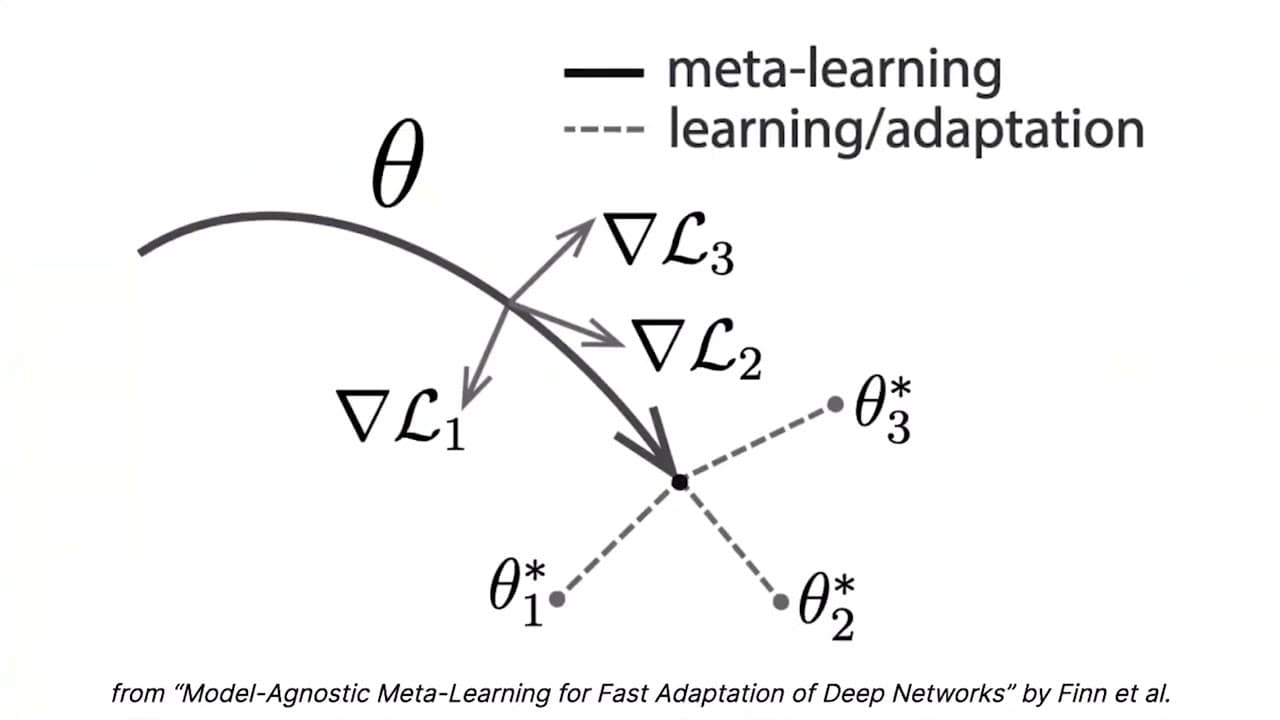
TL;DR
Language models learn word meaning, syntax, grammar, general knowledge, and can even perform tasks through unsupervised pre-training.
Transcript
it is our pleasure today to hear from colin raffle um so colin is an assistant professor in computer science at the university of north carolina in chapel hill colin is also a faculty researcher at hugging face and um well maybe uh you might know him from the celebrated t5 work um that that he did um he's really worked on all kinds of things relate... Read More
Key Insights
- 😑 Language models acquire word meaning, syntax, and grammar through unsupervised pre-training objectives, such as fill-in-the-blank.
- 💁 Pre-training on massive amounts of unlabeled text data exposes language models to diverse facts, trivia, and specific information, improving their general knowledge.
- 📰 Language models trained on unsupervised pre-training demonstrate impressive zero-shot performance on various tasks, indicating their ability to generalize to new tasks.
- 🥺 Careful data selection and supervised multitask training lead to enhanced zero-shot generalization, enabling models to perform well on tasks they were not explicitly trained for.
- 🌍 Larger language models tend to acquire more world knowledge and exhibit better performance on tasks, highlighting the impact of size on model capabilities.
Install to Summarize YouTube Videos and Get Transcripts
Explore YouTube Video Summarizer or Get YouTube Transcript Extractor
Questions & Answers
Q: How do language models learn word meaning, syntax, and grammar without human labeling?
Language models use self-supervised objectives, like filling in blanks, to predict missing words in text data. By training on massive amounts of unlabeled text, the models learn associations between words and the context in which they appear, enabling them to grasp word meaning, syntax, and grammar.
Q: How do language models acquire general knowledge about the world?
Language models indirectly acquire general knowledge by training on large amounts of text data from the internet. By predicting the next word in a sentence during pre-training, the models learn facts, trivia, and even specific information that only appears a few times in the training data.
Q: Can language models perform tasks without specific training on those tasks?
Yes, language models trained on unsupervised pre-training can perform tasks without specific training. By prompting the models with task-specific input and evaluating their responses, they can achieve impressive zero-shot performance on a wide range of tasks, such as question answering, natural language inference, paraphrase identification, and more.
Q: Do larger language models outperform smaller models in terms of world knowledge and task performance?
Yes, larger language models tend to possess more world knowledge and exhibit better task performance. Increased model size allows for better retention and retrieval of information, resulting in higher knowledge acquisition and better generalization to new tasks.
Summary & Key Takeaways
-
Language models use self-supervised objectives, such as fill-in-the-blank, to learn word meaning, syntax, and grammar without human labeling.
-
Language models also learn general knowledge about the world, including facts and trivia, through pre-training on massive amounts of unlabeled text data.
-
Through large-scale pre-training, language models can be adapted to a wide range of tasks and demonstrate impressive zero-shot performance on various benchmarks.
-
With more careful data selection and supervised multitask training, models can achieve better zero-shot generalization to new tasks.
Read in Other Languages (beta)
Share This Summary 📚
Summarize YouTube Videos and Get Video Transcripts with 1-Click
Try YouTube Summary with ChatGPT & Claude or YouTube Transcript Generator
Explore More Summaries from Stanford Online 📚
Summarize YouTube Videos and Get Video Transcripts with 1-Click
Try YouTube Summary with ChatGPT & Claude or YouTube Transcript Generator