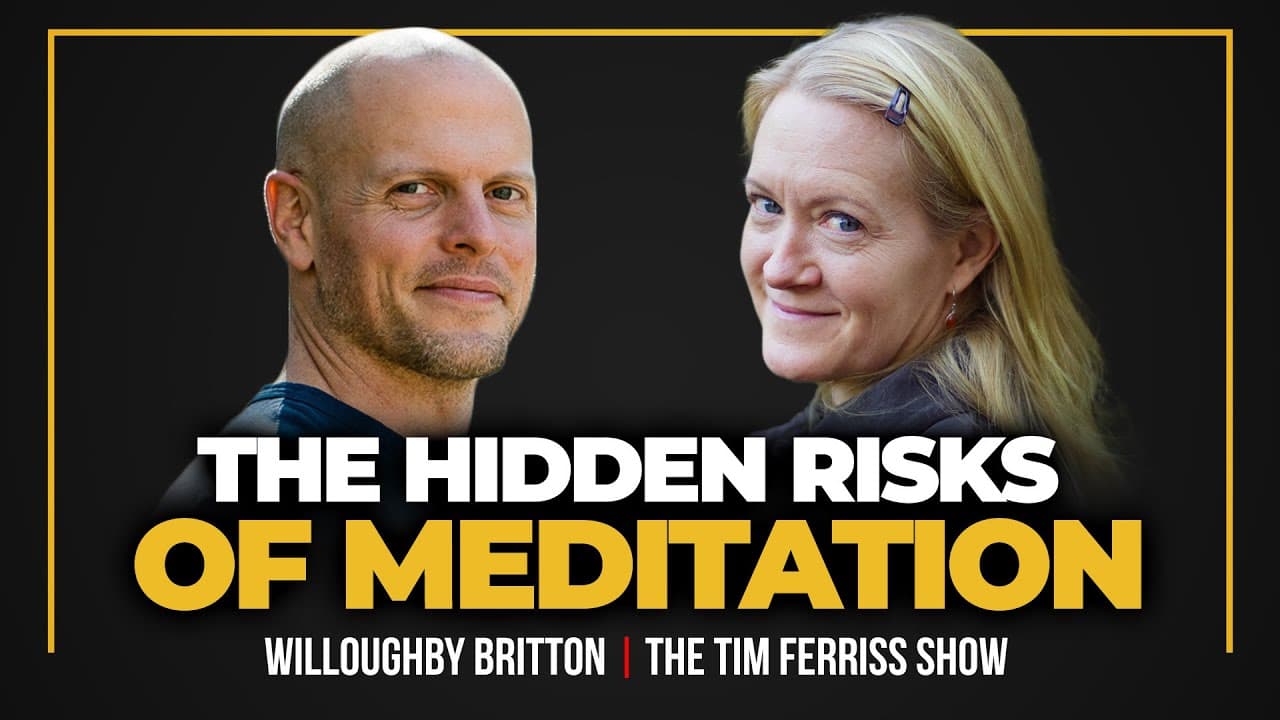
The Hidden Risks of Meditation — Dr. Willoughby Britton | The Tim Ferriss Show
TL;DR
Meditation can have adverse effects, such as heightened emotions or anhedonia, and proper monitoring and tailored retreats are important for safety.
Transcript
Tim Ferriss: Hello, boys and girls, ladies and gents. This is Tim Feriss. Welcome to another episode of The Tim Feriss Show, and it is my pleasure today to have Willoughby Britton, PhD on the podcast. She is a clinical psychologist, and associate professor of psychiatry and human behavior at Brown University Medical School, and the direct... Read More
Key Insights
- 🔨 Combining multiple practices or tools while meditating can increase the risk of adverse effects.
- ✋ Personal risk factors, such as high achievement tendencies, can contribute to adverse experiences.
- 🤘 Maintaining an awareness of individual indicators or warning signs helps individuals gauge their well-being during meditation.
Install to Summarize YouTube Videos and Get Transcripts
Explore YouTube Video Summarizer or Get YouTube Transcript Extractor
Questions & Answers
Q: What are some of the risk factors for adverse effects in meditation?
Some risk factors include being a high achiever, overzealous practice, and combining multiple tools or practices simultaneously.
Q: How can individuals monitor their well-being during meditation?
It is crucial to understand personal indicators or warning signs of distress, such as increased rumination or physical manifestations like dry mouth or temperature changes. Identifying these indicators allows individuals to adjust their practice or seek support if needed.
Q: Are long, intense meditation retreats more risky?
Some retreat formats, such as those with high meditation hours, strict rules, or minimal movement practices, can pose higher risks. It is important to choose a retreat that matches one's goals and needs.
Q: Can adverse effects be prevented or mitigated during a meditation retreat?
Retreats should have robust safety measures in place, including monitoring participants closely, offering tailored feedback, and being open to some modifications to accommodate individuals' needs. Off-ramps or alternative practices can also be helpful if distress arises.
Key Insights:
- Combining multiple practices or tools while meditating can increase the risk of adverse effects.
- Personal risk factors, such as high achievement tendencies, can contribute to adverse experiences.
- Maintaining an awareness of individual indicators or warning signs helps individuals gauge their well-being during meditation.
- Retreats should consider participant feedback, adapt to individual needs, and provide adequate support and monitoring to prevent or address adverse effects.
Summary & Key Takeaways
-
Meditation researcher Willoughby Britton discusses the effects of meditation, including adverse ones, and the importance of understanding individual experiences.
-
Meditation can lead to heightened emotions or anhedonia, where individuals feel numb or emotionally disconnected.
-
Some risk factors for adverse effects include high achiever personalities, overzealous practice, and combining different tools or practices.
Read in Other Languages (beta)
Share This Summary 📚
Summarize YouTube Videos and Get Video Transcripts with 1-Click
Try YouTube Summary with ChatGPT & Claude or YouTube Transcript Generator
Explore More Summaries from Tim Ferriss 📚





Summarize YouTube Videos and Get Video Transcripts with 1-Click
Try YouTube Summary with ChatGPT & Claude or YouTube Transcript Generator