Oxidative Phosphorylation and Chemiosmosis
TL;DR
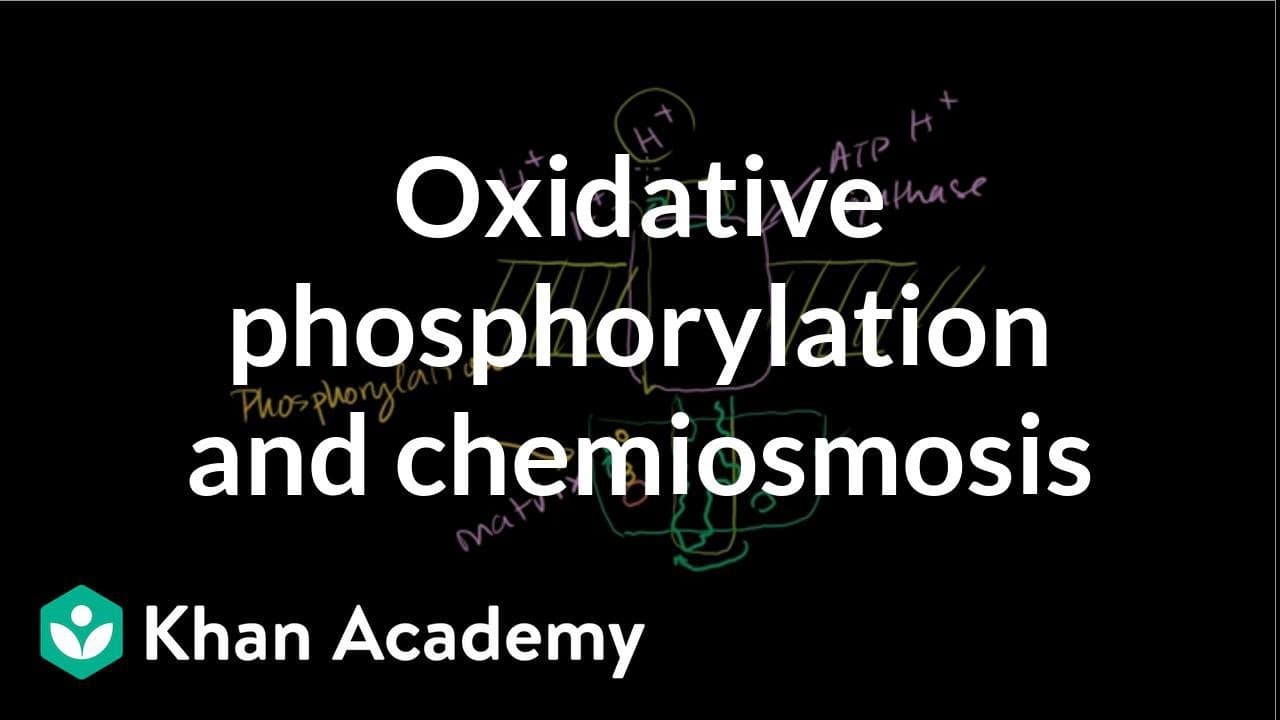
In this video, the presenter corrects a minor mistake in the previous content and introduces important terminology related to the electron transport chain, oxidation, phosphorylation, and chemiosmosis.
Transcript
I made a slight error in the electron transport chain video. And I just wanted to correct it in this one. And it's also an opportunity for me to include a little bit of terminology that I forgot to include in that video. So when I described the electron transport chain, you remember, it's just you have some high-energy electrons in NADH and they ge... Read More
Key Insights
- 🥺 The electron transport chain involves the transfer of high-energy electrons, leading to the oxidation of molecules until water becomes the final electron acceptor.
- 💁 Phosphorylation is the term used for the addition of a phosphate group to another molecule in the ATP formation process.
- ❓ Chemiosmosis is the movement of hydrogen protons through a selectively permeable membrane, enabling the generation of ATP.
- ⛓️ Oxidative phosphorylation is the overall process that involves both oxidation and phosphorylation in the electron transport chain.
- 🏍️ Substrate phosphorylation is an alternative method of ATP production that occurs directly in glycolysis and the Krebs cycle, without involving chemiosmosis.
- ❓ Substrates are the molecules that attach to an enzyme and undergo a specific reaction facilitated by the enzyme.
- 🍉 The presenter emphasizes the importance of knowing these terms, as they may appear in standardized tests or exams.
Install to Summarize YouTube Videos and Get Transcripts
Explore YouTube Video Summarizer or Get YouTube Transcript Extractor
Questions & Answers
Q: What was the minor mistake the presenter corrected in the previous video?
The presenter added a 2 on the left-hand side of the equation in the electron transport chain explanation to correctly balance the hydrogen atoms.
Q: What is oxidation in the context of the electron transport chain?
Oxidation refers to the process where NADH loses a hydrogen and the opportunity to retain its electrons as it moves through the electron transport chain.
Q: What is the term for the addition of a phosphate group to another molecule in the ATP formation process?
The addition of a phosphate group to another molecule in the ATP formation process is called phosphorylation.
Q: What is chemiosmosis?
Chemiosmosis is the process in which hydrogen protons move through a selectively permeable membrane, such as the ATP synthase, generating ATP in the electron transport chain.
Summary & Key Takeaways
-
The presenter corrects a mistake in the electron transport chain explanation by adding a 2 on the left-hand side of the equation to balance the hydrogen atoms.
-
The process of the electron transport chain is called oxidation, as NADH loses a hydrogen and the opportunity to hold onto its electrons.
-
The ATP formation process in the electron transport chain, involving the movement of hydrogens through the ATP synthase, is called oxidative phosphorylation.
Read in Other Languages (beta)
Share This Summary 📚
Summarize YouTube Videos and Get Video Transcripts with 1-Click
Try YouTube Summary with ChatGPT & Claude or YouTube Transcript Generator
Explore More Summaries from Khan Academy 📚



Summarize YouTube Videos and Get Video Transcripts with 1-Click
Try YouTube Summary with ChatGPT & Claude or YouTube Transcript Generator