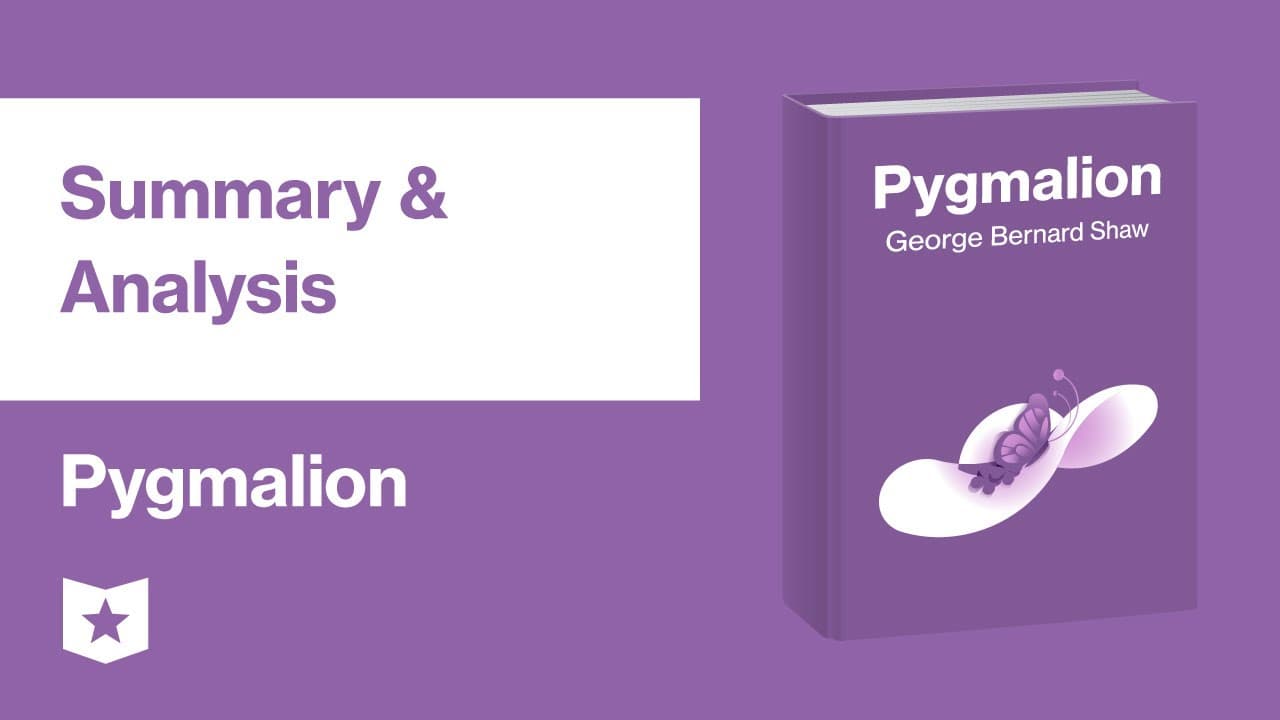
Pygmalion by George Bernard Shaw | Summary & Analysis
TL;DR
A play about language, class, and transformation through the story of Eliza Doolittle and Professor Higgins.
Transcript
in the introduction of the play Pygmalion a sudden downpour has pedestrians in Covent Garden sprinting for shelter or taxis beneath the portico of st. Paul's Church a young deflower girl an older gentleman and a man taking notes on the flower-girl speech are gathering in the rising action becomes clear that the note-taking man is only interested in... Read More
Key Insights
- 🏛️ Pygmalion explores themes of language, class barriers, appearance, and identity.
- 🖐️ Transformation, both physical and internal, is a central focus in the play.
- ❓ The character dynamics highlight issues of objectification, independence, and social hierarchy.
- 🖐️ The play critiques societal values related to femininity, wealth, and morality.
- 😒 The symbolic use of props like the flower shop and the mirror adds depth to the narrative.
- 🎴 Eliza's journey from lower-class flower girl to self-reliant lady is a central arc in the play.
- ✊ Professor Higgins' role as a mentor and creator raises questions about power dynamics and ethics.
Install to Summarize YouTube Videos and Get Transcripts
Explore YouTube Video Summarizer or Get YouTube Transcript Extractor
Questions & Answers
Q: How does Eliza's transformation from a flower girl to a lady reflect larger themes in the play?
Eliza's transformation symbolizes the power of language to break through social barriers and the theme of self-reliance and independence.
Q: What role does Professor Higgins play in Eliza's metamorphosis?
Professor Higgins acts as Eliza's mentor, guiding her through speech and mannerisms, but also objectifying her as an experiment, leading to a clash of values and perspectives.
Q: What are the symbolic meanings behind the flower shop, clothing, and the mirror in Pygmalion?
The flower shop represents Eliza's dream and transformation, clothing reflects social status, and the mirror symbolizes self-awareness and identity.
Q: How does the ending of Pygmalion differ from the original myth of Pygmalion and Galatea?
Shaw's Pygmalion differs from Ovid's myth by emphasizing independence and freedom for Eliza, breaking away from the creator-creation dynamic seen in the ancient story.
Summary & Key Takeaways
-
Eliza Doolittle, a flower girl, undergoes a transformation into a lady through Professor Higgins' phonetic teachings.
-
The play explores themes of class barriers, appearance, identity, and femininity.
-
The dynamic between Eliza, Professor Higgins, and other characters highlights social hierarchy and personal growth.
Read in Other Languages (beta)
Share This Summary 📚
Summarize YouTube Videos and Get Video Transcripts with 1-Click
Try YouTube Summary with ChatGPT & Claude or YouTube Transcript Generator
Explore More Summaries from Course Hero 📚



Summarize YouTube Videos and Get Video Transcripts with 1-Click
Try YouTube Summary with ChatGPT & Claude or YouTube Transcript Generator