Why you’ll need topics to decouple your software systems
TL;DR
Learn to use Q Stash for decoupling software systems with message topics.
Transcript
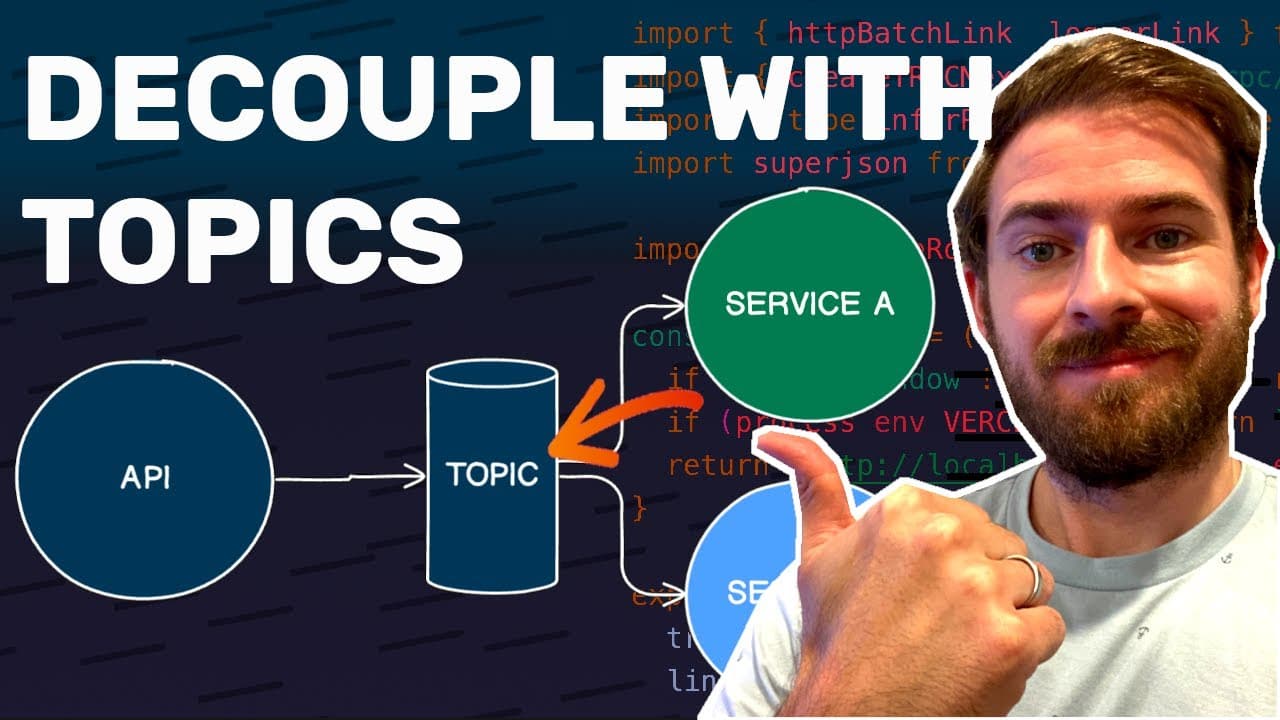
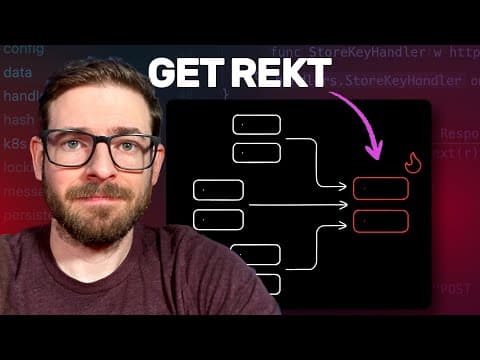
so I've been a software engineer for quite a while now and I'll say one of the most useful tools that you can use when you're building out software is something called cues and topics topics are basically a way to allow your systems to be decoupled from each other where you can publish a message to a topic and that topic will broadcast that message... Read More
Key Insights
- 🔨 Q Stash is a powerful tool for creating decoupled systems, enabling flexibility and scalability in software development.
- 👻 Using topics allows developers to broadcast messages to multiple listeners, reducing dependencies between components.
- 🚚 Automated retry mechanisms within Q Stash enhance the resilience of messaging systems, ensuring message delivery even under failure conditions.
- 😄 The demonstration focuses on practical implementation, showcasing the ease of integrating Q Stash into existing systems without significant overhead.
- 🔒 API endpoint verification is crucial for maintaining security and preventing unauthorized access in systems utilizing message queues.
- 👻 Flexibility in adding new consumers allows developers to adapt swiftly to changing requirements, essential for agile development practices.
- 🈸 Q Stash can be beneficial in various application domains, emphasizing its versatility beyond just Pokémon trading systems.
Install to Summarize YouTube Videos and Get Transcripts
Explore YouTube Video Summarizer or Get YouTube Transcript Extractor
Questions & Answers
Q: What is the primary purpose of using a topic in software systems?
Topics allow systems to decouple by enabling communication without direct dependency, meaning one component can publish messages while others listen and respond accordingly, enhancing flexibility and scalability. This is particularly useful in systems where multiple services need to react to the same event, like a rare card listing.
Q: How does Q Stash improve system resilience?
Q Stash improves resilience through built-in retry logic, which automatically resends messages multiple times if the initial attempt fails. This feature is essential when dealing with third-party APIs where responses can be unpredictable, ensuring that notifications are delivered reliably without manual intervention.
Q: What kind of applications can benefit from using Q Stash?
Applications that require event-driven architecture, such as trading systems, notification services, and any setup needing to emit events to multiple consumers simultaneously, can greatly benefit from Q Stash's capabilities. This includes scenarios in e-commerce, social platforms, and real-time data exchanges.
Q: Can you explain how to publish a message to a Q Stash topic?
To publish a message to a Q Stash topic, you need to format the request correctly by including the API token in the authorization header and the message body. Once the API is configured, you can invoke the publish command using Curl or similar tools, ensuring the message reaches all endpoints subscribed to the topic.
Q: What role does endpoint verification play in the process?
Endpoint verification determines if incoming messages are genuine and originated from authorized sources. By using signing keys, the receiving endpoints can confirm that the messages received were sent by the expected publisher, protecting the system from rogue or malicious requests.
Q: How is the flexibility of adding new consumers managed in this system?
The flexibility to add new consumers is managed through the topic configuration in Q Stash. You can dynamically add or remove endpoints without redeploying your code, facilitating rapid iteration and response to changing system requirements. This supports microservices architecture efficiently.
Q: What is the significance of having retry settings in Q Stash?
Retry settings are vital because they ensure that if an event fails to be processed on the first attempt, it will be automatically retried a predetermined number of times. This minimizes the chances of data loss and maintains functionality even during temporary outages or issues with endpoint services.
Summary & Key Takeaways
-
The video explains how to leverage topics and message queues in software development using Q Stash, specifically for a Pokémon card trading system.
-
It showcases a practical example of listing rare cards and broadcasting notifications across multiple platforms like SMS, email, and Discord without redeploying code.
-
The session includes a demonstration on setting up a topic, publishing messages, and handling retries for failed notifications to ensure robust system performance.
Read in Other Languages (beta)
Share This Summary 📚
Summarize YouTube Videos and Get Video Transcripts with 1-Click
Try YouTube Summary with ChatGPT & Claude or YouTube Transcript Generator
Explore More Summaries from Web Dev Cody 📚
Summarize YouTube Videos and Get Video Transcripts with 1-Click
Try YouTube Summary with ChatGPT & Claude or YouTube Transcript Generator