Lecture 15 – Presenting Your Work | Stanford CS224U: Natural Language Understanding | Spring 2019
TL;DR
This analysis discusses the importance of effective communication in presenting research work and provides insights on data augmentation and probing black-box models.
Transcript
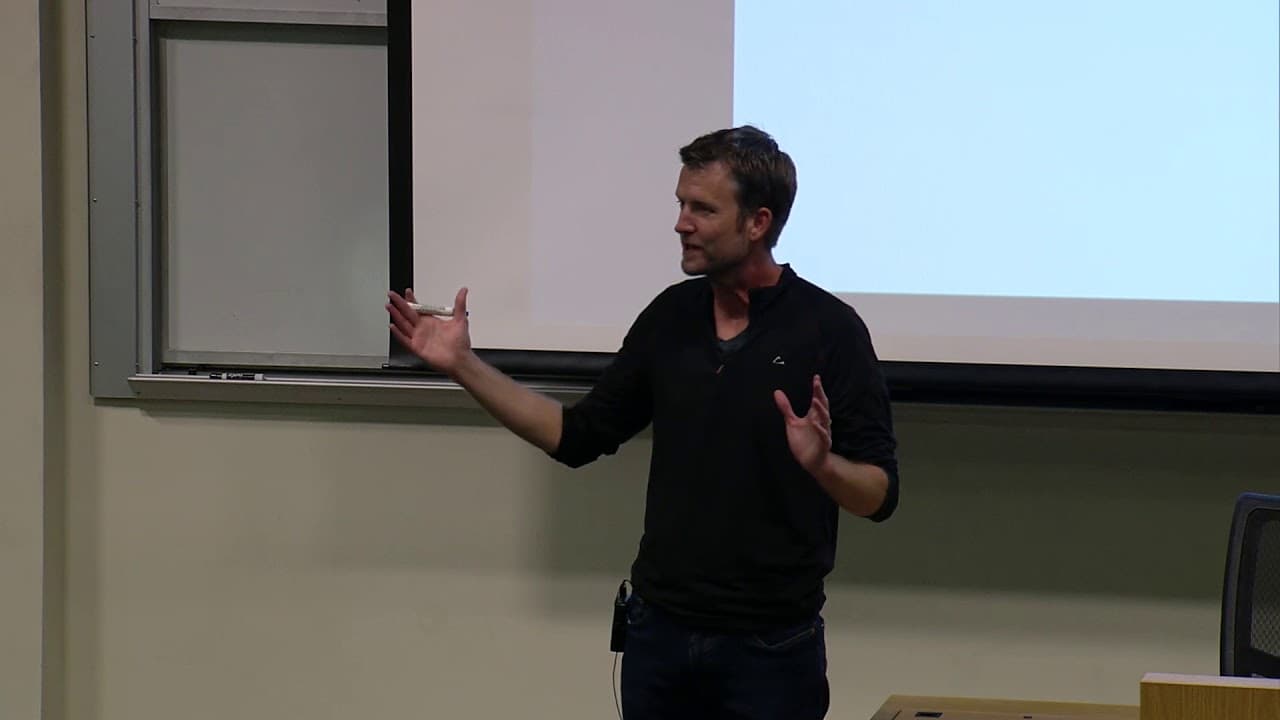
I'm a little bit sick today so I have a scratchy throat. So forgive me for that, but I think we'll, we'll be able to manage without it. Uh, today, I'm gonna talk a little bit about writing up and presenting your work. But before I jump into that, uh, I wanna jump over to our syllabus and orient us a little bit. We're actually gonna cover three topi... Read More
Key Insights
- 💦 Communicating research work effectively is as important as the work itself, ensuring impact and benefiting the scientific community.
- 👨🔬 The inclusion of an authorship statement in research papers promotes responsibility, transparency, and accountability.
- 👨🔬 Writing up and presenting research requires adhering to conventions and structures specific to the field, as well as considering the target audience's understanding and engagement.
- ❓ Data augmentation techniques like EDA and back translation can enhance model performance by generating additional training examples or introducing noise, respectively.
Install to Summarize YouTube Videos and Get Transcripts
Explore YouTube Video Summarizer or Get YouTube Transcript Extractor
Questions & Answers
Q: What is the purpose of including an authorship statement in the final paper?
The authorship statement helps clarify the contributors' roles in the research paper, promoting responsibility and accountability. It enables identification of individual responsibilities within the work and ensures credibility and transparency in case of any concerns or issues.
Q: How can effective communication impact one's research career?
Effective communication of research work is crucial in academia and industry. It helps disseminate findings, build credibility, and open doors for collaboration and career opportunities. Clear and convincing presentation of ideas increases the impact of research and enhances one's professional reputation.
Q: What are some key elements of a research paper?
A research paper typically includes the problem statement, importance of the problem, review of related work, description of the approach/model, evaluation of results, discussion of significance and limitations, and pointers to future work. The narrative arc should emphasize the problem, the approach, and the contributions of the work.
Q: How can data augmentation techniques improve model performance?
Data augmentation techniques increase the amount of relevant training data. These techniques, such as easy data augmentation (EDA) and back translation, create synthetic examples or transform existing examples to provide additional variations. More data often leads to better model accuracy, especially when the original dataset is limited.
Summary & Key Takeaways
-
The video addresses the topics of writing up and presenting research work, as well as mini-lectures on data augmentation and probing black-box models.
-
An announcement is made regarding the inclusion of an authorship statement in the final paper, highlighting the motivation for this scientific practice.
-
The importance of communicating research effectively is emphasized, debunking the misconception that great work will always speak for itself.
Read in Other Languages (beta)
Share This Summary 📚
Summarize YouTube Videos and Get Video Transcripts with 1-Click
Try YouTube Summary with ChatGPT & Claude or YouTube Transcript Generator
Explore More Summaries from Stanford Online 📚

Summarize YouTube Videos and Get Video Transcripts with 1-Click
Try YouTube Summary with ChatGPT & Claude or YouTube Transcript Generator