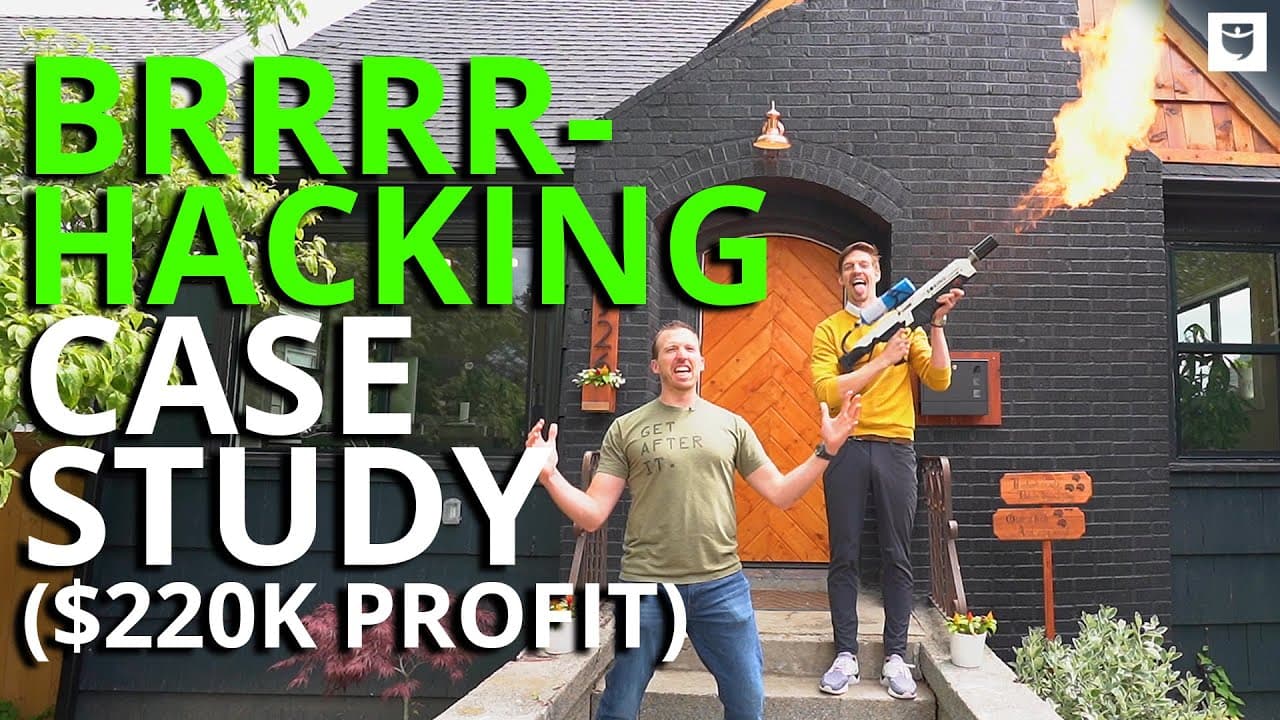
BRRRR-Hacking Real Estate Investment Property Case Study! ($220k Profit!)
TL;DR
A house hacking case study in Seattle yields $220,000 profit.
Transcript
hey everybody i'm tarle yarber with fixated real estate and i'm here with my buddy jan whatnot and we're going to be talking about house hacking that's right we're here with you today here in seattle washington and this house that just got that jan just got finished with he just moved into it he's been house hacking this for a few months uh we're g... Read More
Key Insights
- House hacking can be a lucrative strategy, as demonstrated by Jan's $220,000 profit from refinancing his Seattle property.
- Jan purchased the property for $440,000 and invested $170,000 in renovations, resulting in a final appraised value of $825,000.
- The renovation included modernizing the house with an open concept, new electrical systems, plumbing, HVAC, and custom finishes.
- Jan's property includes a basement ADU that rents for $1,200, offsetting his mortgage payment and reducing his living costs.
- Financing the project with a conventional mortgage allowed Jan to secure a low 3.95% interest rate, minimizing his upfront costs.
- Jan's strategy involved designing the property for personal enjoyment, with plans to convert it into a rental in the future.
- The renovation process took four months, with careful planning and design choices made to maximize both personal comfort and future rental appeal.
- Jan advises potential house hackers to look for properties that can be modified to include additional rental units, such as basements or garages.
Install to Summarize YouTube Videos and Get Transcripts
Explore YouTube Video Summarizer or Get YouTube Transcript Extractor
Questions & Answers
Q: What were the initial purchase and renovation costs for the property?
Jan purchased the property for $440,000 and invested $170,000 in renovations. This brought the total cost basis to $610,000. The renovations included updating the electrical, plumbing, and HVAC systems, as well as modernizing the house with an open concept layout and custom finishes.
Q: How did Jan finance the purchase and renovation of the property?
Jan financed the purchase using a conventional mortgage, which allowed him to secure a low interest rate of 3.95%. He put down $24,000 as a down payment. The renovation was funded with cash, saving on financing costs, although there are other options like 203k loans or hard money loans for those who need them.
Q: What was the final appraised value of the property after renovations?
After completing the renovations, the property was appraised at $825,000. This was significantly higher than Jan's initial target of $675,000, resulting in a substantial increase in equity and enabling a profitable refinancing.
Q: How does the basement ADU contribute to the property's financial performance?
The basement ADU rents for $1,200 per month, which helps offset Jan's mortgage payments. This rental income effectively reduces his living expenses, allowing him to live in an $800,000+ property for a net cost of $2,400 per month after rental income.
Q: What are some key design features of the renovated property?
Key design features include an open concept layout, custom finishes like a chevron-patterned door, unique tile work, and a modern kitchen with a waterfall countertop. The master suite features a vaulted ceiling, custom lighting, and a luxurious bathroom with LED backlighting.
Q: What advice does Jan offer to potential house hackers?
Jan advises potential house hackers to look for properties that can be modified to include additional rental units, such as basements or garages. He suggests focusing on properties that can be transformed into multi-family units at a single-family price, leveraging spaces like basements for additional income.
Q: What challenges did Jan face during the renovation process?
One of the main challenges was addressing a bad sewer line, which required replacement. Additionally, Jan had to manage the complexities of modernizing a 1930s house, ensuring all updates were up to current codes while maintaining the property's original character.
Q: How long did the renovation process take, and what was the outcome?
The renovation process took approximately four months. The outcome was a fully modernized and customized home that appraised for $825,000, allowing Jan to refinance and pull out $220,000 in cash, covering his renovation costs and providing additional profit.
Summary & Key Takeaways
-
In this video, Tarl Yarber and Jan discuss a successful house hacking venture in Seattle, where Jan transformed a $440,000 property into an $825,000 asset. The project involved a $170,000 renovation, resulting in a $220,000 profit after refinancing.
-
The property was upgraded with modern amenities, including an open concept layout, new electrical and plumbing systems, and custom finishes. Jan also added a basement ADU, which generates $1,200 in monthly rental income, significantly reducing his living expenses.
-
Jan financed the project using a conventional mortgage at a 3.95% interest rate, allowing for a low down payment and reduced upfront costs. His strategic design choices aimed at personal enjoyment will later facilitate the property's transition into a rental.
Read in Other Languages (beta)
Share This Summary 📚
Summarize YouTube Videos and Get Video Transcripts with 1-Click
Try YouTube Summary with ChatGPT & Claude or YouTube Transcript Generator
Explore More Summaries from BiggerPockets 📚




Summarize YouTube Videos and Get Video Transcripts with 1-Click
Try YouTube Summary with ChatGPT & Claude or YouTube Transcript Generator