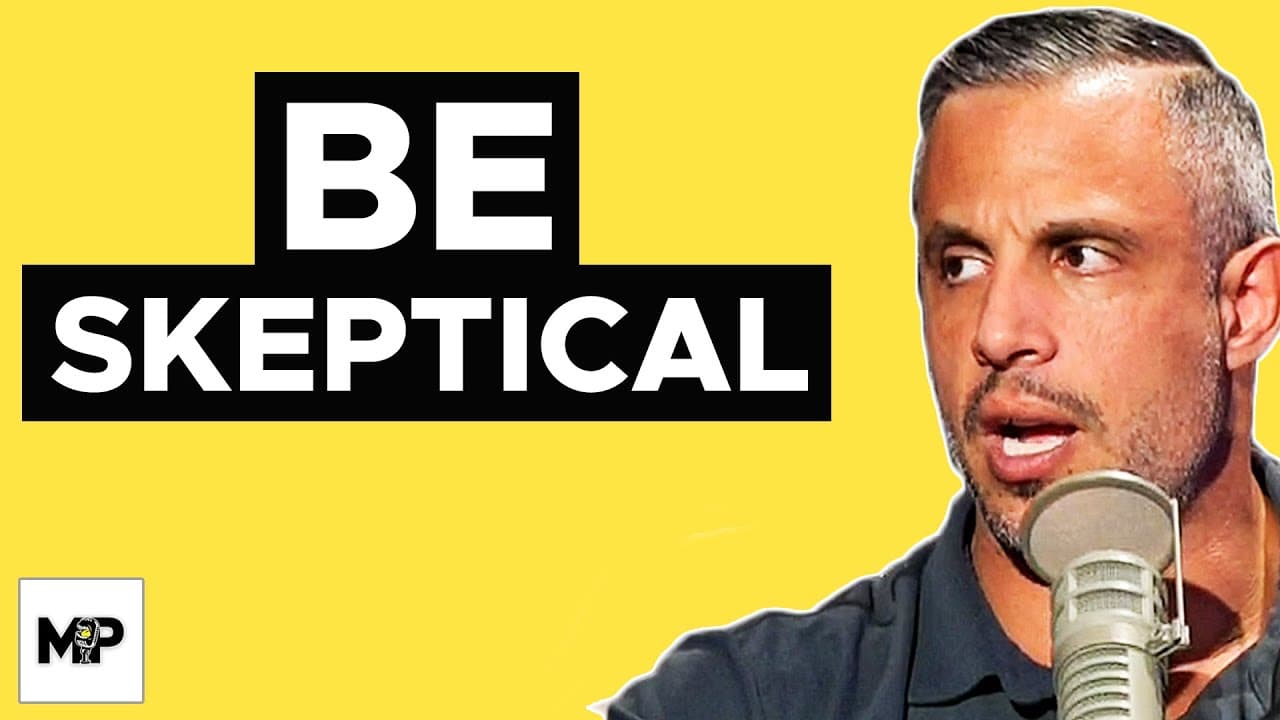
You Can't Fully Trust Scientific Studies! This Is Why Can Anecdote Trump Data | Mind Pump 1869
TL;DR
Scientific studies may not always reflect reality due to biases.
Transcript
there's got to be some balance with this kind of stuff and you got to consider all of these things before making your decisions and also realize that we don't know a lot yeah like there's a lot that we don't know so what you don't want to do is negate uh common knowledge this is where i see a lot of problems where people will read a study but well ... Read More
Key Insights
- Scientific studies can often be misleading due to poor controls and biases, leading to incorrect conclusions.
- Conventional wisdom and historical practices should be considered alongside scientific studies for a well-rounded understanding.
- Studies on sodium and cholesterol have shown that conventional beliefs may sometimes be more accurate than flawed scientific studies.
- The placebo and nocebo effects highlight the power of the mind in influencing study outcomes.
- Observational studies, especially in nutrition, are often unreliable due to self-reporting biases.
- Proper study design includes controls, double-blind setups, large sample sizes, and diverse sample groups.
- Studies are often funded by entities with financial interests, potentially skewing results.
- The serotonin model of depression has been challenged, showing the need for skepticism in scientific conclusions.
Install to Summarize YouTube Videos and Get Transcripts
Explore YouTube Video Summarizer or Get YouTube Transcript Extractor
Questions & Answers
Q: Why should we be cautious about scientific studies?
Scientific studies can often be misleading due to poor controls and biases, leading to incorrect conclusions. It's important to consider conventional wisdom and historical practices alongside scientific studies for a well-rounded understanding.
Q: How do poor controls affect scientific studies?
Poor controls in studies can introduce biases that influence results. For example, studies on sodium and cholesterol have shown that conventional beliefs may sometimes be more accurate than flawed scientific studies.
Q: What is the impact of the placebo and nocebo effects on studies?
The placebo and nocebo effects highlight the power of the mind in influencing study outcomes. Participants' beliefs and attitudes can significantly affect the results, making it crucial to account for these effects in study design.
Q: Why are observational studies often unreliable?
Observational studies, especially in nutrition, are often unreliable due to self-reporting biases. Participants may not accurately report their behaviors, leading to skewed results and incorrect conclusions.
Q: What are key elements of proper study design?
Proper study design includes controls, double-blind setups, large sample sizes, and diverse sample groups. These elements help ensure that results are accurate and applicable to a broader population.
Q: How do financial interests affect study outcomes?
Studies are often funded by entities with financial interests, potentially skewing results. This can lead to biased conclusions that favor the funder's agenda, highlighting the need for skepticism and scrutiny.
Q: What recent example challenges the reliability of scientific conclusions?
The serotonin model of depression has been challenged, showing the need for skepticism in scientific conclusions. Despite decades of belief in this model, recent analyses suggest it may be incorrect, illustrating the evolving nature of scientific understanding.
Q: Why is it important to balance scientific studies with conventional wisdom?
Balancing scientific studies with conventional wisdom provides a more comprehensive understanding. Conventional wisdom offers insights from historical practices that have stood the test of time, while scientific studies can provide new perspectives and data.
Summary & Key Takeaways
-
The discussion highlights the importance of balancing scientific studies with conventional wisdom and historical practices. It emphasizes that studies can be flawed due to poor controls and biases.
-
Examples like sodium and cholesterol illustrate how conventional beliefs may sometimes be more accurate than scientific studies. The placebo and nocebo effects also show the mind's influence on study outcomes.
-
Proper study design includes controls, double-blind setups, large sample sizes, and diverse sample groups. However, many studies are funded by entities with financial interests, potentially skewing results.
Read in Other Languages (beta)
Share This Summary 📚
Summarize YouTube Videos and Get Video Transcripts with 1-Click
Try YouTube Summary with ChatGPT & Claude or YouTube Transcript Generator
Explore More Summaries from Mind Pump Show 📚

Summarize YouTube Videos and Get Video Transcripts with 1-Click
Try YouTube Summary with ChatGPT & Claude or YouTube Transcript Generator