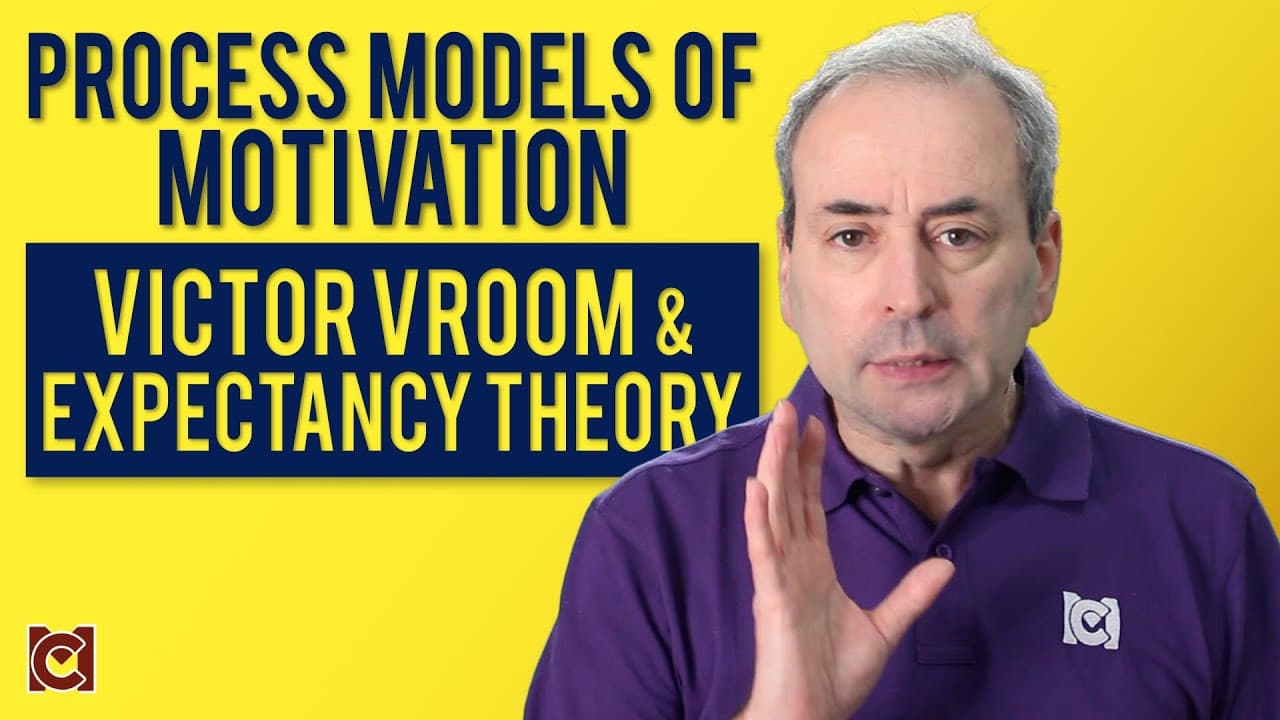
How Does Vroom's Expectancy Theory Work?
TL;DR
Vroom's expectancy theory articulates that motivation hinges on three key factors: expectancy (belief in achieving success), instrumentality (confidence in receiving rewards), and valence (the perceived worth of those rewards). If any one of these elements is weak, overall motivation decreases, suggesting that a strong chain is crucial for effective motivation.
Transcript
have you ever found that someone who should be motivated in a situation isn't if you have if you've ever wondered what's going on and then one of the most valuable models for you is going to be Victor vroom z-- expectancy theory it arguably is one of the least understood and most valuable models for any manager in the field of motivation and that's... Read More
Key Insights
- 📞 Victor Vroom's expectancy theory of motivation highlights the importance of belief in success, receiving rewards, and the value of rewards in influencing motivation.
- 🥹 Managers must ensure that work is perceived as achievable, promises of rewards are fulfilled, and the rewards offered hold sufficient value to motivate individuals.
- ⛓️ Expectancy, instrumentality, and valence together form a chain of motivation, and if any link in this chain is weak, overall motivation will be low.
- ☺️ The equation for motivation in Vroom's theory is motivation = expectancy x instrumentality x valence.
- ❓ Organizations must be mindful of their promises and rewards to avoid undermining motivation.
- 💦 Managers should strive to create a work environment that fosters high expectancy, instrumentality, and valence to motivate employees.
- 😤 Understanding and applying Vroom's expectancy theory can help managers effectively motivate their team members.
Install to Summarize YouTube Videos and Get Transcripts
Explore YouTube Video Summarizer or Get YouTube Transcript Extractor
Questions & Answers
Q: What is Victor Vroom's expectancy theory of motivation?
Victor Vroom's expectancy theory suggests that motivation is determined by the belief in the possibility of success, belief in receiving rewards, and the perceived value of those rewards. These factors form a chain of motivation, and if any link in the chain is weak, motivation will be low.
Q: How does expectancy impact motivation?
Expectancy refers to the belief that putting in effort will lead to a desired outcome. If individuals do not believe that their efforts will yield positive results, their motivation will be low. Managers should set work that is believed to be achievable to maintain high expectancy.
Q: What is instrumentality in Vroom's theory?
Instrumentality refers to the belief that receiving the expected outcome will lead to receiving the promised rewards. If individuals do not believe that their performance will result in receiving the rewards, their motivation will be low. Organizations must fulfill promises of rewards to maintain high instrumentality.
Q: How does valence influence motivation?
Valence represents the satisfaction or value individuals associate with the promised reward. If individuals do not anticipate being pleased or satisfied with the reward, their motivation will be low. Managers must offer rewards that hold a high valence for employees to maintain motivation.
Key Insights:
- Victor Vroom's expectancy theory of motivation highlights the importance of belief in success, receiving rewards, and the value of rewards in influencing motivation.
- Managers must ensure that work is perceived as achievable, promises of rewards are fulfilled, and the rewards offered hold sufficient value to motivate individuals.
- Expectancy, instrumentality, and valence together form a chain of motivation, and if any link in this chain is weak, overall motivation will be low.
- The equation for motivation in Vroom's theory is motivation = expectancy x instrumentality x valence.
- Organizations must be mindful of their promises and rewards to avoid undermining motivation.
- Managers should strive to create a work environment that fosters high expectancy, instrumentality, and valence to motivate employees.
- Understanding and applying Vroom's expectancy theory can help managers effectively motivate their team members.
- Motivation is not solely driven by external factors but is affected by individuals' perceptions and beliefs in the chain of motivation.
Summary & Key Takeaways
-
Victor Vroom's expectancy theory of motivation is a valuable model for managers to understand and apply.
-
Motivation is influenced by three factors: expectancy (belief in the possibility of success), instrumentality (belief in receiving rewards), and valence (perceived value of rewards).
-
If any of these factors are weak or non-existent, motivation will also be low.
Read in Other Languages (beta)
Share This Summary 📚
Summarize YouTube Videos and Get Video Transcripts with 1-Click
Try YouTube Summary with ChatGPT & Claude or YouTube Transcript Generator
Explore More Summaries from Management Courses - Mike Clayton 📚



Summarize YouTube Videos and Get Video Transcripts with 1-Click
Try YouTube Summary with ChatGPT & Claude or YouTube Transcript Generator