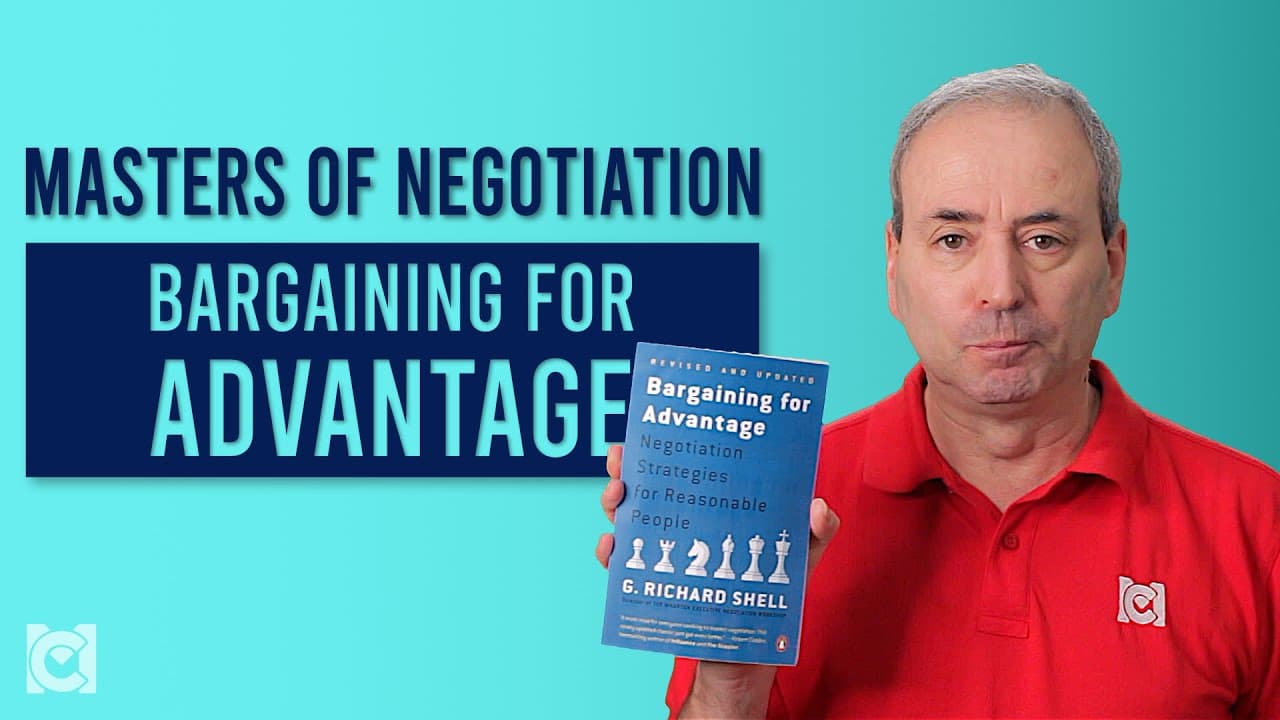
Bargaining for Advantage - Masters of Negotiation
TL;DR
In this video, the speaker shares his five key takeaways from the book 'Bargaining for Advantage,' focusing on information-based bargaining, understanding psychology, reciprocity, leverage, and effective closing tactics.
Transcript
a great book for negotiators in the professional and managerial world is bargaining for advantage by richard shell in this video i want to talk about my five key takeaways from this great little book in bargaining for advantage by richard shell he tells us that the best negotiators are those who research in advance and understand as best they can b... Read More
Key Insights
- 💼 Information-based bargaining focuses on three tactics: preparation, listening, and attentiveness to non-verbal cues and information.
- 💡 Understanding both your own psychology and the psychology of the other person is crucial in negotiations.
- 🤝 Reciprocity is an essential aspect of crafting a good agreement, where both parties give and take to achieve a fair outcome.
- 🔀 Leverage is based on perceived advantage rather than real advantage, highlighting the importance of influencing the other party's perception.
- 🔐 Closing a negotiation is challenging, and two tactics to effectively close are the scarcity effect (fear of missing out) and overcommitment (sunk cost fallacy).
- 📚 "Bargaining for Advantage" by Richard Shell is a recommended book for managers and executives, providing practical negotiation advice.
- 👍 Thumbs up and subscribing to the channel will ensure access to more great management courses content.
- ✨ Continuous learning is important in improving negotiation skills.
Install to Summarize YouTube Videos and Get Transcripts
Explore YouTube Video Summarizer or Get YouTube Transcript Extractor
Questions & Answers
Q: How does information-based bargaining contribute to successful negotiations?
Information-based bargaining, as mentioned by Richard Shell, focuses on three tactics: preparation, listening, and attentiveness to non-verbal cues and information. By thoroughly researching and understanding the facts and psychology of the negotiation, negotiators can make informed decisions and effectively navigate the negotiation process. This approach helps build credibility and allows negotiators to anticipate the other party's needs and concerns, leading to more successful outcomes.
Q: Why is understanding psychology important in negotiations?
Understanding psychology is crucial in negotiations because it helps negotiators navigate their own emotions and those of the other party. By being aware of their own triggers and emotions, negotiators can prevent emotional decision-making and maintain a rational approach. Additionally, comprehending the psychology of the other person enables negotiators to tailor their communication and strategies to appeal to their interests and motivations, fostering better outcomes for both parties.
Q: How does reciprocity contribute to a successful negotiation?
Reciprocity plays a significant role in crafting a good agreement during a negotiation. By offering concessions and asking for reciprocal offers, negotiators create a give-and-take dynamic that leads to a balanced and fair outcome. This approach allows both parties to feel satisfied with the agreement, enhancing the chances of a successful negotiation. Reciprocity also builds trust and goodwill, which can further foster positive ongoing relationships between the parties involved.
Q: What is the role of leverage in negotiations?
According to Richard Shell, leverage in negotiations is based on perceived advantage rather than real advantage. It is not necessarily about having an actual advantage but about the other party's perception of that advantage. This means that negotiators must focus on demonstrating their strengths and advantages effectively to influence the other party's perception. By understanding and utilizing leverage strategically, negotiators can create favorable conditions and negotiate from a position of strength.
Q: How can the scarcity effect be used for effective closing in negotiations?
The scarcity effect, as proposed by Richard Shell, can be a useful tactic for effective closing in negotiations. By creating a sense of urgency and fear of missing out on a good deal, negotiators can prompt the other party to accept a final conclusion. This can be done by imposing a time limit or threatening to walk away from the deal if the other party hesitates. The scarcity effect capitalizes on the human tendency to value things more when they are perceived as limited or exclusive, increasing the chances of reaching a favorable agreement.
Answer: Over commitment, also known as the sunk cost fallacy, is another strategy suggested by Shell to facilitate effective closing in negotiations. By reminding the other party of the effort and resources invested in the negotiation process, negotiators can trigger a feeling of reluctance to throw away that effort. This reminder can sway the other party towards accepting the proposed agreement. However, negotiators should be cautious not to fall victim to the sunk cost fallacy themselves by valuing their own effort over the quality of the outcome. Keeping a clear focus on the negotiation's objectives and alternatives is essential to avoid settling for suboptimal agreements.
Summary & Key Takeaways
-
Negotiators should focus on information-based bargaining, including preparation, listening, and attentiveness to non-verbal cues.
-
Understanding one's own psychology and avoiding emotional control is crucial in negotiations.
-
Reciprocity is essential in crafting a good agreement, creating a balanced outcome for both parties.
-
Leverage is based on perceived advantage rather than real advantage.
-
Effective closing tactics include the scarcity effect and appealing to sunk costs.
Read in Other Languages (beta)
Share This Summary 📚
Summarize YouTube Videos and Get Video Transcripts with 1-Click
Try YouTube Summary with ChatGPT & Claude or YouTube Transcript Generator
Explore More Summaries from Management Courses - Mike Clayton 📚

Summarize YouTube Videos and Get Video Transcripts with 1-Click
Try YouTube Summary with ChatGPT & Claude or YouTube Transcript Generator