6 Steps to Expertise in ANYTHING - No Talent Required!
TL;DR
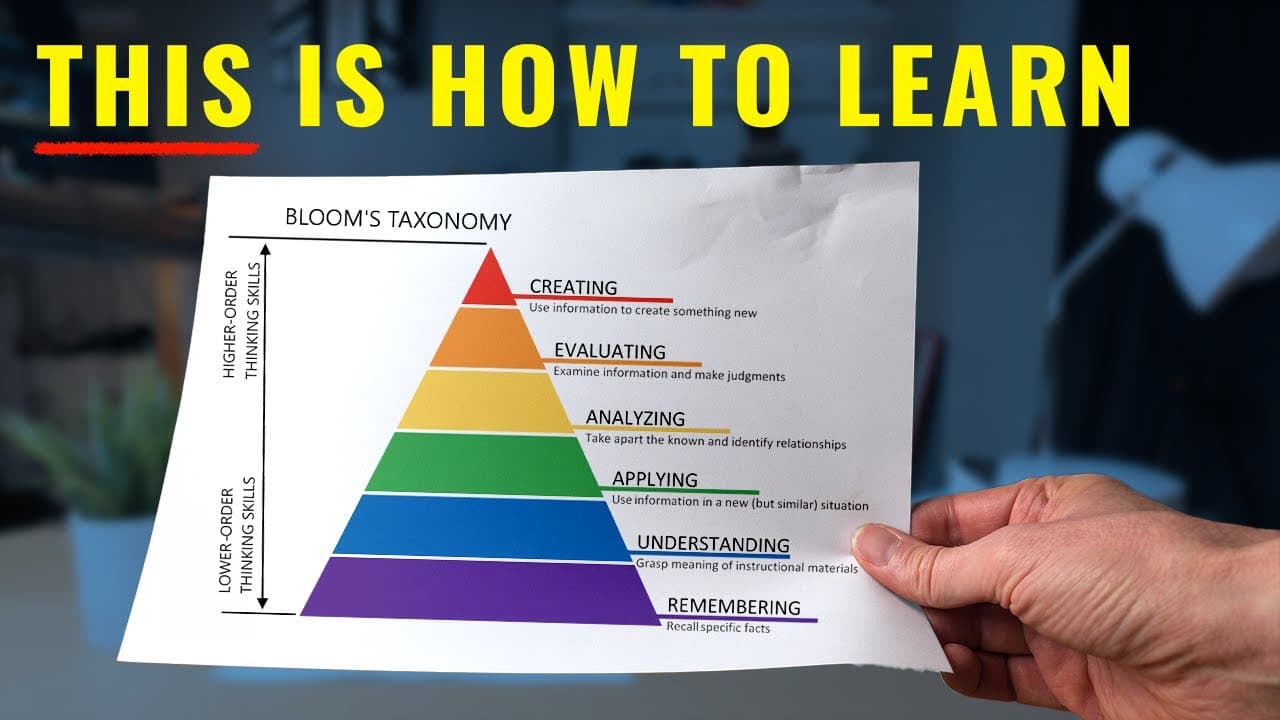
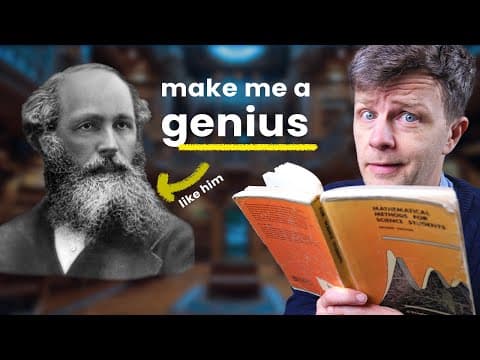
Benjamin Bloom's method outlines six essential steps to become an expert in any field.
Transcript
if you want to become an expert it's not as hard as you might think but you have to make sure you do it the right way a lot of people do it the wrong way which means they waste time and never become experts in anything now you might be wondering in fact you probably should be wondering what is this method but more importantly how do we know it work... Read More
Key Insights
- ❓ Expertise is accessible to everyone by following Bloom's six-step method, regardless of innate talent.
- 🛟 Memorization serves as the foundational step for all learning and requires regular testing to reinforce retention.
- ⁉️ Understanding context and principles helps learners to answer critical questions and apply their knowledge effectively.
- 💋 Practical application transforms theoretical knowledge into tangible skills, marking the transition from understanding to competence.
- 🤔 Higher-order thinking skills enable learners to analyze, critique, and innovate within their chosen domains.
- 🤔 Developing critical thinking can protect individuals from being misled or making poor decisions in everyday life.
- 💦 Continuous evaluation and comparison against others' work promote self-improvement and advanced critical analysis abilities.
Install to Summarize YouTube Videos and Get Transcripts
Explore YouTube Video Summarizer or Get YouTube Transcript Extractor
Questions & Answers
Q: What are the six steps proposed by Benjamin Bloom for achieving expertise?
Benjamin Bloom outlines six essential steps: (1) Remembering the fundamentals, (2) understanding their significance, (3) applying the knowledge in practice, (4) analyzing the components, (5) evaluating effectiveness, and (6) creating something original. By progressing through these stages, individuals can develop a deep comprehension of their chosen field and hone their expertise.
Q: How does the concept of critical thinking relate to becoming an expert?
Critical thinking is a vital component for expertise, as it involves analyzing various sources of information to form sound arguments and make informed decisions. Experts are skilled in evaluating their own work and the work of others. This ability allows them to recognize their strengths and weaknesses, adapt their methods, and innovate effectively, contributing to their journey toward mastery.
Q: Why is practical experience emphasized in Bloom's taxonomy?
Practical experience is highlighted in Bloom's taxonomy as it solidifies theoretical knowledge into real-world application. Engaging in hands-on practice allows individuals to reinforce their learning, experiment with techniques, and develop a deeper understanding of the subject matter. Without doing, mere memorization can lead to superficial learning and hinder true expertise.
Q: How can Bloom's taxonomy help in fields like cooking or coding?
Bloom's taxonomy can facilitate learning in cooking or coding by providing a structured pathway for mastering skills. For instance, aspiring chefs can utilize it to memorize recipes and understand the rationale behind culinary techniques. Coders can analyze code and understand its components, leading to a more thorough grasp of programming principles that enhances their skill level.
Q: What role does evaluation play in achieving expertise according to Bloom?
Evaluation is a crucial step in Bloom's taxonomy, where experts assess their work's effectiveness and compare it with others. This step encourages self-reflection and critical feedback, allowing individuals to identify areas for improvement and refine their methods. By consistently evaluating their outputs, experts can pursue higher standards of excellence in their field.
Q: What types of skills do employers value that are developed through Bloom's method?
Employers often value critical thinking, problem-solving, and the ability to innovate, all of which are cultivated through Bloom's method. As individuals engage in higher-order thinking skills, they become adept at analyzing situations, generating ideas, and applying knowledge creatively. These skills are essential for navigating complex challenges in the workplace.
Summary & Key Takeaways
-
Bloom's method identifies six crucial requirements for becoming an expert, debunking the myth that natural talent is necessary, emphasizing memorization, understanding, and practice.
-
The first three steps involve lower-order thinking skills: remembering, understanding, and applying knowledge, while the next three focus on higher-order skills such as analyzing, evaluating, and creating.
-
Critical thinking is vital for expertise, as it enables individuals to assess their work, critique others, and innovate, ultimately leading to better problem-solving abilities and life outcomes.
Read in Other Languages (beta)
Share This Summary 📚
Summarize YouTube Videos and Get Video Transcripts with 1-Click
Try YouTube Summary with ChatGPT & Claude or YouTube Transcript Generator
Explore More Summaries from Python Programmer 📚

Summarize YouTube Videos and Get Video Transcripts with 1-Click
Try YouTube Summary with ChatGPT & Claude or YouTube Transcript Generator