Who Invented the Hydrogen Bomb?
TL;DR
Hydrogen bombs are extremely destructive, thousands of times more powerful than atomic bombs, and use fusion to release enormous amounts of energy.
Transcript
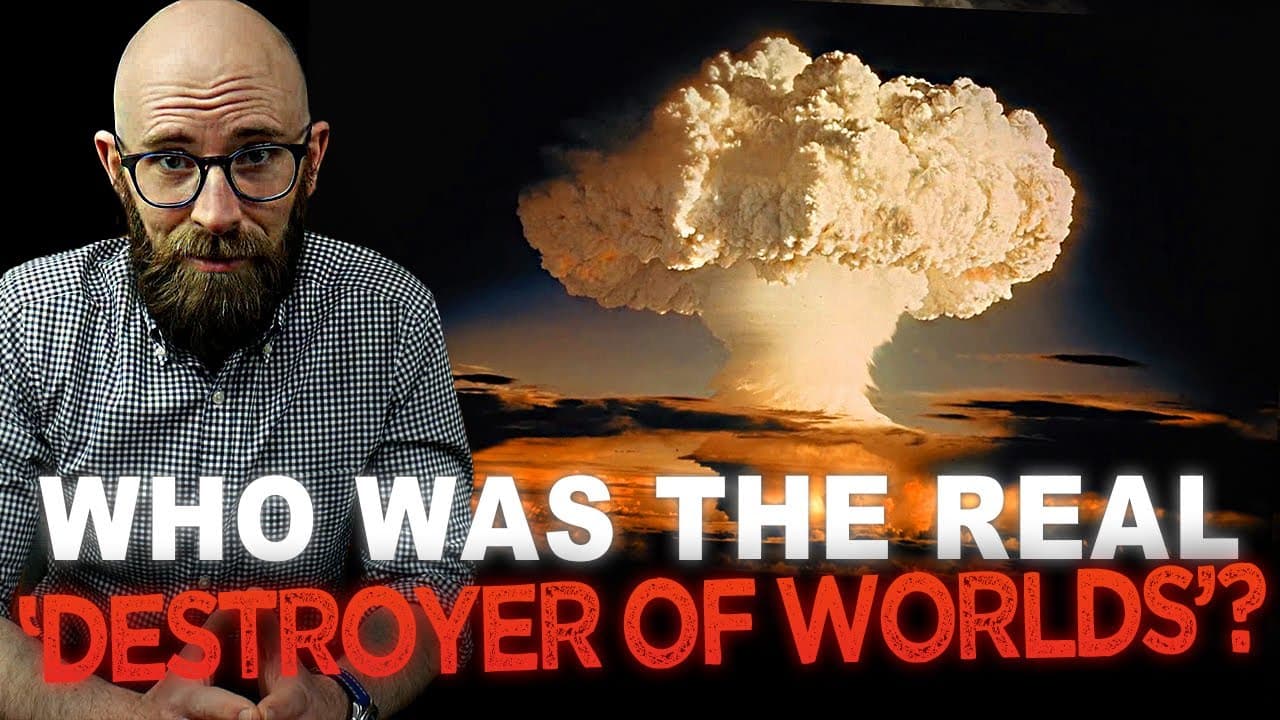
at 6:45 a.m. on March the 1st 1954 a blinding flash brighter than the sun lit up the sky above bikini ATL in the South Pacific from an observation bunker on nuu island 30 km away scientists watched as a monstrous glowing Fireball Rose above the Lagoon expanding to more than 7 km in diameter within a minute this Fireball had grown into a towering mu... Read More
Key Insights
- 💣 Hydrogen bombs, or thermonuclear weapons, are thousands of times more powerful than atomic bombs.
- ✋ Fusion, the process used in hydrogen bombs, requires extremely high temperatures and pressures to overcome the repulsion of hydrogen atoms.
- 🔫 While there are limits to the explosive yield of pure fusion devices, fusion weapons can release enormous amounts of energy and have the potential to cause catastrophic damage.
- ✊ The development and testing of hydrogen bombs during the Cold War raised international tensions and concerns about the devastating power of nuclear weapons.
- 🏆 The Castle Bravo test, the largest hydrogen bomb test in history, resulted in unexpected consequences, including widespread radioactive fallout and health effects on nearby islands and communities.
- 🇺🇸 The United States, Soviet Union, and other nuclear powers developed their own hydrogen bombs during the Cold War, leading to an arms race and global nuclear proliferation.
- 💅 The S-bomb test by the Soviets in 1961, with a yield of 58 megatons, remains the largest man-made explosion in history.
Install to Summarize YouTube Videos and Get Transcripts
Explore YouTube Video Summarizer or Get YouTube Transcript Extractor
Questions & Answers
Q: What is a hydrogen bomb?
A hydrogen bomb, also known as a thermonuclear weapon, is an extremely powerful explosive device that uses fusion to release enormous amounts of energy. It is thousands of times more powerful than atomic bombs.
Q: How does fusion work in a hydrogen bomb?
Fusion in a hydrogen bomb involves combining lighter hydrogen atoms, such as deuterium and tritium, to form heavier helium atoms. Fusion requires extremely high temperatures and pressures to overcome the electrostatic forces that repel hydrogen atoms.
Q: What is the difference between a hydrogen bomb and an atomic bomb?
The main difference is in their energy release mechanisms. Hydrogen bombs use fusion to release energy, while atomic bombs, also known as fission bombs, use the process of fission to split apart heavy uranium or plutonium atoms.
Q: Are there any limits to the power of hydrogen bombs?
While there are limits to the explosive yield of pure fusion devices, known as fishing devices, fusion weapons can generate practically limitless energy and have the potential to cause devastating destruction.
Summary & Key Takeaways
-
Hydrogen bombs, also known as thermonuclear weapons, use fusion to combine lighter hydrogen atoms and release a significant increase in energy and explosive yield.
-
Fusion requires extremely high temperatures and pressures to overcome the electrostatic forces that repel hydrogen atoms.
-
Hydrogen bombs are much more powerful than atomic bombs and have the potential to obliterate entire cities and cause catastrophic damage.
Read in Other Languages (beta)
Share This Summary 📚
Summarize YouTube Videos and Get Video Transcripts with 1-Click
Try YouTube Summary with ChatGPT & Claude or YouTube Transcript Generator
Explore More Summaries from Today I Found Out 📚






Summarize YouTube Videos and Get Video Transcripts with 1-Click
Try YouTube Summary with ChatGPT & Claude or YouTube Transcript Generator