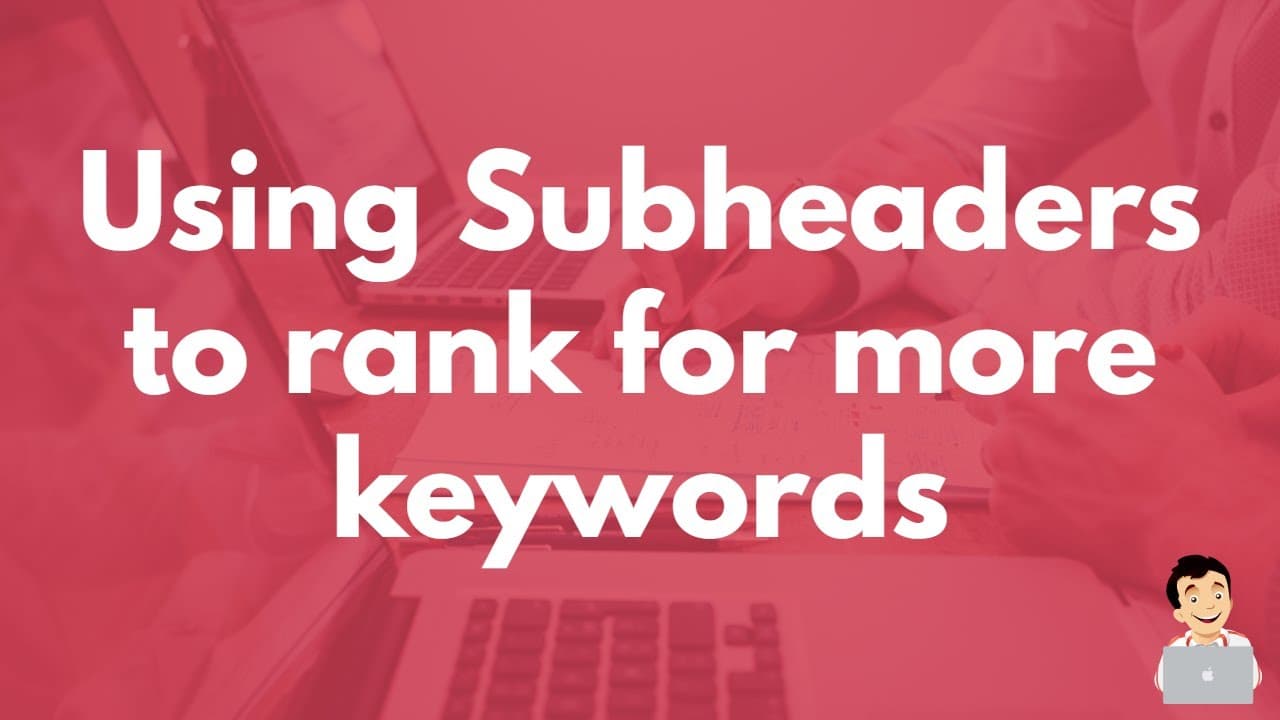
Using Subheadings to Rank for more Keywords [on page SEO Tips]
TL;DR
Using subheadings can improve keyword rankings effectively.
Transcript
hi guys so what i'm going to show you is an example of what is good on page seo from someone in the industry who's very well known now that person is neil patel now much much debated as to whether he's good at a seo or not um i personally think you know the guy he's a marketing genius and certainly knows his stuff if you look at his rankings now th... Read More
Key Insights
- Neil Patel's page ranks for 3,300 keywords by using strategic subheadings, demonstrating effective on-page SEO techniques.
- Subheadings help break down content into digestible sections, allowing each to target different search terms or long-tail keywords.
- Creating a single authoritative page can be more beneficial than multiple pages, as it consolidates SEO efforts and resources.
- Optimizing existing pages with FAQs and additional subheadings can enhance their keyword reach and traffic potential.
- Strategic use of headers and long-form content can capture a wide array of related search terms, boosting overall page rankings.
- On-page SEO involves balancing content structure and keyword targeting to maximize a page's visibility and search engine performance.
- Neil Patel's SEO strategy includes differentiating between on-page and off-page SEO, highlighting the importance of content organization.
- A well-optimized page reduces the need for excessive link building by efficiently using existing content to drive rankings.
Install to Summarize YouTube Videos and Get Transcripts
Explore YouTube Video Summarizer or Get YouTube Transcript Extractor
Questions & Answers
Q: How does Neil Patel's page rank for so many keywords?
Neil Patel's page ranks for over 3,300 keywords by using strategic subheadings. By organizing content into sections with headers, he targets various search terms effectively. This method allows a single page to capture traffic from multiple keyword variations, showcasing a powerful on-page SEO strategy.
Q: What is the benefit of using subheadings in SEO?
Subheadings in SEO help break down content into digestible sections, each targeting different search terms or long-tail keywords. This not only enhances a page's relevance and keyword reach but also consolidates SEO efforts, reducing the need for numerous pages and improving overall search engine performance.
Q: Why is it better to have one authoritative page instead of multiple pages?
Having one authoritative page is beneficial because it consolidates SEO efforts and resources. A well-optimized page can capture a wide array of related search terms, reducing the need for excessive link building and maximizing the page's visibility and search engine performance, as opposed to spreading efforts across multiple pages.
Q: How can existing pages be optimized for better keyword reach?
Existing pages can be optimized by adding FAQs and additional subheadings to enhance their keyword reach. This involves organizing content strategically to target a broader range of search terms, thus boosting traffic potential and improving the page's overall search engine performance.
Q: What role do headers play in SEO according to the content?
Headers play a crucial role in SEO by structuring content into sections that can target different keywords. This strategic use of headers allows a page to capture a wide range of related search terms, enhancing its visibility and ranking potential on search engines.
Q: How does Neil Patel differentiate between on-page and off-page SEO?
Neil Patel differentiates between on-page and off-page SEO by focusing on content organization and keyword targeting for on-page SEO. His strategy involves using headers and long-form content to effectively capture a wide array of search terms, thereby boosting overall page rankings without relying heavily on off-page tactics.
Q: What is the importance of content organization in on-page SEO?
Content organization is crucial in on-page SEO as it helps in structuring content to target multiple keywords efficiently. By using subheadings and strategic content placement, a page can enhance its relevance for various search terms, improving its visibility and ranking on search engines.
Q: How can on-page SEO reduce the need for link building?
On-page SEO can reduce the need for link building by efficiently using existing content to drive rankings. By optimizing a page with strategic subheadings and content organization, it can capture a wide range of search terms, maximizing its visibility and performance on search engines without relying heavily on external links.
Summary & Key Takeaways
-
Neil Patel effectively uses subheadings to rank a page for over 3,300 keywords, showcasing a powerful on-page SEO strategy. His method involves using headers to target various search terms, allowing a single page to capture traffic from multiple keyword variations.
-
The use of subheadings in SEO helps break down content into focused sections, each capable of targeting different long-tail keywords. This approach not only enhances the page's relevance but also consolidates SEO efforts, reducing the need for numerous pages.
-
Optimizing a page with additional subheadings and FAQs can significantly boost its keyword reach and traffic. By strategically organizing content, a page can serve as an authoritative source, capturing a wide array of related search terms and improving overall search engine performance.
Read in Other Languages (beta)
Share This Summary 📚
Summarize YouTube Videos and Get Video Transcripts with 1-Click
Try YouTube Summary with ChatGPT & Claude or YouTube Transcript Generator
Explore More Summaries from Craig Campbell SEO 📚


Summarize YouTube Videos and Get Video Transcripts with 1-Click
Try YouTube Summary with ChatGPT & Claude or YouTube Transcript Generator