What Are Sensors and How Do They Work?
TL;DR
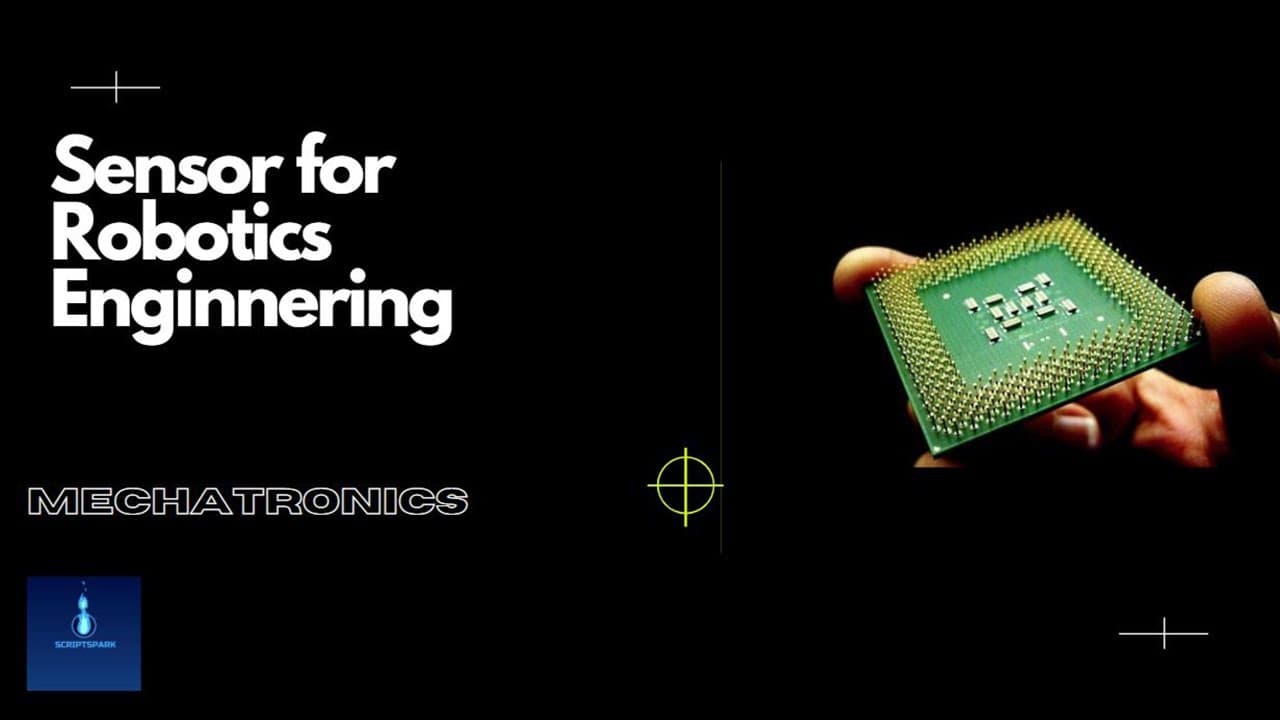
Sensors are devices that detect environmental changes and send this information to electronic systems. They come in various types, such as nano, chemical, and gyroscopic sensors, each designed for specific applications across industries like healthcare, navigation, and manufacturing.
Transcript
In the broadest definition, a sensor is a device, module, machine, or subsystem whose purpose is to detect events or changes in its environment and send the information to other electronics, frequently a computer processor. A sensor is always used with other electronics. Sensors are used in everyday objects such as touch-sensitive elevator buttons ... Read More
Key Insights
- 🌉 Sensors are integral to the function of many devices, bridging the gap between the environment and electronic systems.
- 😮 The rise of microcontroller platforms has significantly broadened the scope of sensor applications, particularly in consumer electronics and industrial technologies.
- 😷 Nano sensors are advancing rapidly, with applications in critical fields such as environmental monitoring and medical diagnostics.
- 🫢 Chemical sensors offer crucial data about the composition of liquids and gases, underpinning safety and quality control across various sectors.
- ✋ Interferometric sensors are distinguished by their ability to measure minute distance changes with high accuracy, benefiting applications in metrology.
- 🫀 Atomic force microscopy (AFM) sensors provide unprecedented resolution, facilitating breakthroughs in materials science and biology.
- 🖐️ Gyroscopes play a vital role in stabilization and navigation, with applications that span from aerospace to consumer electronics.
Install to Summarize YouTube Videos and Get Transcripts
Explore YouTube Video Summarizer or Get YouTube Transcript Extractor
Questions & Answers
Q: What is the primary function of a sensor?
The primary function of a sensor is to detect events or alterations in its environment, converting these changes into signals that can be interpreted by other electronic systems, such as processors. Sensors are vital in facilitating interactions between the physical world and electronic devices, making them essential in numerous applications across various industries.
Q: How do nano sensors differ from traditional sensors?
Nano sensors differ from traditional sensors primarily in their size and the level of detail they can measure. Operating at the nanoscale allows them to detect physical quantities with high sensitivity and specificity, which traditional sensors may not achieve. Their development techniques, such as top-down lithography and molecular self-assembly, further enhance their applicability in industries like defense and healthcare.
Q: What are the two key steps in the operation of a chemical sensor?
The operation of a chemical sensor involves two key steps: recognition and transduction. In the recognition step, specific analyte molecules interact with receptor sites, resulting in a change in a physical measurable parameter. The transduction step then converts this change into an output signal that corresponds to the concentration of the analyte, allowing for chemical analysis.
Q: What are some notable applications of accelerometers?
Accelerometers have diverse applications including inertial navigation systems for aircraft and missiles, monitoring vibrations in machinery, adjusting the display orientation in tablets and cameras, and stabilizing flight in unmanned aerial vehicles. Their sensitivity allows for precise measurements and feedback across these different uses, essential for safety and performance in technology.
Summary & Key Takeaways
-
Sensors are devices that detect changes in their environment and relay this information to electronic systems like computers, playing crucial roles in everyday technologies from elevator buttons to advanced healthcare equipment.
-
Various sensor types, including nano, chemical, interferometric, AFM, accelerometers, and gyroscopes, serve specific purposes in industry, manufacturing, and science, utilizing principles from physics and engineering.
-
The advancements in sensor technology, especially miniaturization and microcontroller integration, have expanded their applications, allowing for more sophisticated uses in robotics, medicine, environmental monitoring, and navigation systems.
Read in Other Languages (beta)
Share This Summary 📚
Summarize YouTube Videos and Get Video Transcripts with 1-Click
Try YouTube Summary with ChatGPT & Claude or YouTube Transcript Generator
Explore More Summaries from script spark 📚





Summarize YouTube Videos and Get Video Transcripts with 1-Click
Try YouTube Summary with ChatGPT & Claude or YouTube Transcript Generator