Project-Based Learning at Clear View Charter Elementary School (Learn and Live)

TL;DR
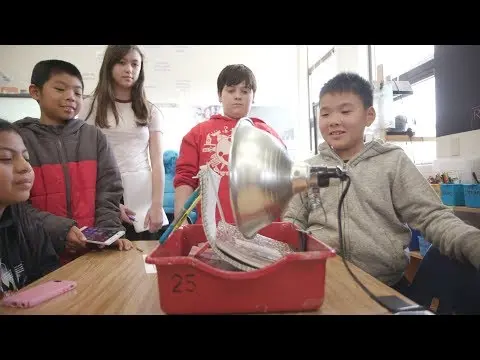
Fourth and fifth graders collaborate with scientists in studying insects under an electron microscope, gaining a deeper understanding of insects through hands-on exploration.
Transcript
Teacher: That's incredible. That's the best we've seen yet. >>Narrator: Fourth and fifth graders at Clear View Charter School in Chula Vista, California, work over a two way interactive video connection with scientists at a local university. Together they study insects under an electron microscope. >>Teacher: Okay, introduce yourselves, girls, ge... Read More
Key Insights
- 🤗 Hands-on exploration with electron microscopes enhances students' understanding of insects.
- 😷 Learning becomes more meaningful when students take an active role in their studies and ask questions.
- 🛟 Cooperative learning develops essential emotional intelligence and life skills.
- 👪 Parent involvement in education is pivotal for supporting children's learning and fostering a positive learning environment.
- 😑 Technology, such as multimedia presentations, offers new ways for students to express their ideas and demonstrate knowledge.
- 💦 Rubrics help students assess the quality of their own work and strive for improvement.
- 💁 Alternative forms of assessment, beyond traditional tests, are necessary to evaluate students' learning effectively.
Install to Summarize YouTube Videos and Get Transcripts
Explore YouTube Video Summarizer or Get YouTube Transcript Extractor
Questions & Answers
Q: How does studying insects under an electron microscope enhance students' learning compared to traditional classroom resources?
Studying insects under an electron microscope allows students to see details that would not be visible with traditional resources, such as the ability to magnify up to 700x and observe fine details like insect hairs. This hands-on approach enables students to learn by themselves rather than being told by someone else.
Q: Why is it important for students to take an active role in their studies and ask questions?
Taking an active role in studying helps students retain information and engage in critical thinking. By asking questions and pursuing answers, students develop a deeper understanding and learn to apply the scientific process to their inquiries.
Q: How does cooperative learning benefit students?
Cooperative learning promotes emotional intelligence and essential life skills, such as managing emotions and working effectively with others. It allows students to master essential skills while working together and fosters a sense of accomplishment and enjoyment in learning.
Q: How can parents be involved in their children's education?
Parent involvement is crucial in education. Regular meetings between parents, teachers, and staff help keep parents informed about the school's programs and approaches to learning. When parents and teachers collaborate, it conveys the value of learning to children and enhances their academic progress.
Summary & Key Takeaways
-
Fourth and fifth graders at Clear View Charter School work with scientists to study insects under an electron microscope, going beyond traditional resources to gain a deeper understanding.
-
The project aims to teach students not only about insects but also about the scientific process and the life of a scientist.
-
Students collect and examine specimens, learning about the different mouth parts of insects and how each part is adapted to their diets.
Read in Other Languages (beta)
Share This Summary 📚
Summarize YouTube Videos and Get Video Transcripts with 1-Click
Try YouTube Summary with ChatGPT & Claude or YouTube Transcript Generator
Explore More Summaries from Edutopia 📚


Summarize YouTube Videos and Get Video Transcripts with 1-Click
Try YouTube Summary with ChatGPT & Claude or YouTube Transcript Generator