Why Ethiopia is in a civil war
TL;DR
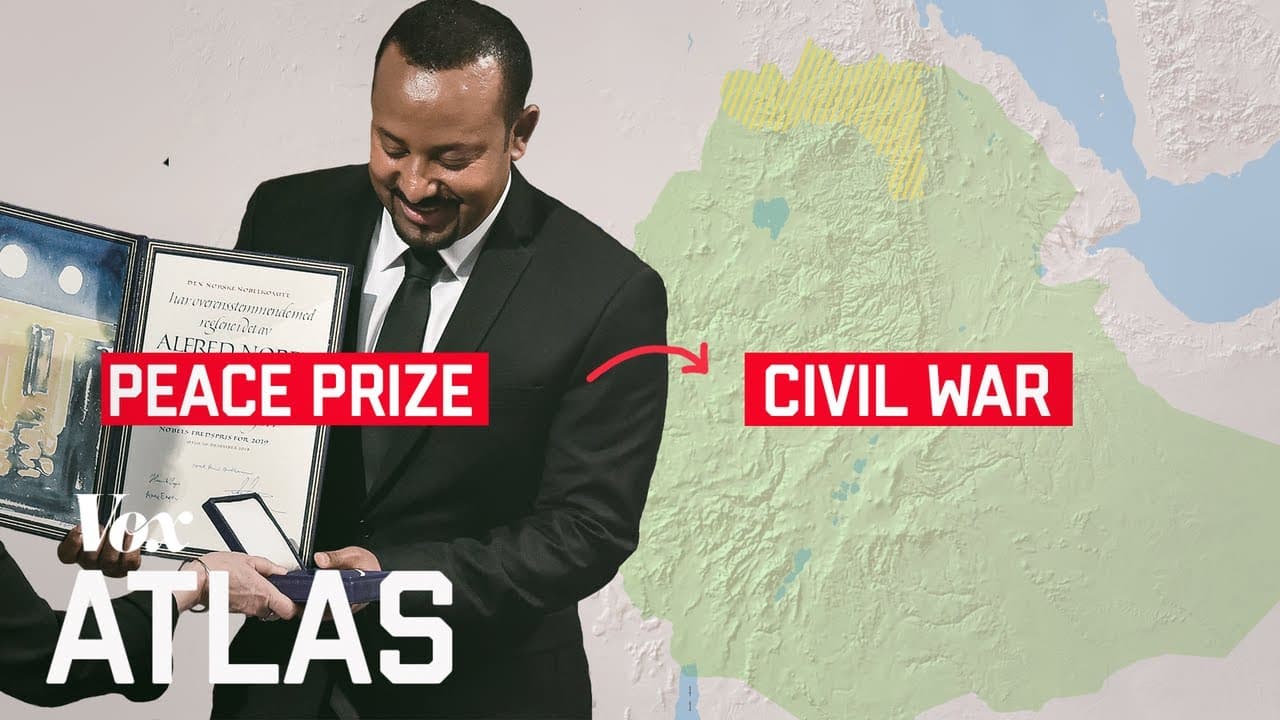
Ethiopia's leader won a peace prize, then launched a war.
Transcript
This is the chair of the Nobel Committee. And she's talking about this man: "Ethiopian Prime Minister Abiy Ahmed." ...who's about to receive the Nobel Peace Prize. Ethiopia's new leader had ended a decades-long war with a neighboring country, Eritrea. But, less than a year later, Ethiopia was attacking one of its own regions, the regional state of ... Read More
Key Insights
- Prime Minister Abiy Ahmed was awarded the Nobel Peace Prize in 2019 for ending Ethiopia's war with Eritrea, signaling hope for peace.
- Despite initial hopes, Abiy's government quickly became embroiled in a civil war against the Tigray People's Liberation Front (TPLF).
- The conflict was sparked by political tensions and disputes over elections, leading to military confrontations in Tigray.
- Ethiopia's complex ethnic history and regional divisions have contributed significantly to the current conflict's escalation.
- The TPLF, once a dominant political force, rejected Abiy's new political coalition, leading to increased tensions.
- Abiy's attempts to unify Ethiopia under a single political party have been met with resistance from various ethnic groups.
- The war has resulted in thousands of deaths and displaced over 60,000 Ethiopians, exacerbating humanitarian crises.
- Abiy's vision for peace has been challenged by deep-rooted ethnic divisions and historical grievances within Ethiopia.
Install to Summarize YouTube Videos and Get Transcripts
Explore YouTube Video Summarizer or Get YouTube Transcript Extractor
Questions & Answers
Q: What initially earned Prime Minister Abiy Ahmed the Nobel Peace Prize?
Prime Minister Abiy Ahmed was awarded the Nobel Peace Prize in 2019 for his role in ending the long-standing conflict between Ethiopia and Eritrea. His efforts were seen as a significant step towards peace and reconciliation in the region, marking a hopeful new beginning for Ethiopia after decades of oppressive regimes and dictatorships.
Q: What led to the escalation of conflict between Abiy Ahmed's government and the TPLF?
The conflict escalated due to political tensions between Abiy Ahmed's government and the Tigray People's Liberation Front (TPLF), especially surrounding the postponement of regional elections. The TPLF defied the postponement by holding its own elections, which Abiy's government deemed illegal. This political rivalry and dispute over the election process led to military confrontations, sparking the current conflict.
Q: How has Ethiopia's ethnic history contributed to the current conflict?
Ethiopia's ethnic history has played a significant role in the current conflict. The country's diverse ethnic composition, coupled with historical grievances and power imbalances, has fueled tensions. The TPLF, representing a minority ethnic group, felt marginalized by Abiy's attempts to centralize power, leading to resistance and conflict. These deep-rooted ethnic divisions have made it challenging to achieve lasting peace.
Q: What actions did Abiy Ahmed take that increased tensions with the TPLF?
Abiy Ahmed took several actions that increased tensions with the TPLF. He initiated a political reform by forming the Prosperity Party, a new coalition that the TPLF refused to join. Additionally, Abiy worked to remove corrupt TPLF officials from power and mended relations with Eritrea, an adversary of the TPLF. These moves were perceived as threats to the TPLF's influence and power, heightening tensions.
Q: What has been the humanitarian impact of the conflict in Tigray?
The humanitarian impact of the conflict in Tigray has been severe. Thousands of people have been killed, and over 60,000 Ethiopians have been displaced, seeking refuge in neighboring Sudan. The conflict has disrupted access to essential services and aid, exacerbating the humanitarian crisis. Reports of violence against civilians and infrastructure destruction have further compounded the suffering of the Tigrayan population.
Q: Why did the TPLF refuse to join Abiy Ahmed's Prosperity Party?
The TPLF refused to join Abiy Ahmed's Prosperity Party because they viewed it as an attempt to undermine their political influence and centralize power under a single party. The TPLF, having been a dominant force in Ethiopian politics, saw the new coalition as a threat to their autonomy and representation. This refusal to join the Prosperity Party marked a significant turning point in the escalating tensions between the TPLF and Abiy's government.
Q: What were the consequences of Abiy Ahmed's decision to postpone regional elections?
Abiy Ahmed's decision to postpone regional elections due to the pandemic led to significant consequences. The TPLF perceived the postponement as a strategic move to weaken their political influence, leading them to hold their own elections in defiance. This act of defiance escalated tensions, resulting in a military confrontation when the TPLF took over a federal military base, marking the beginning of the current conflict.
Q: How has Abiy Ahmed's vision for Ethiopia been challenged by the ongoing conflict?
Abiy Ahmed's vision for a unified and peaceful Ethiopia has been severely challenged by the ongoing conflict. His attempts to centralize power and promote national unity have been met with resistance from various ethnic groups, particularly the TPLF. The deep-rooted ethnic divisions and historical grievances have made it difficult to achieve consensus, leading to a polarized and divided nation. Abiy's promise of peace is now overshadowed by a war that has intensified social and political divisions.
Summary & Key Takeaways
-
In 2019, Ethiopian Prime Minister Abiy Ahmed was awarded the Nobel Peace Prize for ending a decades-long conflict with Eritrea, raising hopes for a peaceful future. However, tensions with the Tigray People's Liberation Front (TPLF) quickly escalated, leading to a civil war that has caused significant casualties and displacement.
-
The conflict in Ethiopia is rooted in its complex ethnic history and political tensions. Abiy's attempts to unify the country under a single political coalition were met with resistance from the TPLF, which had been a dominant political force. This resistance led to military confrontations and a humanitarian crisis.
-
Ethiopia's current conflict highlights the challenges of addressing historical grievances and ethnic divisions. Despite Abiy's initial promise of peace, his government is now engaged in a war that has deepened social divisions and raised questions about the future of Ethiopia's unity and stability.
Read in Other Languages (beta)
Share This Summary 📚
Summarize YouTube Videos and Get Video Transcripts with 1-Click
Try YouTube Summary with ChatGPT & Claude or YouTube Transcript Generator
Explore More Summaries from Vox 📚




Summarize YouTube Videos and Get Video Transcripts with 1-Click
Try YouTube Summary with ChatGPT & Claude or YouTube Transcript Generator