Why Were Bootleggers Called That?
TL;DR
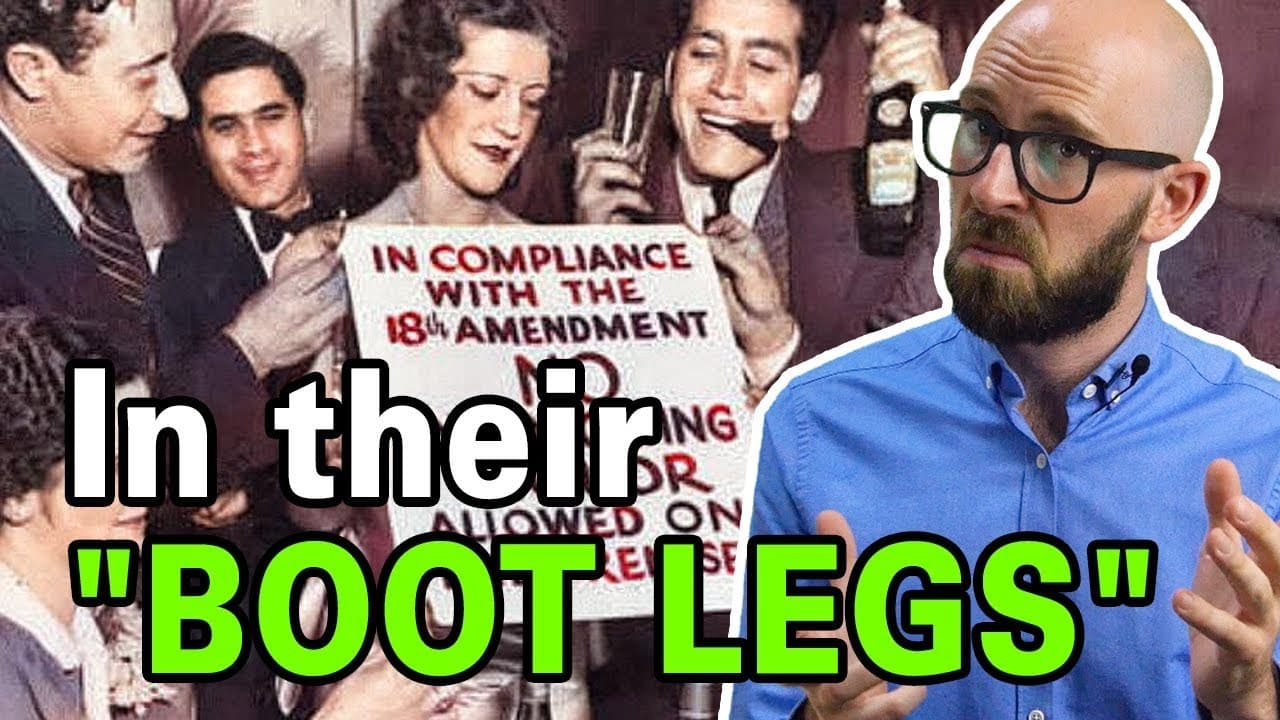
Prohibition, enacted in 1920, aimed to reduce societal issues, but instead gave rise to bootlegging, illegal activities, increased alcohol consumption, and tainted alcohol.
Transcript
Although Prohibition officially began on January 16, 1920, the impetus for banning the production, sale, importation and transportation (though not the consumption) of alcohol had been brewing for decades. Part of a string of reforms introduced by Progressives, Protestants and other activists to cure all of society's ills, limiting the consumption ... Read More
Key Insights
- 🪛 Prohibition was driven by a desire for societal improvement, but instead resulted in unintended consequences.
- 💝 The term "bootlegging" originated in Kansas in the late 1800s and expanded to encompass all illegal activities, not just related to alcohol.
- ❓ Despite efforts to enforce Prohibition, alcohol consumption increased, and criminal activities surged.
- 💀 Tainted alcohol caused thousands of deaths, and the U.S. government even intentionally poisoned alcohol supplies.
Install to Summarize YouTube Videos and Get Transcripts
Explore YouTube Video Summarizer or Get YouTube Transcript Extractor
Questions & Answers
Q: Why did Prohibition come into effect?
Prohibition was introduced by activists and reformers who believed it would solve societal problems such as domestic violence and loose morals by limiting alcohol consumption.
Q: How did the term "bootlegging" originate?
The term "bootlegging" was originally associated with concealing illicit items, like alcohol, in the top part of a tall boot. It gained popularity during Kansas' prohibition laws and was further popularized during nationwide Prohibition.
Q: Did alcohol consumption increase or decrease during Prohibition?
Surprisingly, alcohol consumption actually increased by 39% from 1919 to 1929 during Prohibition. The difficulty in producing and transporting beer led to a shift towards stronger spirits and fortified wines.
Q: What were the consequences of Prohibition?
Prohibition resulted in a rise in criminal activities, such as thefts and burglaries, which increased by 9%, homicides and assaults, which increased by 13%, and arrests for drunk driving, which increased by 81%.
Summary & Key Takeaways
-
Prohibition was fueled by the belief that limiting alcohol consumption would solve social issues like domestic violence and poor health.
-
The term "bootlegging" originated in Kansas in the late 1800s and gained popularity during nationwide Prohibition, extending to refer to illegal activities beyond alcohol.
-
Despite efforts by federal agents and a budget of over $10 million, alcohol consumption increased during Prohibition, with a shift towards stronger spirits, and wealthier individuals were able to stockpile alcohol.
Read in Other Languages (beta)
Share This Summary 📚
Summarize YouTube Videos and Get Video Transcripts with 1-Click
Try YouTube Summary with ChatGPT & Claude or YouTube Transcript Generator
Explore More Summaries from Today I Found Out 📚





Summarize YouTube Videos and Get Video Transcripts with 1-Click
Try YouTube Summary with ChatGPT & Claude or YouTube Transcript Generator