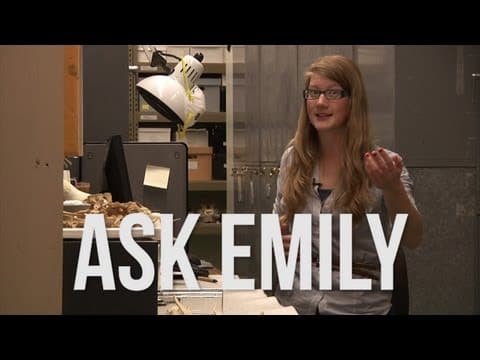
Plants in Space? | Ask Emily

TL;DR
Lichens can survive in space, most museum specimens are not displayed, art is a form of communication, and natural history museums are important for documenting the changing world.
Transcript
Hey, I'm hanging out in a lab in the fishes collection We just filmed an episode here, Now we're going to film another one Guess what it is, it's Ask Emily Spoiler alert, you already read the title Okay here we go! Hannah Schwab, @SchwabDuckling asked In 2008, scientists from the European Space Agency attached some samples of the orange sunburst li... Read More
Key Insights
- 💄 Lichens can go into a state of dormancy to survive in extreme conditions, making them resilient organisms.
- 👨🔬 Most museum specimens are used for research and not for display due to various reasons.
- 👨🏫 Art school teaches valuable skills in communication and storytelling through visual elements.
Install to Summarize YouTube Videos and Get Transcripts
Explore YouTube Video Summarizer or Get YouTube Transcript Extractor
Questions & Answers
Q: How did lichens survive in space?
Lichens are able to go into a state of dormancy to prevent their cells from breaking down and dying off in extreme conditions like space. This allows them to continue growing even after being exposed to solar radiation, cosmic rays, and vacuum.
Q: Why are most museum specimens not displayed?
While museums have permanent exhibits, the majority of specimens are used for research purposes. Some specimens may be too fragile or not aesthetically pleasing, while others are destined to stay in storage to preserve their scientific value.
Q: How does art school contribute to daily life?
Art school teaches students skills in communication, using imagery, color, and design to share narratives and concepts. These skills can be applied to various disciplines, such as using the English language to share information effectively.
Q: Why are natural history museums important?
Natural history museums serve as repositories of the physical world, documenting ecosystems, species, and landscapes. They play a crucial role in understanding the changes in our environment over time and preserving remnants of the past.
Summary & Key Takeaways
-
Lichens have the ability to go into a dormant state to survive in space, making them capable of surviving Earth's next apocalypse.
-
Most specimens in museums are not displayed, as they are primarily used for research purposes and some may not be aesthetically pleasing.
-
Art school teaches students how to communicate and share narratives using imagery, color, and design.
-
Natural history museums act as repositories of the physical world and provide valuable insights into the changing environment.
Read in Other Languages (beta)
Share This Summary 📚
Summarize YouTube Videos and Get Video Transcripts with 1-Click
Try YouTube Summary with ChatGPT & Claude or YouTube Transcript Generator
Explore More Summaries from thebrainscoop 📚





Summarize YouTube Videos and Get Video Transcripts with 1-Click
Try YouTube Summary with ChatGPT & Claude or YouTube Transcript Generator