Was the European Renaissance a True Cultural Revolution?
TL;DR
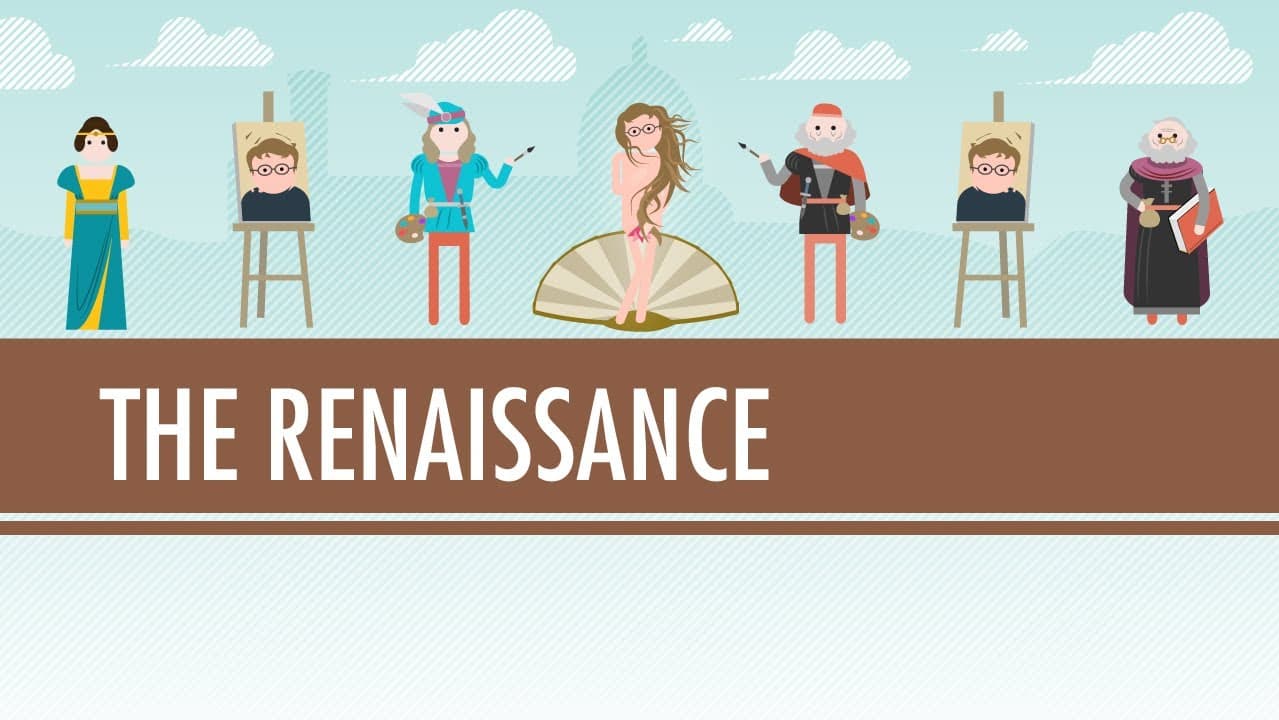
The Renaissance, often seen as a rebirth of European culture, is argued by John Green to be more nuanced and less of a singular event. It was a series of interdependent developments over centuries, influenced significantly by trade and Islamic scholarship, rather than a sudden cultural revolution.
Transcript
Hi, I'm John Green, This is Crash Course: World History and today we're going to talk about something that ought to be controversial: The Renaissance. So you probably already know about the Renaissance thanks to the work of noted teenage mutant ninja turtles Leonardo, Michelangelo, Donatello, and Raphael. But that isn't the whole story. Mr. Green, ... Read More
Key Insights
- The Renaissance is traditionally associated with the 15th and 16th centuries, primarily in Italy.
- Renaissance art and architecture were heavily influenced by Greek and Roman styles.
- Humanism during the Renaissance focused on the study of humanities like literature, philosophy, and history.
- Italy's wealth, particularly from trade with the Ottomans, was crucial in supporting Renaissance art and scholarship.
- Venetian and Genoan trade with the Islamic world, especially in commodities like alum, was vital for the Renaissance.
- Muslim scholars preserved and expanded upon Greek writings, influencing Renaissance thinkers.
- The Renaissance's impact was limited to a small elite, with most Europeans unaware of its developments.
- The concept of the Renaissance as a distinct historical period is more a modern narrative than a contemporary reality.
Install to Summarize YouTube Videos and Get Transcripts
Explore YouTube Video Summarizer or Get YouTube Transcript Extractor
Questions & Answers
Q: How did trade influence the Renaissance?
Trade, especially with the Islamic world, was crucial in the Renaissance. Italian city-states like Venice and Genoa amassed wealth through trade, which supported artists and scholars. Trade with the Ottomans provided materials like alum, essential for textiles, and facilitated cultural exchanges that enriched European scholarship.
Q: What role did Islamic scholars play in the Renaissance?
Islamic scholars preserved and expanded upon ancient Greek texts, which later influenced Renaissance thinkers. Their work on texts by Aristotle and Ptolemy provided a foundation for European scholars. The fall of Constantinople also led to the migration of Byzantine scholars to Italy, further spreading Greek ideas.
Q: Why is the Renaissance considered controversial as a historical period?
The Renaissance is controversial because it was not a sudden or universal cultural revolution. It primarily affected a small elite, leaving most Europeans unaware. The period spanned centuries, with developments occurring at different times and places, making the notion of a singular Renaissance more of a modern construct.
Q: Why did the Renaissance primarily occur in Italy?
The Renaissance occurred primarily in Italy due to the region's wealth from trade and industry. Italian city-states like Florence and Venice were economic powerhouses, providing the resources necessary to support artists, architects, and scholars. Italy's geographic position also facilitated cultural exchanges with the Islamic world.
Q: What is humanism in the context of the Renaissance?
Humanism during the Renaissance was an intellectual movement focused on studying the humanities, including literature, philosophy, and history. It emphasized the value of human beings and the study of classical texts. Contrary to some beliefs, Renaissance humanists were often religious and integrated their studies with their faith.
Q: How did the discovery of alum impact the Renaissance?
The discovery of alum in Italy was significant because it was a vital dyeing agent for textiles, a major industry in cities like Florence. Previously, alum had to be imported from the Ottoman Empire, but local sources reduced dependency on foreign trade and bolstered the Italian economy, supporting the arts and scholarship.
Q: What were the main themes in Renaissance art?
Renaissance art focused on the human form, often idealized, drawing inspiration from Greek and Roman art. It also featured classicizing elements in architecture, such as Greek columns and Roman arches. Themes of individualism and humanism were prevalent, reflecting the broader intellectual currents of the time.
Q: Did the Renaissance have a significant impact on the average European?
The Renaissance had little impact on the average European, as it was largely confined to a small elite. Most people continued to live agrarian lives, unaffected by the art and learning of the period. The cultural and intellectual developments were primarily experienced by the wealthy and those directly serving them, like artists and scholars.
Summary & Key Takeaways
-
The Renaissance was a period marked by a revival of Greek and Roman art and ideas, largely supported by the wealth of Italian city-states. However, its impact was limited to a small elite, and most Europeans remained unaffected by its developments.
-
Trade, particularly with the Islamic world, played a crucial role in the Renaissance. Italian city-states like Venice and Genoa became wealthy through trade, enabling them to support artists and scholars.
-
The notion of a singular Renaissance is a modern construct; it was a series of interdependent events over centuries. Islamic scholarship and trade significantly influenced what we now call the Renaissance.
Read in Other Languages (beta)
Share This Summary 📚
Summarize YouTube Videos and Get Video Transcripts with 1-Click
Try YouTube Summary with ChatGPT & Claude or YouTube Transcript Generator
Explore More Summaries from CrashCourse 📚




Summarize YouTube Videos and Get Video Transcripts with 1-Click
Try YouTube Summary with ChatGPT & Claude or YouTube Transcript Generator