What Are Michael Turvey's Contributions to Ecological Psychology?
TL;DR
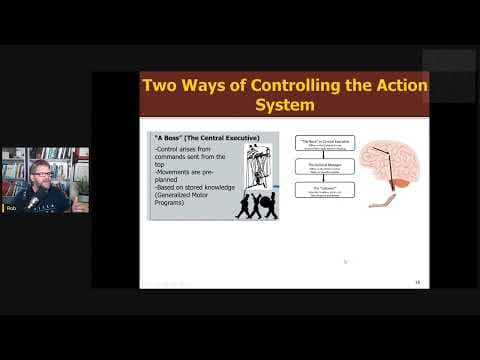
Michael Turvey significantly shaped the field of ecological psychology, emphasizing the integration of perception and action. His work, which includes connecting Gibson's and Bernstein's theories, laid the groundwork for understanding motor control and skill acquisition. Turvey's approach challenged traditional information processing models, advocating for a system-based perspective where behavior is governed by environmental interactions rather than internal controllers.
Transcript
today on the perception and an action podcast a brief look at the incredible career of Michael tury and his contributions to the ecological approach to perception action so it's time for a call to action hi this is Rob Gray from Arizona State University I've been on a now over 25e Journey as a researcher professor and high performance consultant to... Read More
Key Insights
- Michael Turvey's work focused on the ecological approach to perception-action, emphasizing the integration of perception and action.
- Turvey was instrumental in connecting Gibson's and Bernstein's theories, forming the basis of ecological dynamics.
- He challenged traditional information processing models, advocating for a system-based perspective where behavior is governed by environmental interactions.
- Turvey's research on haptic perception and the concept of inertial tensors advanced the understanding of information sources in perception.
- He played a key role in translating Bernstein's work, highlighting the degrees of freedom problem in motor control.
- Turvey founded the Center for the Ecological Study of Perception and Action at the University of Connecticut, a hub for ecological psychology.
- He emphasized the importance of adhering to a clear theoretical framework, warning against eclectic approaches that mix models.
- Turvey's legacy includes a profound impact on the ecological dynamics approach to skill acquisition and motor control.
Install to Summarize YouTube Videos and Get Transcripts
Explore YouTube Video Summarizer or Get YouTube Transcript Extractor
Questions & Answers
Q: What are Michael Turvey's contributions to ecological psychology?
Michael Turvey significantly shaped ecological psychology by integrating perception and action, connecting Gibson's and Bernstein's theories, and challenging traditional information processing models. His work laid the foundation for understanding motor control and skill acquisition, emphasizing a system-based perspective where behavior is governed by environmental interactions rather than internal controllers.
Q: How did Michael Turvey connect Gibson's and Bernstein's theories?
Michael Turvey connected Gibson's and Bernstein's theories by highlighting the parallels between Gibson's focus on perceptual invariance and Bernstein's emphasis on the degrees of freedom problem in motor control. This integration formed the basis of ecological dynamics, emphasizing a system-based approach where behavior is influenced by environmental interactions.
Q: Why is Michael Turvey's work on haptic perception significant?
Michael Turvey's work on haptic perception is significant because it advanced the understanding of information sources in perception, particularly through the concept of inertial tensors. His research provided insights into how organisms perceive and interact with their environment, contributing to the broader field of ecological psychology and enhancing the understanding of perception-action integration.
Q: What is the ecological dynamics approach to skill acquisition?
The ecological dynamics approach to skill acquisition, influenced by Michael Turvey, emphasizes the integration of perception and action, focusing on how behavior emerges from interactions between the organism and its environment. This approach challenges traditional models by advocating for a system-based perspective where skills are acquired through adaptive interactions rather than predetermined internal processes.
Q: How did Michael Turvey challenge traditional information processing models?
Michael Turvey challenged traditional information processing models by advocating for a system-based perspective where behavior is governed by environmental interactions rather than internal controllers. He emphasized the importance of understanding perception and action as integrated processes, highlighting the limitations of models that rely on internal representations and predetermined programs.
Q: What role did Michael Turvey play in translating Bernstein's work?
Michael Turvey played a crucial role in translating Bernstein's work, particularly in highlighting the degrees of freedom problem in motor control. He emphasized the importance of understanding how organisms achieve coordinated movement despite the vast number of possible actions, connecting this concept with Gibson's focus on perceptual invariance to form the basis of ecological dynamics.
Q: Why did Michael Turvey emphasize a clear theoretical framework?
Michael Turvey emphasized a clear theoretical framework to ensure the integrity and rigor of ecological psychology research. He warned against eclectic approaches that mix models, arguing that such practices weaken the ecological approach by preventing a thorough exploration of its potential. Turvey believed that a committed, consistent approach was essential for advancing the field.
Q: What is the significance of the Center for the Ecological Study of Perception and Action?
The Center for the Ecological Study of Perception and Action, founded by Michael Turvey, is significant as a hub for ecological psychology research. It has been instrumental in advancing the study of perception-action integration, fostering collaboration among researchers, and promoting the development of ecological dynamics. The center continues to influence the field by supporting innovative research and training new generations of scholars.
Summary & Key Takeaways
-
Michael Turvey's career was pivotal in shaping ecological psychology, emphasizing the integration of perception and action. He connected Gibson's and Bernstein's theories, forming the basis of ecological dynamics. Turvey's approach challenged traditional information processing models, advocating for a system-based perspective where behavior is governed by environmental interactions rather than internal controllers.
-
Turvey's research on haptic perception and inertial tensors advanced the understanding of information sources in perception. He highlighted the degrees of freedom problem in motor control, emphasizing the importance of adhering to a clear theoretical framework. Turvey's legacy includes a significant impact on the ecological dynamics approach to skill acquisition.
-
As a founder of the Center for the Ecological Study of Perception and Action, Turvey created a hub for ecological psychology. His emphasis on a system-based perspective and commitment to a clear theoretical framework warned against eclectic approaches that mix models. Turvey's work continues to influence the field of ecological psychology and motor control.
Read in Other Languages (beta)
Share This Summary 📚
Summarize YouTube Videos and Get Video Transcripts with 1-Click
Try YouTube Summary with ChatGPT & Claude or YouTube Transcript Generator
Explore More Summaries from Rob Gray 📚
Summarize YouTube Videos and Get Video Transcripts with 1-Click
Try YouTube Summary with ChatGPT & Claude or YouTube Transcript Generator